Yes, many hail dents can be repaired without repainting using Paintless Dent Repair (PDR), when the paint remains intact and the damaged metal is suitable for repair.
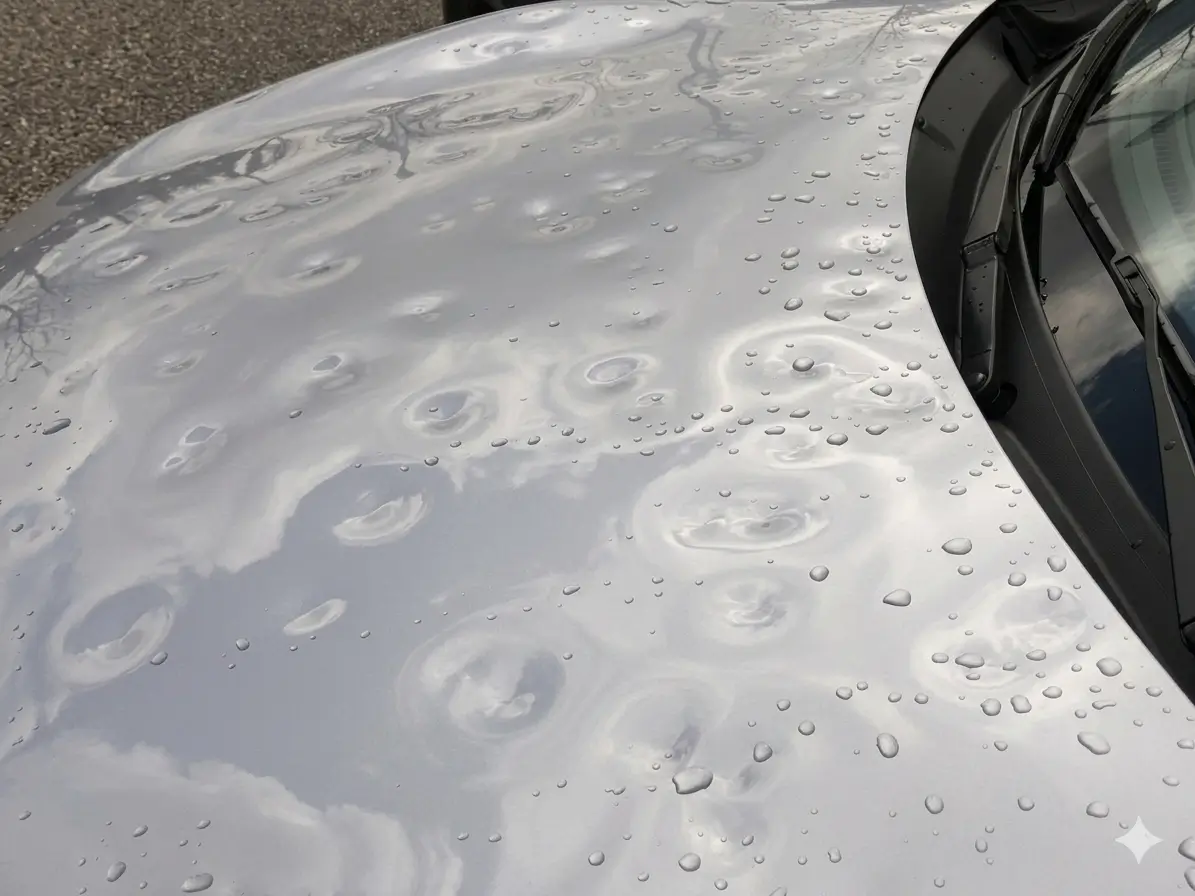
Hail commonly damages the hood, roof, and trunk, while wind-driven hail can also strike side panels. Impacts may dent the metal, crack or chip the finish, or damage trim and glass.
A professional assessment determines the appropriate repair method for each panel. Some vehicles need a combination of PDR, conventional body repair, refinishing, and part replacement. Chipped or cracked glass requires a separate assessment for repair or replacement.
Why Hail Damage Needs a Panel-by-Panel Assessment
Hail can leave many dents across several panels, with different repair needs on each. The hood, roof, and trunk may have shallow dents suitable for PDR, while another panel has sharp deformation or damaged paint.
Wind-driven hail can also affect doors, fenders, and quarter panels. The condition of each panel—not the number of dents alone—determines whether repainting can be avoided.
Qualification Matrix: When Does Hail Damage Qualify for PDR?
| Vehicle & Damage Attribute | Generally Suitable for PDR Assessment | May Require Conventional Repair, Refinishing, or Replacement |
|---|---|---|
| Paint Condition | Paint is intact, with no visible cracking, chipping, or flaking. | Hail impacts caused paint chipping, cracking, or flaking. |
| Dent Geometry & Depth | Shallow to moderately deep depressions without severe metal stretching. | Sharp impacts or creases with severe metal stretching. |
| Panel Substrate | Steel or aluminum panels that can be reshaped while preserving the finish. | Metal is torn, punctured, or otherwise unsuitable for paintless repair. |
| Access & Construction | Safe backside access or suitable exterior glue pulling is available. | Neither safe backside access nor suitable exterior pulling is available. |
| Prior Repair History | No known prior repairs that would compromise the proposed PDR method. | Existing filler or compromised refinishing may limit paintless repair options. |
These factors guide the assessment; the repair method depends on the specific damage and applicable vehicle manufacturer instructions.
For other dent types, see whether all dents can be fixed without repainting.
How Can Hail Dents Be Removed Without Repainting?
Technicians reshape suitable dents using controlled pushing or pulling while preserving the existing finish. Specialized lighting helps reveal panel contours during the repair.
Access behind roof or other panel dents may require removing interior trim or insulation. Exterior glue pulling may be an option where the paint condition, panel construction, and manufacturer’s instructions permit it.
Restricted access can limit PDR, so the method must be assessed for each affected panel.
Steel vs. Aluminum Hail Repairs
Modern vehicles mix panel materials to reduce overall weight, which directly impacts how hail damage is corrected.
Steel Panels: Repair difficulty depends on the steel grade, panel construction, dent shape, and access.
Aluminum Panels: Aluminum may require different techniques and additional labor. Any heat use must follow the vehicle manufacturer’s applicable repair instructions.
For model-specific considerations, see paintless dent repair for Tesla vehicles, including panel materials, access, and manufacturer restrictions.
Discussing the Repair Estimate With Your Shop
Ask the shop to explain the proposed method for each panel and how it meets manufacturer repair requirements. An insurance estimate should reflect the documented damage; coverage and payment remain subject to your policy and the insurer’s assessment.
For claim-related questions, read whether filing a PDR claim affects insurance rates in California.
Frequently Asked Questions
Can one vehicle require both paintless repair and traditional repainting for hail damage?
Yes. One vehicle may receive PDR on panels with intact paint and repairable dents, while panels with damaged paint or more severe deformation need conventional repair, refinishing, or replacement.
Does a high dent count automatically mean repainting is needed?
No. Dent count affects the amount of work, but paint condition, dent shape, panel material, and access determine whether PDR is suitable.
Can PDR alone fix hail dents with chipped paint?
PDR may reshape the dent, but it does not repair missing or cracked paint. Restoring the finish requires a separate paint repair.
Schedule a Professional Hail Damage Assessment in Huntington Beach
At ER Collision and Auto Body Shop in Huntington Beach, Erik Reyna and his team assess hail damage and recommend PDR, conventional body repair, or a combination based on the vehicle’s condition.
As an I-CAR Gold Class shop, we can document damage and prepare repair estimates and supplemental estimates for an insurance claim, where applicable.