The cost to paint a car in Huntington Beach generally ranges from $300–$1,500+ for one panel or a localized repair and $3,000–$7,000+ for a professional full-vehicle repaint.
Premium finishes, complete color changes, extensive bodywork, and restoration projects may exceed $10,000.
| Type of paint work | Estimated price |
|---|---|
| Small localized paint repair | $300–$800+ |
| Bumper, door, fender, or similar panel | $500–$1,500+ |
| Basic cosmetic respray | $500–$2,500+ |
| Professional full repaint | $3,000–$7,000+ |
| Premium, custom, or restoration finish | $7,000–$10,000+ |
These are general planning ranges, not guaranteed prices. Your actual cost depends on the vehicle, body condition, paint system, color, required repairs, and preparation involved.
An in-person inspection is the most reliable way to receive an accurate estimate.
Car-paint cost by panel
A complete repaint may not be necessary when damage is limited to one area. Individual panel refinishing commonly falls within these ranges:
- Side mirror cover: $200–$500+
- Fender: $400–$1,000+
- Bumper cover: $500–$1,200+
- Door: $500–$1,200+
- Hood: $700–$1,500+
- Roof: $800–$1,800+
- Quarter panel: $800–$2,000+
The estimate may increase if dents, cracked plastic, corrosion, or previous repair material must be corrected first.
Adjacent panels may also need to be blended so the repaired area transitions naturally into the existing finish.
What determines the price of a car paint job?
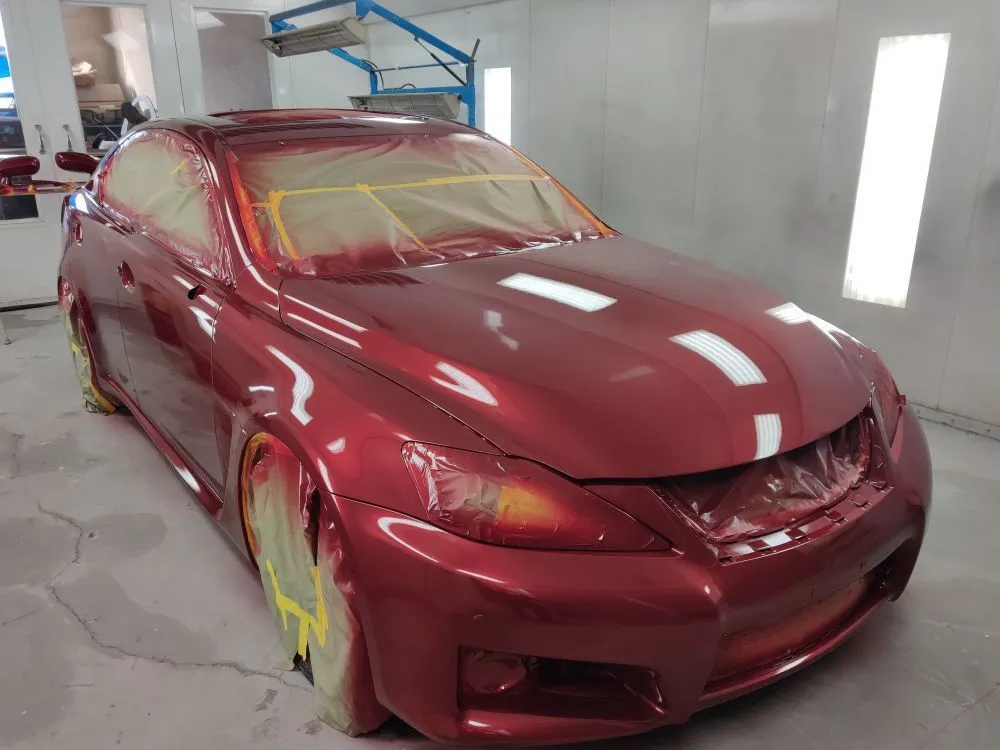
Existing paint and body condition
New automotive paint needs a clean, stable surface. Peeling clear coat, oxidation, deep scratches, exposed metal, dents, and poorly completed previous repairs add corrective labor.
If the existing coating is unstable, simply applying new paint over it can lead to visible defects or premature failure. The damaged material must be removed or properly prepared before refinishing begins.
Drivers experiencing delamination or flaking can review the common causes of clear-coat peeling.
Vehicle size and construction
A truck, van, or large SUV requires more refinishing material than a compact car.
Body design also affects labor. Moldings, cameras, sensors, lamps, emblems, weatherstripping, and door handles may need to be protected or removed before a panel is painted.
Paint color and finish
Solid colors are typically less complex than metallic, pearl, matte, or multi-stage finishes. A tri-coat color may require a base color, translucent effect coat, and clear coat applied at controlled thicknesses.
Specialty finishes require additional material, application time, spray-out testing, and technician skill, which can raise the price.
Color matching and blending
A manufacturer paint code identifies the original formula, but it does not always produce a perfect match by itself. Sun exposure, vehicle age, factory color variants, and earlier repairs can alter the appearance of the existing finish.
Professional color matching may involve:
- Confirming the paint code and variant
- Measuring the existing finish
- Mixing a refinishing formula
- Creating a spray-out card
- Checking the color under appropriate lighting
- Blending adjacent panels when necessary
Blending adds labor and materials, but it can prevent an obvious color difference between the repaired panel and the rest of the vehicle.
Surface preparation
Preparation may include cleaning, sanding, feather-edging damaged material, applying primer or sealer, block sanding, masking, and removing necessary exterior components.
This work affects adhesion, surface uniformity, corrosion protection, and the final appearance. Two estimates can differ significantly when one includes thorough corrective preparation and the other covers only a limited cosmetic respray.
For more about low advertised prices and differences in repair scope, read why some paint shops cost less than local auto body shops.
Full repaint versus complete color change
Repainting a vehicle in its existing color generally costs less than changing it to a different color.
A complete color change may require refinishing less-visible areas such as:
- Door jambs and inner door edges
- Trunk or hatch openings
- Hood edges
- Fuel-door opening
- Areas behind moldings and weatherstripping
Without this additional work, the previous color may remain visible whenever a door, hood, or trunk is opened.
The required disassembly, preparation, and added refinishing area make a color change more expensive than an exterior repaint in the original color.
Does your car need a complete repaint?
A localized repair may be sufficient when:
- Damage affects one panel or a small area
- The surrounding paint remains stable
- One bumper, fender, hood, or door is affected
- The existing color can be matched and blended
- A full repaint may be appropriate when:
- Clear-coat failure affects several panels
- Oxidation or fading is widespread
- Multiple previous repairs have created mismatched panels
- Scratches or coating deterioration cover most of the exterior
- The vehicle is undergoing restoration or a color change
A technician should inspect the complete finish before recommending the scope. Repainting one panel will not resolve coating failure that is already developing across the rest of the vehicle.
Is car paint cheaper than a vehicle wrap?
Paint and vinyl wraps solve different problems.
A wrap is removable film installed over an existing finish. It can provide a temporary appearance change when the underlying paint is stable. A wrap is not a proper repair for peeling clear coat, exposed metal, corrosion, or failing paint.
Automotive refinishing is permanent and can restore damaged coating systems after the substrate has been prepared correctly.
Compare the cost, expected lifespan, maintenance, and limitations in this car wrap versus paint guide.
Does insurance pay for car painting?
Auto insurance may cover necessary refinishing when the damage resulted from a covered collision, vandalism, or another insured event.
Insurance generally does not pay for normal fading, oxidation, wear and tear, voluntary color changes, or appearance-only repainting. Coverage depends on the cause, policy, deductible, inspection, and insurance carrier’s decision.
The body shop can document visible damage, prepare an estimate, identify related repair operations, and communicate necessary supplements. The insurer determines whether the loss is covered.
Learn more about insurance coverage for vehicle paint damage.
How long does painting a car take?
Longer repair times do not automatically mean higher prices, but extensive preparation, bodywork, disassembly, and specialty finishes can increase both labor time and total cost.
Approximate production times include:
- Localized repair: 1–3 business days
- One or two panels: 2–5 business days
- Several panels: 3–7 business days
- Complete repaint: 1–3 weeks or longer
- Color change or restoration: Several weeks or more
Body repairs, parts availability, hidden damage, curing requirements, insurer approval, and specialty finishes can affect completion time. A shop can provide a more reliable timeframe after inspecting the vehicle and defining the repair plan.
How to compare paint estimates
Compare the included operations—not only the final price. Ask each shop:
- Which panels will be refinished?
- What sanding, priming, and preparation are included?
- Are dents, scratches, corrosion, and peeling material included?
- Will adjacent panels need color blending?
- Which trim or exterior parts will be removed?
- Is the estimate for single-stage paint or basecoat and clearcoat?
- What warranty applies to the completed work?
- Could hidden damage change the estimate after disassembly?
A written estimate should identify the planned repair and refinishing operations clearly. If one estimate is substantially lower, confirm that both shops are pricing the same scope.
Frequently asked questions
How much does it cost to repaint an entire car?
A professional complete repaint typically ranges from $3,000–$7,000+. According to J.D. Power’s guide on how much it costs to paint a car, premium finishes, extensive prep work, or custom restoration projects can push total costs up to $10,000 or more
How much does it cost to paint one panel?
One-panel refinishing usually costs approximately $300–$1,500+, depending on its size, condition, color, accessibility, and blending requirements.
Can a body shop match the existing color?
A professional shop can use the manufacturer’s paint code, formula variants, measuring equipment, spray-out testing, and blending techniques to produce a close visual match. Vehicle age and existing finish condition influence the process.
Can peeling clear coat be painted over?
Failing clear coat should not simply be covered. The unstable coating must be removed or prepared to create a sound surface for the new refinishing system.
Can I receive an exact price from photos?
Photos can support an initial conversation, but they may not reveal dents, corrosion, previous body filler, lifting paint, or damage underneath exterior components.
An in-person inspection is normally required for an accurate written estimate.
Request a Car-Paint Estimate in Huntington Beach
Erik Reyna and his team inspect the existing finish, damaged panels, previous repairs, color-matching requirements, and necessary preparation to determine whether your vehicle needs a localized repair, panel refinishing, or a complete repaint.
With more than 15 years of collision-repair experience and recognition as an I-CAR Gold Class facility, ER Collision and Auto Body Shop provides a clearly defined repair scope and vehicle-specific estimate before work begins.
Explore our car paint shop services in Huntington Beach or request an inspection to receive an estimate based on your vehicle’s actual condition.
Pricing notice: Figures in this guide are general planning ranges and do not represent guaranteed estimates. Actual prices vary by vehicle, damage, labor, materials, preparation, paint system, and requested finish.