Disc Brakes, Air Conditioning, EFI, Suspension, and Electrical Upgrades
For a classic car driven regularly in Orange County, the most useful restomod upgrades are usually:
- Disc brakes for more consistent stopping
- Air conditioning for improved comfort
- Electronic fuel injection for easier starting
- Suspension improvements for better control
- Updated wiring and lighting for reliability and visibility
The right upgrades depend on the vehicle’s condition and intended use. A factory-original collector car, weekend cruiser, and frequent freeway driver should not receive the same modifications.
At ER Collision and Auto Body Shop in Huntington Beach, we begin by identifying the owner’s driving goals and evaluating the vehicle’s structural and mechanical condition.
What we commonly find: Owners may ask about brakes, EFI, or air conditioning before worn suspension parts, cooling limitations, structural concerns, or aging wiring have been addressed.
Evaluating the complete vehicle first helps prevent incompatible upgrades and unnecessary spending.
Which Upgrades Match Your Driving Goals?
| Your priority | Upgrade to consider | Check before installation |
|---|---|---|
| More consistent stopping | Disc brake conversion | Hydraulics, wheel clearance, and suspension condition |
| Easier starting | Electronic fuel injection | Fuel delivery, ignition, wiring, and charging output |
| Better handling | Suspension and steering upgrades | Frame mounts, bushings, alignment, and tire clearance |
| Comfortable summer driving | Modern air conditioning | Cooling capacity, alternator output, and cabin sealing |
| Better nighttime visibility | Lighting and wiring upgrades | Harness condition, grounds, relays, and beam pattern |
| Lower freeway engine speed | Overdrive transmission | Rear-axle ratio, clearance, and driveshaft requirements |
This approach connects each modification to a real driving need rather than treating a restomod as a list of parts.
Should You Convert a Classic Car to Disc Brakes?
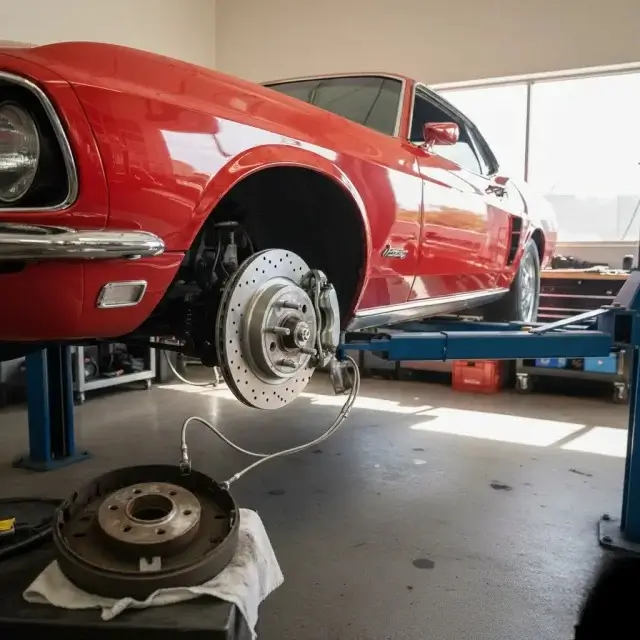
Consider disc brakes if the vehicle will be driven frequently in modern traffic, through hills, or in repeated stop-and-go conditions.
Disc brakes can provide more consistent braking as temperatures increase. However, a conversion is not automatically necessary for every classic.
A correctly restored drum-brake system may remain appropriate for a lightly driven vehicle when factory originality is the priority.
Before selecting a conversion, evaluate:
- Master-cylinder compatibility
- Manual or power-assisted operation
- Brake-pedal ratio and brake balance
- Brake lines and hoses
- Wheel and caliper clearance
- Tire condition and available traction
A common planning mistake is choosing visible brake components before confirming that the wheels, hydraulics, tires, and suspension will support them.
A disc-brake conversion should be treated as a complete system change—not simply a rotor and caliper installation.
Existing problems can be addressed through appropriate brake repair services before or during an approved conversion.
Can Air Conditioning Be Added to a Classic Car?
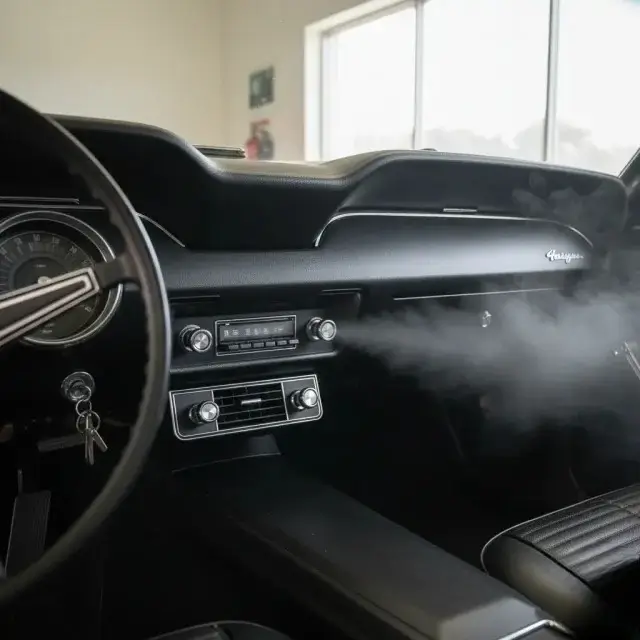
Yes. Modern air conditioning can be added to many classic cars, often with discreet vents and period-style controls.
The AC unit is only one part of an effective installation. The shop should also evaluate:
- Space behind the dashboard
- Condenser placement and airflow
- Radiator and cooling-fan capacity
- Alternator output
- Belt and compressor alignment
- Cabin sealing and insulation
- Firewall hose routing
If the engine already runs warm in traffic, adding an AC compressor may worsen the problem. Cooling-system limitations should therefore be corrected before the installation is finalized.
Owners concerned about originality should ask whether the system requires cutting the dashboard or firewall. When available, a reversible installation using existing mounting locations can help preserve the vehicle’s original appearance.
Is EFI Better Than a Carburetor?
EFI is usually better for frequent driving and easier starting, while a carburetor may be preferable for originality and mechanical simplicity.
Electronic fuel injection can provide more consistent hot and cold starts, automatic fuel adjustment, and less routine tuning when installed and calibrated correctly.
A well-rebuilt and properly tuned carburetor can still operate reliably. EFI should solve a defined starting, drivability, or fuel-management problem—not replace a carburetor only because it is newer technology.
An EFI conversion may require:
- An electric fuel pump
- Fuel-pressure regulation
- A return fuel line
- Oxygen-sensor installation
- Reliable ignition input
- Clean electrical power and grounding
- Adequate alternator capacity
EFI will not correct low compression, ignition faults, contaminated fuel, or internal engine wear. These conditions should be diagnosed through appropriate mechanical repair services before a conversion.
Which Suspension Upgrades Improve a Classic Car?
Begin by replacing worn components before changing the original suspension design.
Worn bushings, ball joints, tie rods, springs, shocks, steering components, and tires can cause wandering, leaning, vibration, or unpredictable handling.
Correcting these conditions may provide the improvement the owner wants without requiring a complete aftermarket suspension.
When additional performance is appropriate, options can include:
- Modern shocks or adjustable dampers
- Upgraded sway bars
- Replacement springs or coilovers
- Steering-box or rack-and-pinion upgrades
- Alignment settings matched to modern tires
The right setup depends on vehicle weight, suspension geometry, wheel size, intended ride height, and driving use.
Lowering a car or installing excessively stiff components can reduce suspension travel, cause tire interference, and make a street-driven car less comfortable. More aggressive equipment is not automatically better.
The frame, mounting points, steering linkage, clearances, and existing suspension condition should be evaluated before selecting new components.
When Should Classic-Car Wiring Be Replaced?
Replace or modernize the wiring when the harness is brittle, corroded, repeatedly repaired, or unable to safely support planned electrical equipment.
Warning signs include cracked insulation, overheated connectors, unprotected splices, intermittent accessories, repeated fuse failures, and weak or corroded grounds.
EFI, electric cooling fans, air conditioning, upgraded lighting, and modern audio equipment may require more power than the original charging system was designed to provide.
Depending on the vehicle, the solution may include:
- A replacement wiring harness
- Modern fuse and relay protection
- Improved engine and chassis grounds
- A higher-output alternator
- Dedicated, properly protected accessory circuits
A full harness replacement is not always necessary. If the original wiring remains sound, individual circuits, grounds, and protective components may be upgraded.
Are Modern Headlights Worth Adding?
Modern headlights can improve nighttime visibility when the bulb, housing, beam pattern, wiring, and charging system are compatible.
Restoring grounds, adding relays, using compatible housings, and correctly aiming the headlights may be more effective than installing the brightest available bulb.
Poorly matched LED bulbs can create glare without improving usable road illumination.
Which Upgrades Should Be Completed First?
For most regularly driven classic cars, the practical order is:
- Repair structural or rust-related problems
- Correct brake, steering, suspension, and tire issues
- Resolve overheating, fuel-delivery, and starting problems
- Upgrade wiring to support planned electrical equipment
- Add comfort and convenience features
- Add performance only after supporting systems are ready
This sequence prevents owners from adding horsepower or accessories to a vehicle that still has weaknesses in its structure, braking, cooling, suspension, or electrical system.
For related structural concerns, review our guide to common classic car restoration problems.
Should Restomod Upgrades Be Reversible?
Choose reversible modifications when originality, collector appeal, or future resale flexibility matters.
Ways to preserve flexibility include:
- Keeping and labeling original components
- Using existing mounting locations when possible
- Avoiding unnecessary dashboard cutting
- Selecting period-style controls
- Retaining receipts for installed components
Some upgrades require permanent drilling, cutting, fabrication, or welding. The owner should understand these changes before approving the work.
Do Restomod Upgrades Increase a Classic Car’s Value?
Not automatically.
Professionally installed upgrades may appeal to buyers who value drivability, comfort, and reliability. Permanent modifications may reduce the vehicle’s appeal to collectors seeking factory-original specifications.
The effect on value depends on the vehicle’s rarity, originality, installation quality, documentation, component compatibility, and buyer preference.
Restomod decisions should primarily support how the owner intends to use the vehicle—not depend on a guaranteed financial return.
What Should You Decide Before Starting a Restomod?
Before selecting parts, define how often and where the car will be driven, which existing problems must be solved, how much originality should be preserved, whether modifications must be reversible, and the total budget.
These decisions help the shop recommend compatible upgrades and determine whether the work should be completed together or in phases.
For help planning the full project budget, review our classic car restoration cost guide.
Restomod Services in Huntington Beach
ER Collision and Auto Body Shop serves classic car owners throughout Orange County from Huntington Beach location.
Backed by 15+ years of collision repair experience and I-CAR Gold Class recognition, Erik Reyna’s team applies established structural, bodywork, and refinishing practices to each approved project scope.
Our classic car restoration services may include rust repair, fabrication, bodywork, refinishing, mechanical work, and selected restomod upgrades.
Contact ER Collision and Auto Body Shop to discuss your driving goals, the vehicle’s condition, and which upgrades fit the build.