What Problems Affect Classic Cars Near the Coast?
Classic cars kept or driven near Huntington Beach can develop hidden rust, paint failure, electrical faults, and storage-related mechanical problems.
Coastal air can increase exposure to salt and moisture, while Southern California sun contributes to fading and finish deterioration.
The actual risk depends on the vehicle’s distance from the shoreline, storage conditions, maintenance history, previous repairs, and driving frequency.
Common concerns include:
- Corrosion in seams, floors, rockers, and structural areas
- Oxidized, peeling, cracked, or bubbling paint
- Corroded electrical grounds and connectors
- Failed previous repairs or poorly fitting panels
- Brake, fuel, cooling, and rubber-component deterioration after storage
A visible symptom may represent only part of the damage. The correct solution depends on what is found beneath the paint, trim, carpeting, undercoating, wiring connection, or previous bodywork.
How Is Hidden Rust Found and Repaired?
Rust can develop inside seams, drainage areas, and enclosed cavities before appearing on an exterior panel.
Important inspection areas include rockers, floor pans, trunk floors, lower body panels, window channels, frame rails, crossmembers, and suspension mounting points.
Warning signs include bubbling paint, swollen seams, lifting filler, stains around trim, soft metal, interior moisture, and patches that differ from the surrounding construction.
What we commonly find: The visible rust spot or paint bubble is not always the full repair area. Corrosion may extend beneath the finish or into an adjoining seam.
Typical repair direction: The area is opened enough to expose the corrosion.
Stable metal may be cleaned and protected, while thin or perforated metal must be removed and replaced. Repaired seams and enclosed cavities are then protected before refinishing.
Does Surface Rust Require Panel Replacement?
No. Surface oxidation does not automatically require replacing the complete panel.
The decision depends on the depth, location, remaining metal thickness, and structural role of the affected area.
| Condition | Typical repair direction |
|---|---|
| Light surface oxidation | Remove corrosion, prepare the metal, and apply appropriate primer and finish |
| Localized pitting | Evaluate the remaining metal before choosing repair or partial replacement |
| Perforated sheet metal | Remove the damaged area and install sound replacement metal |
| Rust around a seam or patch | Open the area and determine how far corrosion has spread |
| Structural corrosion | Restore the affected structure before cosmetic refinishing |
Painting over corrosion, placing filler over weakened metal, or hiding rust beneath undercoating does not create a durable repair.
Localized damage may require only a fabricated patch, while widespread deterioration may justify partial or complete panel replacement.
How Is Bubbling, Faded, or Peeling Paint Fixed?
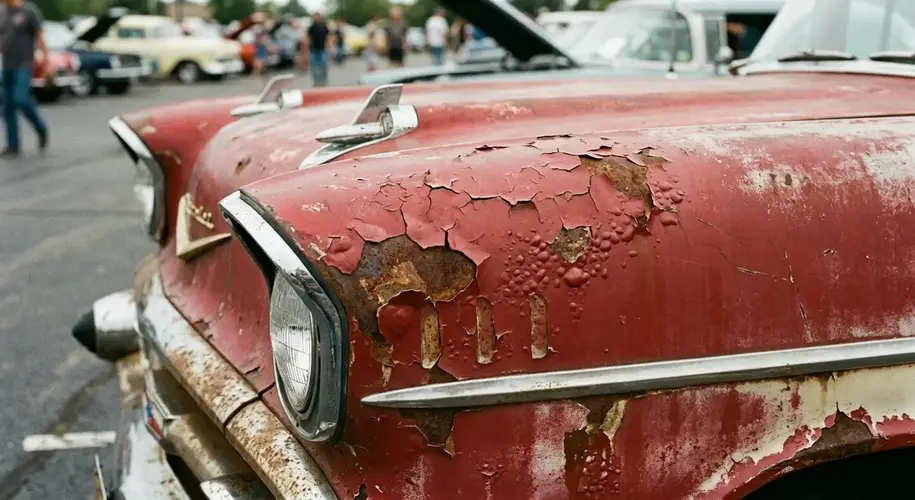
Sound but oxidized paint may sometimes be corrected. Bubbling, peeling, cracking, poor adhesion, and failed clearcoat generally require refinishing.
The appropriate solution depends on the type of failure:
- Surface oxidation may respond to careful paint correction
- Peeling clearcoat requires removal of the failed coating and refinishing
- Cracked or lifting paint must be removed until a stable layer is reached
- Rust bubbling requires metal repair before paint is reapplied
Polishing cannot permanently repair peeling clearcoat, deep cracks, adhesion failure, or corrosion beneath the finish.
Before work begins, the paint should be evaluated for coating type, adhesion, previous repairs, and underlying metal condition.
Wax, sealant, and ceramic coatings can protect a stable finish, but they cannot repair defective paint or stop existing corrosion.
How Is Corrosion in Classic-Car Wiring Fixed?
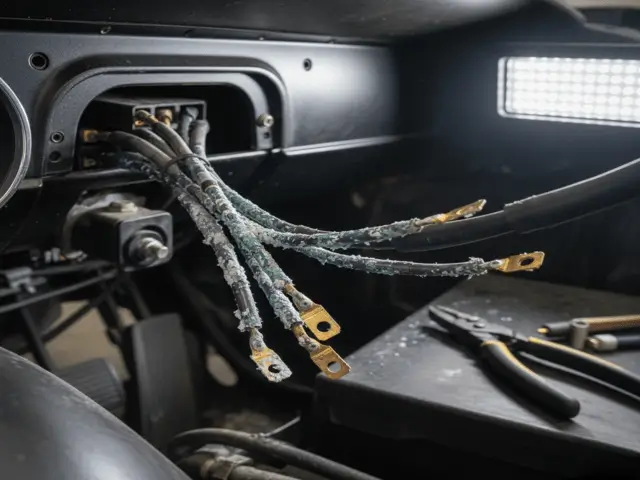
Moisture can cause corrosion at grounds, terminals, sockets, fuse panels, and connectors. Older vehicles may also contain brittle insulation, inadequate circuit protection, or earlier wiring repairs.
Symptoms include dim lights, intermittent gauges, inconsistent starting, charging problems, repeated fuse failures, and accessories that operate only occasionally.
Diagnosis should start with the affected circuit. The shop may inspect grounds and terminals, measure voltage loss, check for heat damage, examine fuse panels, and review previous splices.
Typical repair direction: A corroded terminal or poor ground may be cleaned or replaced.
Damaged wire sections can be repaired with suitable connectors, insulation, routing, and circuit protection. Brittle, overheated, extensively corroded, or repeatedly spliced wiring may require partial or complete harness replacement.
What Can Be Done When Replacement Parts Are Unavailable?
Discontinued components and poorly fitting reproduction panels are common restoration challenges.
Possible solutions include:
- Restoring the original component
- Locating a used or new-old-stock part
- Using a quality reproduction
- Fabricating a patch, bracket, mount, or panel section
- Modifying a replacement component for proper fit
The best option depends on availability, structural requirements, originality goals, and installation labor.
Reproduction panels should be measured and test-fitted before final installation. Trimming or reshaping may be necessary to achieve proper alignment and consistent gaps.
A lower-priced panel can ultimately cost more if it requires extensive correction.
Fabricated structural pieces should be based on reliable measurements and sound reference points. Acceptable appearance alone does not confirm correct strength or positioning.
How Are Problems From Long-Term Storage Corrected?
A long-stored classic should not be assumed safe to drive after adding fresh fuel and installing a battery.
Inactivity can result in:
- Contaminated fuel or fluids
- Restricted fuel lines or carburetor passages
- Corroded fuel tanks
- Seized brake components
- Deteriorated tires, hoses, and bushings
- Dry seals and leaking gaskets
- Corroded terminals
- Stuck engine or accessory components
Typical repair direction: Old fuel and contaminated fluids can be removed correctly, affected systems cleaned or serviced, and deteriorated rubber, seals, tires, and hydraulic components replaced as needed.
The engine should be evaluated before repeated starting attempts, and the brakes, cooling, steering, suspension, and electrical systems should be inspected before road use.
These concerns may be addressed through appropriate mechanical repair services.
Once the vehicle is mechanically sound, owners seeking better drivability can review our guide to restomod upgrades for classic cars.
What Should You Inspect Before Buying a Coastal Classic Car?
A pre-purchase inspection can identify conditions that may significantly change the restoration scope and budget.
Priority areas include:
- Floors, rockers, trunk, and lower body seams
- Window channels and structural mounting points
- Panel alignment and inconsistent gaps
- Bubbling paint, heavy filler, or concealed repairs
- Wiring modifications and corroded grounds
- Missing glass, trim, gauges, and hardware
- Engine, transmission, brakes, steering, and cooling systems
Fresh paint is not proof that the underlying structure is sound. Inconsistent gaps, visible overspray, lifting filler, or unusually thick coatings may indicate previous repairs.
An incomplete car also requires careful evaluation because model-specific trim, glass, brackets, and hardware may be difficult or expensive to replace.
How Is Heavy Structural Rust Repaired?
Many heavily rusted classic cars can be restored, but not every project is structurally or financially practical.
The decision depends on the frame or unibody condition, remaining sound metal, replacement-panel availability, fabrication requirements, budget, and the car’s personal or historical significance.
Typical repair direction: Structurally weakened metal must be removed and replaced with properly fitted repair sections or fabricated metal.
Critical dimensions, alignment points, and body or suspension mounts should be verified before final welding, corrosion protection, and refinishing.
Localized damage may be repairable without reconstructing the entire vehicle. Extensive deterioration across the frame, floors, rockers, and mounting points can require a much larger project.
Before proceeding, compare the projected work with the cost of buying a more complete example. Our classic car restoration cost guide explains how condition, labor, parts, and project goals affect the budget.
How Can You Prevent Coastal Restoration Problems From Returning?
Long-term protection depends on consistent storage and maintenance—not one coating or product.
After coastal exposure
- Remove visible residue when appropriate.
- Dry the vehicle, including jambs and trim edges.
- Keep water from remaining in seams or drains.
During storage and maintenance
- Use a dry, ventilated indoor space when possible.
- Never cover the vehicle while it is wet or dirty.
- Keep cowl, door, rocker, and body drains open.
- Replace deteriorated weatherstripping.
- Repair paint chips before exposed metal corrodes.
- Inspect the underbody, seams, grounds, and enclosed cavities periodically.
- Operate and service the vehicle regularly.
Vehicles stored outdoors or frequently driven near the shoreline may require closer inspection than cars kept indoors farther inland.
When Should a Classic Car Be Professionally Inspected?
Request an inspection when you notice bubbling paint, swollen seams, interior water, soft floors, recurring electrical faults, peeling paint, fluid leaks, steering or braking problems, or evidence of heavy filler and previous patchwork.
An inspection can determine whether the problem is cosmetic, mechanical, electrical, or structural and establish the appropriate repair scope.
Classic Car Restoration in Huntington Beach
ER Collision and Auto Body Shop serves classic-car owners throughout Orange County from our Huntington Beach location.
Backed by 15+ years of collision-repair experience and I-CAR Gold Class recognition, Erik Reyna’s team applies established structural, bodywork, and refinishing practices to each approved restoration scope.
Depending on the vehicle, our classic car restoration services may include rust repair, metal fabrication, bodywork, refinishing, mechanical work, and project coordination.
If you have found rust, failing paint, electrical faults, or deterioration after storage, contact ER Collision and Auto Body Shop to request an inspection and determine the appropriate repair direction.