Is an Unsolicited Parking Lot Dent Repair Offer a Scam?
An unsolicited offer to repair your car’s dent in a parking lot is not automatically fraudulent, but it is a serious warning sign.
Do not authorize the repair until you have verified the provider’s identity, written estimate and proposed repair method.
Common warning signs include:
- Being approached unexpectedly
- Pressure to approve the repair immediately
- An unusually low, cash-only offer
- No verifiable business name or contact information
- No active California Bureau of Automotive Repair registration
- No written or electronic estimate
- No explanation of the repair method
- No final invoice or written warranty
- Instructions not to inspect the work until later
Legitimate mobile dent repair businesses should allow you to verify their information before touching your vehicle. If the person pressures you to decide immediately or refuses to provide documentation, decline the offer.
Common Warning Signs of a Dent Repair Scam
An unusually cheap, immediate offer
A person may claim that a body shop would charge hundreds or thousands of dollars but offer to repair the dent immediately for a small cash payment.
A low estimate is not proof of fraud. However, an extremely low price combined with urgency, no documented inspection and no verifiable business identity may indicate that the person does not intend to perform a complete professional repair.
Pressure to approve the work immediately
Statements such as these should make you cautious:
- “This price is only available right now.”
- “I can fix it while you shop.”
- “You don’t need an estimate.”
- “It will only take a few minutes.”
- “There’s no reason to call a body shop.”
A legitimate provider should give you time to verify the business, understand the repair and compare your options.
No verifiable business information
Before authorizing the repair, ask for:
- Registered business name
- Active Automotive Repair Dealer registration number
- Business contact information
- Written or electronic estimate
- Description of the proposed repair
- Authorization terms
- Final invoice
- Warranty terms, if offered
A business card alone does not establish legitimacy. Confirm that the business name and registration status match the information supplied by the provider.
Cash payment requested before completion
Some legitimate businesses accept cash, but a demand for immediate cash payment, especially before the repair is completed, reduces your ability to dispute poor or incomplete work.
Do not provide payment simply because someone has already touched the vehicle or claims additional work is suddenly necessary. No repair should begin without your informed authorization.
Instructions to inspect the repair later
Be cautious if someone applies wax, paste, compound or another substance over the dent and tells you not to remove it for several hours.
The Better Business Bureau has documented parking lot dent repair complaints involving drilled holes, putty-like material and instructions to leave the repair covered until after the person departed. Review the BBB parking lot dent repair scam alert.
You should be able to examine the completed repair under clear lighting before making final payment.
How to Verify a Mobile Dent Repair Provider in California
California requires businesses that diagnose, service or repair vehicles for compensation, including mobile repair businesses, to hold an active Automotive Repair Dealer registration with the Bureau of Automotive Repair.
Before authorizing parking lot or mobile dent repair:
1. Ask for the provider’s registered business name and Automotive Repair Dealer number.
2. Verify the business and registration status through the Bureau of Automotive Repair.
3. Confirm that the information supplied by the provider matches the registered business.
4. Request a written or electronic estimate.
5. Make sure the estimate describes the repair and expected charges.
6. Authorize only the work you understand and approve.
7. Require approval before any additional work is performed.
8. Request a final invoice and keep your payment record.
The California Bureau of Automotive Repair provides an Auto Shop Locator and consumer repair guidance.
What Can Go Wrong With an Improper Dent Repair?
An unsuccessful repair can leave the vehicle with more damage than the original dent.
At ER Collision & Auto Body Shop, we evaluate previous repair attempts before recommending another procedure.
A dent that originally may have qualified for PDR could require conventional repair if an earlier attempt stretched the metal, damaged the finish, drilled an unnecessary access hole or applied filler over the panel.
Unnecessary holes in the panel
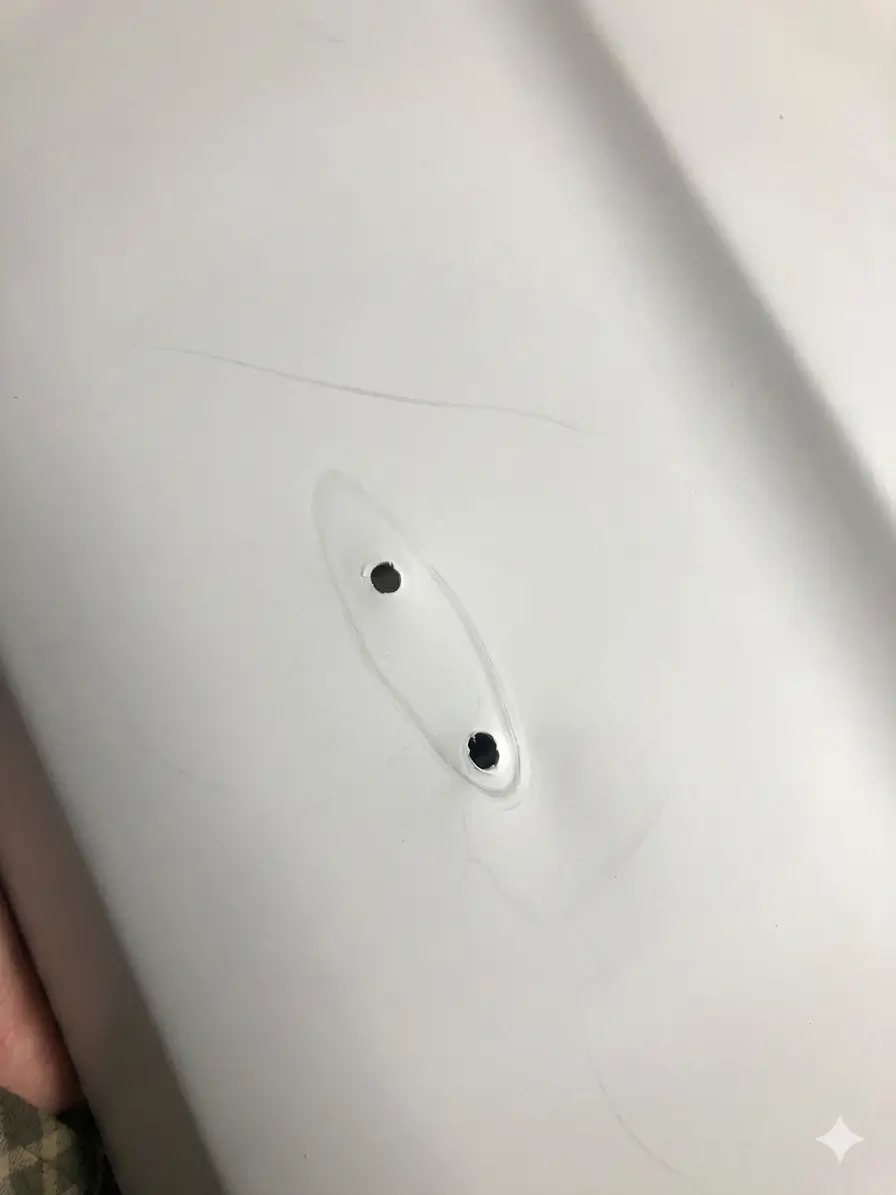
Some repair situations may involve manufacturer-permitted access procedures, but drilling should never be performed casually or without explanation and authorization.
An unnecessary opening can damage protective coatings and create a possible corrosion path if it is not properly protected and sealed. It may also make subsequent repairs more complicated.
Over-pulled or stretched metal
Uncontrolled pulling can raise the metal beyond its intended contour, creating:
- High spots
- Wavy reflections
- A distorted body line
- Additional metal tension
- A larger repair area
Correcting an over-pulled or stretched panel may be more difficult than repairing the original dent.
Paint and clear-coat damage
Incorrect adhesives, uncontrolled heat or excessive pulling force may lift weakened paint or damage the clear coat.
Paintless dent repair is intended to preserve an intact finish. If a failed repair attempt cracks or removes paint, the panel may require conventional repair and refinishing instead of PDR.
Learn more about whether PDR can damage automotive paint.
Hidden or incomplete work
Wax, rubbing compound, filler or colored material may temporarily hide an unfinished repair. Once the material is removed, the dent, scratches or surface distortion may still be visible.
Do not accept instructions to wait until the following day to examine the result. Inspect the panel under clear lighting before approving the completed work.
How Is Professional PDR Different?
Professional paintless dent repair begins with an inspection of the paint, dent geometry, panel material and available access.
Depending on the damage, a qualified technician may use behind-the-panel tools or controlled glue pulling while monitoring the panel under specialized lighting. The technician gradually moves the metal, lowers high spots and checks the surface for distortion.
Glue pulling is a legitimate PDR technique when performed with the correct adhesive, pulling force and paint evaluation. The risk comes from using it on unsuitable paint or without controlling the metal’s movement.
Learn how glue pulling differs from behind-the-panel PDR.
What Should You Do If Someone Approaches You?
If you do not want the service:
- Decline firmly
- Do not hand over your keys
- Do not allow the person to touch or begin repairing the vehicle
- Move to a safe, populated area if you feel uncomfortable
- Notify store or parking facility security if the person continues pressuring you
- Contact local law enforcement if you feel threatened
If you are interested in the offer, do not authorize immediate work. Take the provider’s information, verify the business and obtain a written or electronic estimate first.
What If a Parking Lot Repair Has Already Damaged Your Car?
Do not attempt another DIY correction immediately. Another repair attempt could further stretch the metal, damage the paint or remove evidence of what was done.
Instead:
- Photograph the panel and any repair materials
- Save messages, receipts and payment records
- Record the name, telephone number and vehicle information provided
- Obtain an assessment from a BAR-registered automotive repair business
- Request a written estimate for corrective work
- Report suspected unlicensed activity or repair violations
Frequently Asked Questions
Are all mobile dent repair services scams?
No. Legitimate mobile repair businesses exist, but the provider should have active BAR registration, verifiable business information, an estimate, proper authorization procedures and a final invoice.
Can a failed dent repair still be corrected?
Sometimes. Repairability depends on whether the metal was stretched, paint was damaged, holes were drilled or filler was applied. The vehicle must be inspected before PDR or conventional repair can be recommended.
Can someone repair my vehicle without a written estimate?
California automotive repair dealers generally must provide a paper or electronic estimate before performing repairs. The customer must authorize the work, and additional repairs also require authorization. Do not permit work that has not been described and approved.
Get a Professional Dent Evaluation in Huntington Beach

ER Collision & Auto Body Shop is an I-CAR Gold Class collision repair facility serving Huntington Beach and surrounding Orange County communities. Erik Reyna and his team bring more than 15 years of collision repair experience.
We evaluate the paint, dent geometry, panel material, previous repair attempts and tool accessibility before determining whether paintless dent repair or conventional body repair is appropriate.
If you received a questionable parking lot repair offer or someone has already attempted the repair, request a professional evaluation before additional work makes the damage more difficult to correct.