If you notice one edge of your tire wearing down faster than the rest, something in your suspension or alignment system may be out of specification.
Uneven tire wear is not just cosmetic — it often signals changes in wheel alignment geometry or suspension component wear.
Understanding what different wear patterns mean can help prevent premature tire replacement and restore stable handling. In some cases, uneven wear may also contribute to steering issues, such as a vehicle drifting left or right, which is commonly explained in why a car pulls to one side while driving.
What Is Considered Uneven Tire Wear?
Tires should wear evenly across the tread surface.
Uneven wear patterns include:
- Inside edge wear
- Outside edge wear
- One-sided wear
- Feathering across tread blocks
- Cupping or scalloping
Each pattern points to a different mechanical cause. According to AAA, tread wear on one edge of the tire typically occurs when the wheels are out of alignment.
What Causes Inside Edge Tire Wear?
Excessive inside tire wear is commonly related to:
Negative Camber
Camber refers to the inward or outward tilt of the wheel.
If camber angle becomes too negative (top of tire leaning inward), the inner tread edge carries more load, leading to accelerated wear.
Worn Suspension Components
Control arm bushings, ball joints, or springs that allow excess movement can alter alignment angles while driving.
Even if alignment appears correct statically, worn components may shift geometry under load.
Lowered Ride Height
Sagging springs or suspension modifications can change camber angles and increase inner edge wear.
What Causes Outside Edge Tire Wear?
Outer edge wear often relates to:
Positive Camber
If the top of the tire leans outward excessively, the outer tread absorbs more friction during driving.
Underinflation
Low tire pressure increases outer shoulder wear because the tire flexes more during contact.
Checking tire pressure is always the first step.
What Is Feathered Tire Wear?
Feathering occurs when tread blocks feel sharp on one side and smooth on the other.
This is typically caused by:
- Incorrect toe alignment
- Steering angle misadjustment
- Tie rod wear
Toe imbalance causes tires to scrub slightly sideways as they roll.
What Causes Tire Cupping or Scalloping?
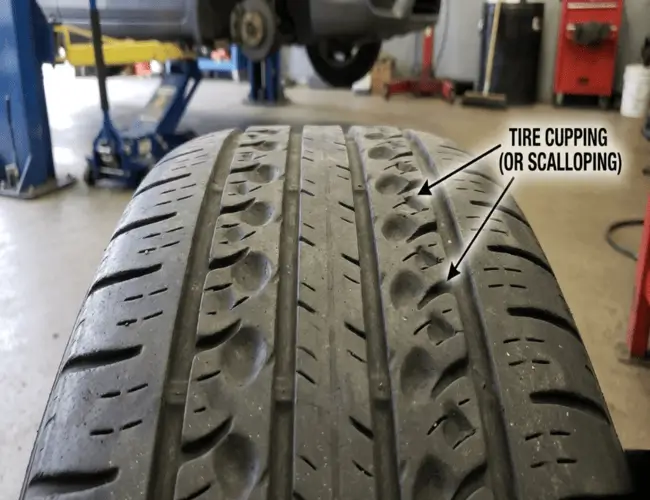
Cupping appears as alternating high and low spots around the tread.
Common causes include:
- Worn shock absorbers or struts
- Weak suspension damping
- Imbalanced wheels
- Loose suspension mounting points
Drivers may also notice knocking or clunking sounds when these components begin to loosen, which is commonly discussed in situations where vehicles develop clunking noises when driving over bumps.
When shocks fail to control bounce properly, tires lose consistent contact with the road surface.
Can Bad Suspension Cause Uneven Tire Wear?
Yes.
Worn suspension components can change alignment angles dynamically.
In many cases, resolving uneven tire wear requires inspecting and repairing worn suspension parts, which is why professional suspension repair services are often recommended when alignment angles continue to shift during driving.
As components loosen:
- Camber shifts
- Toe varies under load
- Steering becomes inconsistent
Even small geometry changes can dramatically increase tire wear over time.
Does an Alignment Fix Uneven Tire Wear?
An alignment can correct angle measurements — but it does not fix worn components.
If:
- Ball joints
- Tie rods
- Control arm bushings
- Subframe mounts
are worn, they must be repaired before alignment adjustments will hold properly.
Alignment alone cannot compensate for mechanical looseness.
Is Uneven Tire Wear Dangerous?
Uneven wear can lead to:
- Reduced traction
- Increased road noise
- Vibration at highway speeds
- Longer stopping distance
Addressing the root cause improves safety and extends tire life.
How Is Uneven Tire Wear Diagnosed?
A proper inspection includes:
- Tire tread measurement
- Alignment angle evaluation (camber, caster, toe)
- Suspension component inspection
- Steering linkage testing
- Ride height assessment
This determines whether the issue is pressure-related, alignment-related, or component-related.
During a full vehicle inspection, technicians may also recommend mechanical repair services if worn steering or suspension components are affecting wheel alignment and tire wear patterns.
Frequently Asked Questions
Why is my tire wearing on the inside only?
This is often caused by excessive negative camber or worn suspension components affecting wheel angle.
Can uneven tire wear cause vibration?
Yes. Uneven tread patterns can create imbalance and noticeable vibration at higher speeds.
Should I replace tires before fixing suspension?
It’s best to correct mechanical issues first. Otherwise, new tires may wear unevenly again.
Does tire rotation fix uneven wear?
Rotation can temporarily balance wear patterns, but underlying alignment or suspension issues must be corrected.
Suspension & Alignment Inspection in Huntington Beach
If you notice uneven tire wear, a professional suspension and alignment inspection can determine the exact cause.
At ER Collision & Auto Body Shop in Huntington Beach, we evaluate alignment geometry and suspension components to restore proper tire contact and handling stability.
Addressing uneven wear early helps protect your tires, steering response, and overall vehicle control.