A car may pull to one side because of unequal tire pressure, tire damage, wheel alignment outside specification, brake drag, worn steering or suspension components, or damage from a pothole, curb or collision.
A mild drift on a crowned road can be normal. Persistent pulling on different, relatively level roads—or a vehicle that needs repeated steering correction—should be inspected.
Start by checking the tires. If their pressure, condition and wear are acceptable, the brakes, alignment, steering and suspension should be evaluated.
What Does Car Pulling Feel Like?
Car pulling may feel like:
- Consistent drifting left or right
- Repeated steering correction
- The steering wheel tugging in one direction
- A sudden handling change during braking or after a road impact
- An off-center steering wheel does not always mean the vehicle is pulling. It can also indicate an alignment or steering-wheel centering issue.
When the symptom occurs provides an important diagnostic clue:
| When the vehicle pulls | Possible causes |
|---|---|
| Constantly while cruising | Tire pressure, tire-induced pull, alignment or suspension geometry |
| Mainly while braking | Brake drag, unequal braking force or suspension movement |
| Mainly during acceleration | Torque steer, control-arm movement or drivetrain forces |
| After a pothole or curb strike | Tire damage, bent wheel, alignment change or suspension damage |
| Only on certain roads | Road crown, crosswind or pavement condition |
Tire-Related Causes of Vehicle Pulling
Unequal Tire Pressure
A significantly underinflated or damaged tire can create additional rolling resistance and cause a vehicle to pull toward that side.
Check all four tires when cold and use the pressure listed on the vehicle’s door-jamb placard—not the maximum pressure molded into the tire sidewall.
According to AAA’s tire-safety guidance, pulling at a steady speed may indicate an underinflated or damaged tire. If tire pressure is correct, poor alignment or a brake problem may be responsible.
Tire Damage or Tire-Induced Pull
A tire can create directional pull even when inflation pressure and alignment measurements appear correct.
Possible causes include:
- Internal tire construction variation
- Belt displacement or impact damage
- Unequal tread depth
- Mismatched tire sizes or models
- Different rolling characteristics from side to side
During diagnosis, a technician may reposition suitable tires to see whether the pull changes direction. This depends on tire construction and rotation restrictions. Directional or staggered tires cannot always be moved in the same way.
Uneven Tire Wear
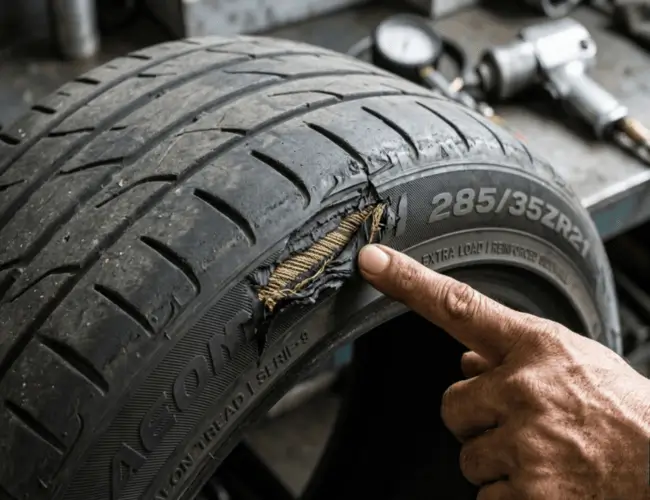
Inside-edge wear, outside-edge wear, feathering, cupping or unequal tread depth can affect directional stability.
These patterns may involve tire pressure, alignment, wheel balance or worn steering and suspension components. Installing new tires without correcting the underlying cause may allow the wear to return.
Learn more about what causes uneven tire wear.
Wheel Alignment Outside Specification
Wheel alignment describes the direction and position of the wheels relative to the vehicle and road.
Important measurements include:
- Camber: inward or outward wheel tilt
- Caster: steering-axis angle affecting stability and steering return
- Toe: whether the tires point inward or outward when viewed from above
- Thrust angle: the direction the rear wheels track relative to the vehicle centerline
Side-to-side camber or caster differences can contribute to directional pull. Incorrect toe more commonly contributes to rapid tire wear, wandering or an off-center steering wheel.
Rear alignment or thrust-angle problems can also cause improper tracking.
Alignment may change because of suspension wear, incorrect ride height, bent components, shifted mounting points or previous repairs.
An alignment can correct adjustable wheel angles. It cannot repair a loose tie rod, deteriorated bushing, damaged tire or bent control arm. Mechanical problems should be repaired before final alignment.
For inspection and repair information, visit our suspension repair service in Huntington Beach.
Worn Steering and Suspension Components
Tie Rods and Steering Linkage
Tie rods connect the steering rack to the steering knuckles. Worn inner or outer tie-rod ends can allow unwanted wheel movement.
Possible symptoms include:
- Wandering at highway speeds
- Loose or inconsistent steering
- Delayed response to steering input
- Uneven tire wear
- Knocking from the steering or suspension
A damaged steering rack, knuckle or related linkage may also affect directional stability.
Control Arms, Bushings and Ball Joints
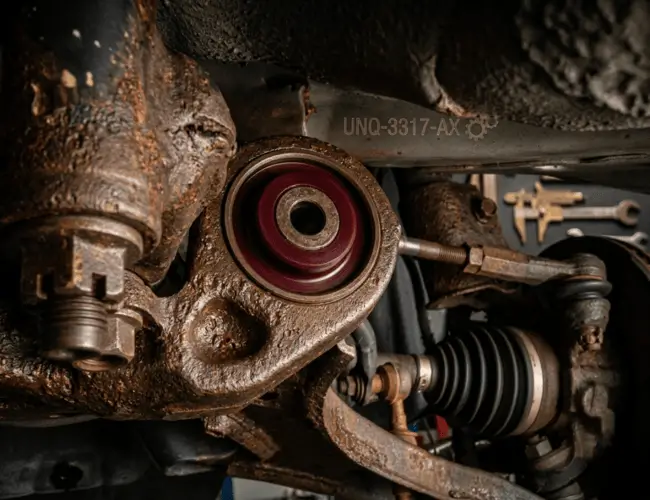
Control arms and ball joints position the wheels while allowing suspension movement. Bushings control how far the arms move during braking, acceleration and cornering.
Wear or damage can allow wheel geometry to change under load. A vehicle may therefore pull more strongly during braking or acceleration even when stationary alignment measurements appear close to specification.
The same movement may produce clunking or knocking. If pulling occurs with suspension noise, read what causes clunking over bumps.
Shocks, Struts and Mounting Points
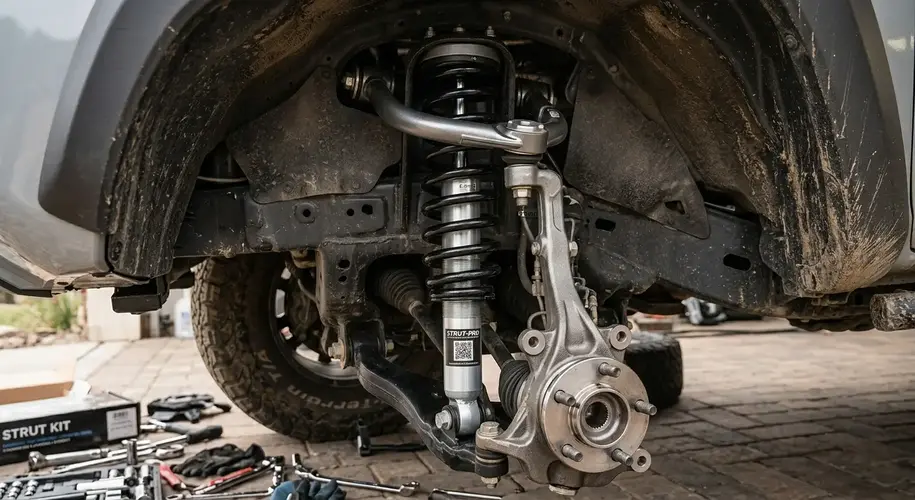
Worn shocks primarily affect damping and tire contact. They are not alignment adjustments.
Bent struts, damaged strut mounts, incorrect ride height or movement at attachment points can affect wheel geometry and steering behavior.
Learn more about the structural difference between shocks and struts.
Brake Drag or Unequal Braking Force
A sticking brake caliper, restricted brake hose or related brake problem can create resistance at one wheel.
Brake-related pulling may be strongest when the pedal is applied. A caliper that remains partially engaged can also cause pulling while cruising.
Warning signs may include:
- Pulling that increases during or after braking
- A burning smell
- Unusual brake noise
- Reduced vehicle roll
- One wheel generating substantially more heat
Do not touch a wheel or brake assembly that may be overheated. Arrange a brake inspection if brake drag is suspected.
Can Road Crown Make a Car Drift?
Yes. Roads are often crowned or sloped for water drainage, which can create mild drift. Crosswinds and uneven pavement may produce a similar sensation.
If the drift appears only on certain roads and disappears on relatively flat pavement, road design may be contributing.
Persistent pulling across different roads is more likely to involve a tire, brake, alignment, steering or suspension condition.
Can an Alignment Fix a Car That Pulls?
Alignment can correct pulling caused by adjustable wheel angles outside specification.
It will not correct:
- Tire damage or tire-induced pull
- Brake drag
- Worn tie rods or ball joints
- Deteriorated control-arm bushings
- Bent suspension or steering components
- Incorrect ride height
- Shifted mounting points
This is why alignment measurements should be considered alongside tire condition and mechanical inspection—not treated as an automatic repair for every pulling complaint.
Why Did My Car Start Pulling After a Pothole or Collision?
A wheel impact can damage the tire, bend a wheel, change alignment or damage suspension and steering parts even when little exterior body damage is visible.
Potential impact damage includes:
- Tire belt or sidewall damage
- Bent wheels
- Bent control arms or steering linkage
- Damaged struts or steering knuckles
- Wheel-hub or bearing stress
- Shifted subframes or mounting points
New pulling, vibration, tire rubbing, noise or an off-center steering wheel after an impact should be inspected promptly.
How We Diagnose Vehicle Pulling
At ER Collision & Auto Body Shop, we do not assume every pulling complaint needs an alignment. The appropriate checks depend on when the symptom occurs and whether it began gradually or after an impact.
An inspection may include:
- Verifying cold tire pressure and inspecting tire size, tread and visible damage
- Evaluating whether a tire is producing directional pull
- Checking for brake drag or unequal braking
- Inspecting tie rods, ball joints, bushings and control arms
- Checking shocks, struts, ride height and mounting points
- Measuring camber, caster, toe and thrust angle where applicable
- Inspecting for bent components or structural movement after an impact
- Road-testing the vehicle when it is safe to operate
This process distinguishes an alignment concern from tire, brake, steering, suspension or collision-related damage and helps prevent replacing parts that are not responsible for the symptom.
Frequently Asked Questions
Why does my car pull even though the alignment is correct?
A tire may be producing directional pull, or the vehicle may have brake drag, worn suspension components or geometry that changes under load. Rear thrust angle and road conditions should also be considered.
Why does my car pull only when braking?
Pulling during braking may involve a sticking caliper, restricted brake hose, unequal braking force or suspension movement under load.
Will rotating the tires fix pulling?
Rotation may change or reduce pulling when a tire is responsible. It will not repair tire damage, brake drag, worn suspension parts or incorrect alignment. Tire construction and rotation restrictions must be considered.
Is it safe to drive when my car pulls?
The urgency depends on the cause and severity. Stop driving and arrange an inspection or tow if the pull is sudden or severe, the steering feels loose, a tire appears damaged, a wheel may be overheating or the vehicle is difficult to control.
Persistent mild pulling should still be inspected promptly.
Suspension and Steering Inspection in Huntington Beach
If your vehicle drifts, wanders or requires repeated correction, ER Collision & Auto Body Shop can evaluate whether the cause involves tires, brakes, alignment, steering, suspension or impact damage.
Erik Reyna and his team bring more than 15 years of repair experience. As an I-CAR Gold Class® collision-repair facility, we also evaluate suspension and steering damage associated with potholes, curb strikes and vehicle collisions.
Call (714) 866-9453, visit 17851 Jamestown Lane, Huntington Beach, CA 92647, or request a repair estimate.