Do DIY Dent Repair Kits Actually Work?
Short Answer:
DIY dent repair kits can improve very small dents, but they rarely restore the panel completely. For a smooth, factory-level finish, professional paintless dent repair (PDR) is usually required.
If you’re comparing repair methods, see our detailed guide on paintless vs traditional dent repair.
If your goal is to maintain long-term value, it’s important to understand how proper repairs impact your car’s resale value.
When Do DIY Dent Repair Kits Work?
DIY dent repair kits may work if:
- The dent is small (coin-sized or smaller)
- The panel is flat and accessible
- The paint is undamaged
- The dent is shallow (no sharp creases)
In these cases, DIY can improve the dent—but not fully eliminate it.
When DIY Dent Repair Does NOT Work
Avoid DIY kits if:
- The dent is deep or sharp
- It’s on a body line or curved panel
- The paint is cracked or stressed
- The panel is reinforced or double-walled
These situations require professional tools and precision.
Can Your Dent Be Fixed Without Repainting?
Not all dents qualify for paintless dent repair.
Dents can typically be repaired without repainting if:
- The paint surface is intact
- The metal is not overstretched
- The dent is accessible from behind
Why DIY Dent Repair Kits Often Fail
1. Lack of Precision
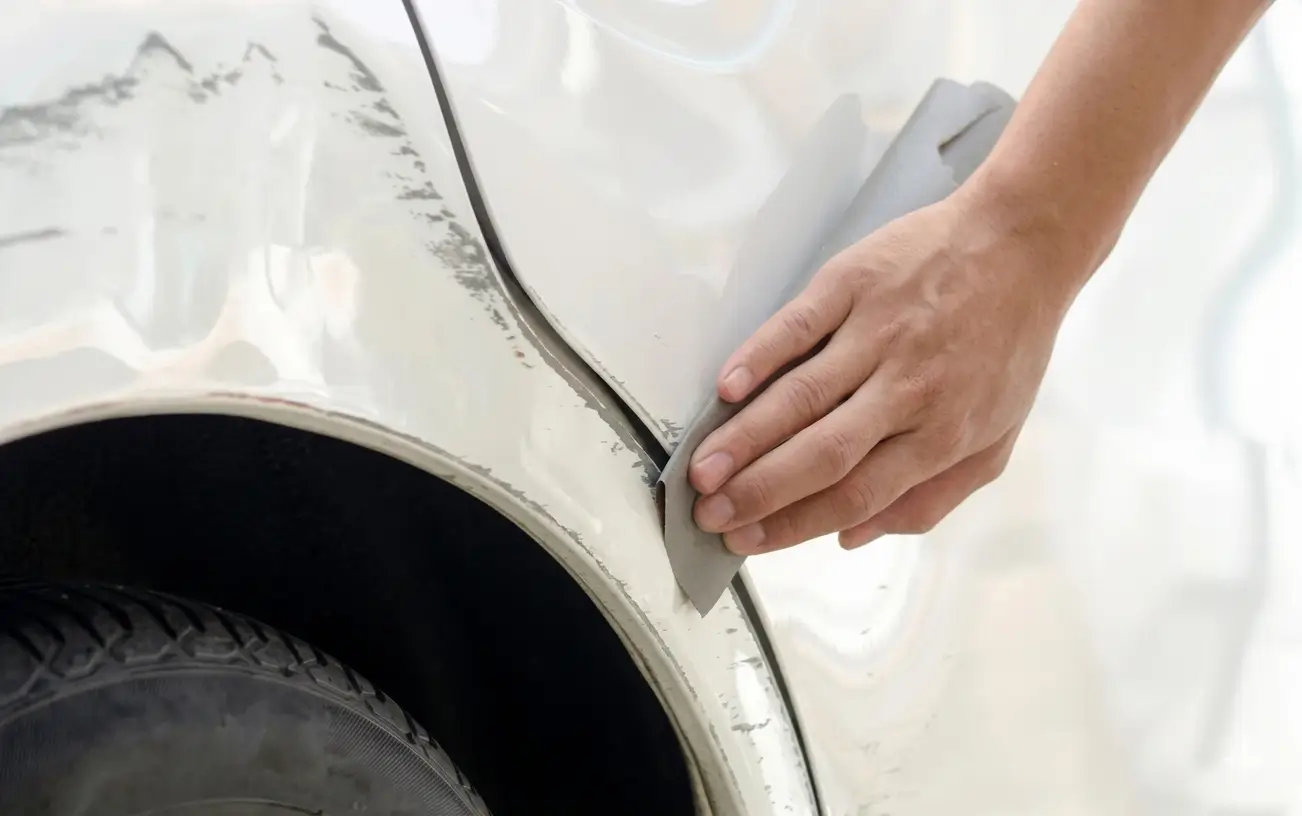
DIY kits rely only on external pulling, while professionals use controlled pushing and pulling from both sides of the panel.
2. Incorrect Force Application
Car panels have “metal memory,” meaning they return to shape only when force is applied correctly.
DIY kits often:
- Pull at the wrong angle
- Apply uneven pressure
- Fail to restore the original shape
3. High Spots & Surface Distortion
Over-pulling creates:
- Raised areas (“high spots”)
- Wavy reflections
- Visible imperfections
These defects are often more noticeable than the original dent.
4. Limited Access to the Panel
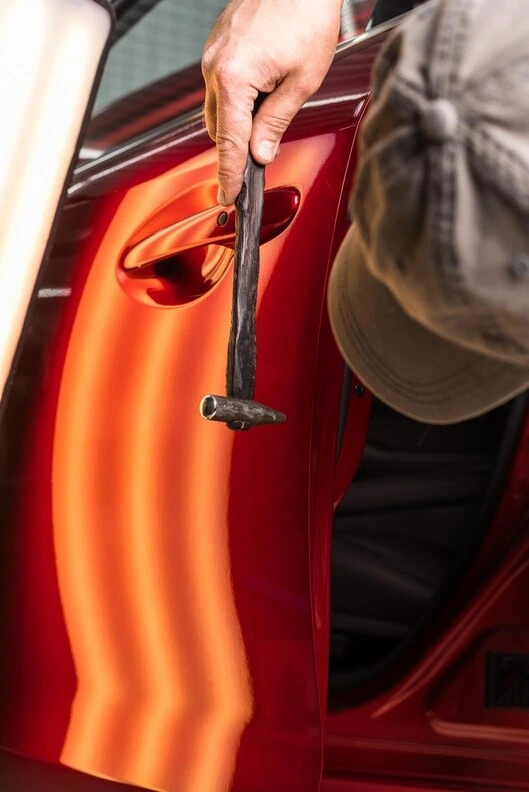
Professional PDR requires:
- Specialized rods
- Controlled lighting
- Access behind the panel
DIY kits cannot replicate this level of control.
The “90/10 Rule” (What Technicians Know)
It takes about 20% of the effort to fix 80–90% of a dent.
But the final 10–20%—the part that makes the repair invisible—requires:
- Precision tools
- Controlled technique
- Professional experience
DIY kits can often reach a “good enough” result—but not a factory-perfect finish.
This is why drivers should be cautious of unrealistic repair promises and learn how to identify parking lot dent repair scams.
Common DIY Dent Repair Mistakes
Common mistakes include:
- Pulling too hard
- Using the wrong tab size
- Applying force at the wrong angle
- Repeating pulls on the same spot
These errors can:
- Stretch the metal
- Create high spots
- Distort reflections
- Make professional repair more difficult
Why PDR Is Preferred for Hail Damage
Paintless dent repair is commonly used for hail damage because it preserves the factory finish and prevents repainting.
Learn more: Can hail damage be repaired without repainting
How Much Does Dent Repair Cost?
Dent repair costs vary depending on:
- Dent size and depth
- Location on the panel
- Repair method (DIY vs professional)
Is Professional Dent Repair Worth It?
Professional PDR is worth it if:
- The dent is visible
- You want a factory-level finish
- You want to protect resale value
DIY may be sufficient only for minor cosmetic dents.
DIY vs Professional PDR (Quick Comparison)
| Factor | DIY Kits | Professional PDR |
|---|---|---|
| Finish Quality | Partial improvement | Invisible repair |
| Risk of Damage | High | Low |
| Precision | Limited | High |
| Resale Value | May decrease | Preserved |
Can DIY Dent Repair Damage Your Car?
Yes.
Improper use of DIY kits can:
- Stretch the metal
- Create high spots
- Damage the paint
- Make professional repair more difficult
Popular DIY Dent Repair Hacks (Do They Work?)
Plunger Method
- May work on shallow dents
- Often ineffective on modern panels
Boiling Water Method
- Sometimes works on plastic bumpers
- Can damage paint if misused
Glue Pull Kits
- Can improve minor dents
- Often leave uneven results
These methods may improve appearance slightly—but rarely deliver a professional result.
The Real Difference: Appearance vs Perfection
DIY Result:
- Less noticeable dent
- Not fully corrected
Professional Result:
- Invisible repair
- Factory-level finish
The goal of PDR is not just improvement — it is complete restoration.
What’s the Best Option for Your Situation?
- Lowest cost: DIY kit
- Best appearance: Professional PDR
- Complex dent: Professional repair required
The right choice depends on your expectations, budget, and the type of damage.
Local Insight: Dent Repair in Huntington Beach
Environmental conditions in Huntington Beach & Orange County can impact dent repair results.
Heat exposure
High surface temperatures can affect glue performance in DIY kits—sometimes increasing the risk of paint damage.
Coastal air
Salt exposure makes preserving factory paint more important to prevent long-term corrosion.
Local standards
In a community known for well-maintained vehicles, visible DIY repairs often stand out.
Professional PDR ensures your vehicle is repaired correctly while maintaining its original finish.
Final Recommendation
DIY dent repair kits can improve small dents—but they are not a substitute for professional paintless dent repair.
To ensure you’re following the FTC’s best practices for choosing a reputable auto repair shop, we recommend getting a professional evaluation before DIY attempts increase your total repair costs.
If your goal is a clean, invisible result, PDR is the better option.
Get Professional Paintless Dent Repair in Huntington Beach
At ER Collision & Auto Body Shop in Huntington Beach, CA, Erik Reyna & his team (with I-CAR Gold certification & 15+ years of experience) provide:
✔ Precision dent removal
✔ Factory paint preservation
✔ Honest repair assessments
✔ Fast turnaround
Not sure if your dent can be repaired without repainting?
Get a professional evaluation before DIY attempts increase repair costs.