Paintless dent repair (PDR) is designed to preserve a vehicle’s existing finish. It generally does not damage sound factory paint when the dent qualifies for PDR and the repair is performed correctly.
However, paint damage remains possible when:
- The paint is already cracked, chipped, peeling or separated
- The panel was previously repainted or repaired with body filler
- The dent is deep, sharp or severely stretched
- Excessive heat, pressure or pulling force is used
- Glue pulling is attempted on an unsuitable finish
- Vehicle-specific repair limitations are not followed
A technician should inspect both the dent and the coating condition before deciding whether PDR can be performed safely.
How Does PDR Preserve the Existing Paint?
PDR reshapes a damaged panel without the sanding, body filler, primer and repainting normally associated with conventional dent repair.
Depending on the dent and available access, a technician may:
- Apply controlled pressure from behind the panel
- Use exterior glue-pulling techniques
- Lower raised areas with tap-down tools
- Monitor the panel under specialized lighting
- Use controlled heat when appropriate
- Refine the metal gradually until the contour is restored
These procedures retain the existing coating system instead of removing and replacing it. The paint may still be contacted by glue tabs, tap-down tools, heat or cleaning products, so technique and surface condition remain important.
When Can PDR Damage Paint?
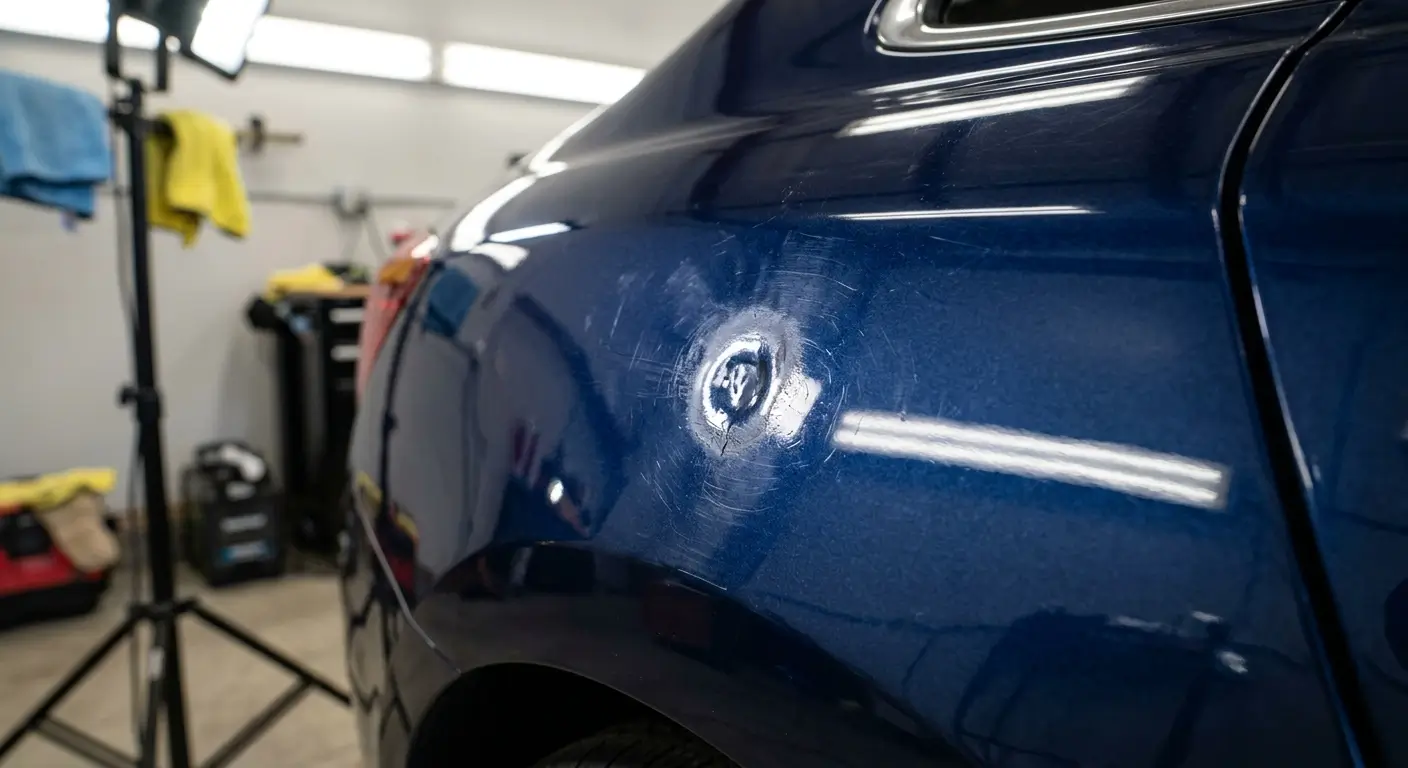
Existing cracks, chips or peeling
PDR moves the metal beneath the finish. If the paint is already cracked, chipped or separating, that movement may cause the damaged area to spread or lift.
A technician should inspect the impact point and surrounding finish for:
- Cracks or chips
- Clear-coat separation
- Peeling edges
- Exposed metal
- Paint bridging across a sharp crease
- Corrosion around the damaged area
When the coating is compromised, conventional repair and refinishing may be more appropriate.
Deep or sharply folded dents
Dent diameter alone does not determine paint risk. A broad, shallow dent may place less stress on the finish than a smaller dent with a sharp impact point.
Paint damage becomes more likely when:
- The metal is severely stretched
- The dent contains a sharp crease
- The damage crosses a pronounced body line
- The panel edge is distorted
- The impact has already fractured the coating
Some complex dents can still receive PDR, but they require a vehicle-specific inspection rather than an automatic recommendation.
Previously repainted panels
Previously refinished paint may respond differently from the original factory coating. Its adhesion, thickness, preparation quality and repair history may be unknown.
Warning signs of previous refinishing can include:
- Texture or color differences
- Overspray
- Tape lines
- Unusual coating thickness
- Body filler beneath the repair area
- Paint lifting near panel edges
A repainted panel does not automatically rule out PDR. However, the possibility of adhesion failure may be greater, particularly when exterior glue pulling is required.
Improper pressure or pulling
Excessive force can create:
- High spots
- Surface distortion
- Additional metal stretch
- Clear-coat stress
- Paint lifting or separation
Professional PDR relies on small, controlled adjustments rather than forcing the dent outward in one movement. Specialized lighting helps the technician monitor the panel’s contour and avoid overcorrection.
Can Glue Pulling Damage Paint?
Glue pulling is a legitimate PDR technique used when direct access behind a dent is limited. A temporary tab is bonded to the exterior surface and pulled in a controlled manner.
Paint risk depends on:
- Existing paint condition
- Whether the panel was previously refinished
- Adhesive and tab selection
- Surface preparation
- Panel temperature
- Pulling force
- Release technique
Glue pulling should not be performed automatically on cracked, peeling or unstable paint. Previously repainted panels require additional caution because the replacement coating’s adhesion may be uncertain.
Learn more about glue pulling versus behind-the-panel PDR.
Can Heat Used During PDR Damage Paint?
Controlled heat may be used to help manage the coating and metal during certain repairs, but there is no single temperature appropriate for every vehicle.
The safe approach depends on:
- Paint and clear-coat condition
- Panel material
- Repair history
- Dent severity
- Manufacturer procedures
- How the temperature is monitored
Uncontrolled heating can discolor, soften, blister or otherwise damage a finish. Consumer heat guns, boiling water and similar DIY methods do not provide the same control as a professionally monitored repair.
How Is Paint Evaluated Before PDR?
A professional evaluation should consider more than whether the paint “looks intact.”
The technician may inspect:
- The dent’s depth and impact point
- Cracks, chips or clear-coat damage
- Signs of previous refinishing
- Panel material and accessibility
- Metal stretch and body-line involvement
- Corrosion or exposed substrate
- The proposed repair technique
At ER Collision & Auto Body Shop in Huntington Beach, we also consider whether direct tool access, exterior glue pulling or another repair method would create unnecessary risk to the finish.
If paint stability is questionable, we explain why conventional repair may provide a more appropriate result.
For a broader eligibility assessment, see which dents can be fixed without repainting.
What Happens If Paint Damage Is Found?
The recommendation depends on the extent of the problem:
- A dent with sound paint may qualify for PDR
- A dent with minor coating concerns requires closer evaluation
- Cracked or missing paint may require refinishing after metal repair
- Severe distortion may require conventional repair or panel replacement
- Corrosion should be addressed before the area is refinished.
PDR should not be selected merely to avoid painting when the coating has already failed. The correct repair must address both the panel shape and the damaged finish.
Frequently Asked Questions
Does PDR change paint thickness?
PDR generally retains the existing exterior coating rather than sanding and replacing it, so it normally does not add refinishing material or alter exterior paint thickness.
Is PDR safe for older vehicles?
It may be, but older paint should be inspected for brittleness, fading, cracking, previous repairs and poor adhesion before work begins.
Does PDR affect the paint warranty?
Warranty coverage depends on the manufacturer, vehicle history and warranty terms. Although PDR normally retains the existing finish, confirm coverage with the applicable manufacturer or warranty provider.
Is DIY PDR safe for paint?
DIY pulling, heating or suction techniques can damage paint or distort the panel when the user cannot evaluate coating stability and metal tension. See how DIY dent-repair kits compare with professional PDR.
Get a Professional Paint and Dent Evaluation
ER Collision & Auto Body Shop is an I-CAR Gold Class collision repair facility serving Huntington Beach and surrounding Orange County communities. Erik Reyna and his team bring more than 15 years of collision-repair experience.
Before recommending paintless dent repair, we evaluate paint integrity, dent geometry, panel material, previous refinishing, tool access and applicable repair procedures.
Request a professional evaluation to determine whether your dent can be repaired while preserving its existing finish.
Further Reading (Recommended Guides)
If you want to go deeper into paintless dent repair, here are helpful resources: