Yes, a small dent can contribute to rust when the impact cracks, chips, or separates the vehicle’s protective coating and exposes the underlying metal.
In a coastal environment such as Huntington Beach, airborne salt and prolonged moisture may increase corrosion risk after that protective barrier has been compromised.
Whether the damage requires PDR, paint repair, or another method depends on the condition of both the dent and the surrounding finish.
Does Every Small Car Dent Cause Rust?
No. A dent does not automatically lead to corrosion.
Modern vehicle panels are protected by several layers that may include:
- Metal pretreatment
- Corrosion-resistant electrocoat or primer
- Color coat
- Clear coat
- Seam sealers or cavity protection in certain areas
If these layers remain intact, the metal may still be protected even though the panel has changed shape.
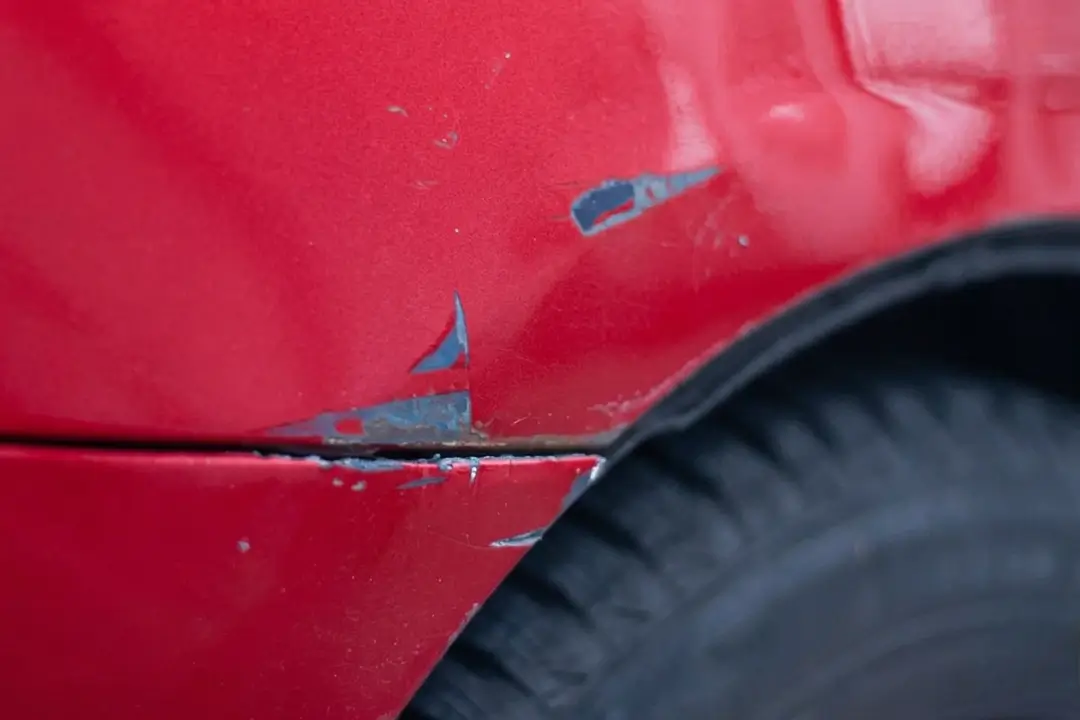
Rust risk becomes more significant when the dent includes:
- Chipped or missing paint
- Cracks around the impact point
- Exposed steel
- Paint separation or lifting
- A deep scratch through the protective layers
- Damage along a panel edge or seam
- Previous repairs with deteriorating paint
- Trapped moisture in an already damaged area
Aluminum panels do not develop iron rust, but damaged aluminum surfaces can still oxidize or experience other forms of corrosion. Panel material should be identified before recommending a repair.
Why Does Coastal Exposure Matter?
Marine air can carry chloride-containing salt particles inland. Moisture, fog, humidity, distance from the shoreline, wind direction, shelter, parking conditions, and vehicle maintenance can all influence exposure.
Chlorides do not create rust by themselves. Corrosion also requires conditions such as moisture, oxygen, exposed or insufficiently protected metal, and enough time for the reaction to develop.
A vehicle parked outdoors close to the shoreline may experience different exposure than one stored in a dry garage farther inland.
However, it is not possible to assign a universal Huntington Beach rust timeline to every dent.
Factors that can increase corrosion risk include:
- Exposed steel
- Repeated coastal moisture
- Salt accumulation
- Poor drainage
- Panel seams and crevices
- Existing rust
- Failed previous refinishing
- Delayed repair of chipped paint
The condition of the protective coating is more important than the dent’s size alone.
How Can You Tell Whether the Paint Is Damaged?
Inspect the dent in bright, indirect light and view it from several angles.
Look for:
- White or light-colored fracture lines
- Paint chips
- Clear-coat separation
- Dark exposed areas
- Bare metal
- Discoloration
- Bubbling paint
- Orange or brown corrosion deposits
- Cracking along the center or edge of a crease
A fingernail that catches on a scratch may indicate that the damage extends through part of the finish, but a home inspection cannot determine the complete depth of coating damage.
Do not press repeatedly on the dent or attempt to flex the panel. Additional movement can worsen an existing paint fracture.
How Quickly Can a Damaged Dent Rust?
There is no reliable universal answer.
Corrosion speed depends on:
- Whether steel is exposed
- Size and depth of the coating damage
- Humidity and moisture exposure
- Salt concentration
- Parking and storage conditions
- Vehicle age
- Panel material
- Existing corrosion protection
- Previous repair quality
- Cleaning and maintenance practices
Visible corrosion may appear sooner on exposed, contaminated steel than on a small area protected by primer or electrocoat. Rust may also begin in a crevice or beneath lifting paint before it becomes obvious from the exterior.
Avoid relying on fixed claims such as “two weeks near the beach” or “months inland.” The same scratch can behave differently depending on the vehicle and exposure conditions.
Can Paintless Dent Repair Prevent Rust?
PDR does not remove existing rust and does not repair cracked or missing paint.
Paintless dent repair reshapes qualifying metal panels while preserving the existing finish. It may be appropriate when:
- The paint remains intact
- The metal is not severely stretched
- The panel can be accessed safely
- The damage is limited to a repairable cosmetic dent
When the protective coating is genuinely intact, PDR can restore the panel without introducing sanding or repainting. This preserves the factory finish, but it should not be described as applying new corrosion protection.
If paint has been cracked, chipped, or separated, correcting the dent alone may not address the corrosion risk.
The damaged finish may require proper surface preparation, corrosion treatment, primer, refinishing, or another conventional repair procedure.
Learn which dents can be fixed without repainting and when paint damage changes the repair recommendation.
When Does a Dent Require Conventional Repair?
Conventional dent repair and refinishing may be more appropriate when:
- Bare steel is visible
- Paint has cracked or separated
- Rust has already formed
- The dent contains a deep fold
- The metal is severely stretched
- A panel edge or seam is damaged
- Previous body filler or failing paint is present
- The panel requires corrosion treatment
- Structural or attachment damage is involved
A technician may sometimes use PDR-related tools to reduce the dent before refinishing, but the completed repair would not be entirely paintless.
Review paintless versus traditional dent repair to understand how paint condition affects the appropriate method.
Is Touch-Up Paint Enough?
Touch-up paint may help protect a very small, properly prepared chip, but it is not a complete solution for every dent or corrosion problem.
Before applying any product, the area should be evaluated for:
- Existing rust
- Contamination
- Loose paint
- Moisture
- Exposed primer or metal
- Depth of the chip or scratch
Applying touch-up paint over rust, salt residue, moisture, or loose coating can conceal the problem without correcting it. A deep chip, spreading corrosion, lifted paint, or dent requiring metal repair should be evaluated professionally.
Touch-up paint also does not restore the shape of a dented panel.
Does Washing Help Reduce Coastal Salt Exposure?
Routine washing can help remove surface dirt and salt deposits, particularly from exterior panels, wheel openings, seams, and the underbody.
Use vehicle-safe products and methods. Avoid directing excessive pressure at loose paint, exposed seams, damaged coatings, or areas already showing corrosion.
Washing cannot reverse rust or reseal damaged paint. If a dent contains a crack or chip, cleaning should be followed by an appropriate repair assessment rather than treated as a permanent solution.
What Should You Do After Finding a Dent?
Use the following steps:
- Inspect the paint under good lighting
- Photograph the dent and surrounding finish
- Look for chips, cracks, lifting paint, or corrosion
- Avoid DIY heating, pulling, or forceful pressing
- Keep the area clean and dry when practical
- Arrange an evaluation if the finish appears compromised
- Ask whether the panel qualifies for PDR or requires refinishing
Early evaluation does not mean every dent requires immediate repainting. It helps determine whether the damage is cosmetic or whether the protective coating needs attention.
Frequently Asked Questions
Can a dent rust if the paint is intact?
A dent with fully intact, securely bonded paint is less likely to expose the metal to corrosion. A professional inspection may still be appropriate if the dent is sharp or the paint appears stressed.
Does coastal air automatically make a dent rust?
No. Coastal exposure can increase corrosion risk when metal protection is compromised, but rust also depends on moisture, oxygen, panel material, coating condition, and time.
Can PDR remove existing rust?
No. PDR reshapes qualifying panels but does not remove corrosion or replace damaged paint layers.
Can a chipped dent receive PDR?
PDR-related techniques may reshape the metal, but the complete repair will not be entirely paintless if the finish requires corrosion treatment or refinishing.
Should every small dent be repaired immediately?
Not necessarily. The urgency depends primarily on paint condition, exposed metal, existing corrosion, dent severity, and panel location.
Dent and Paint Evaluation in Huntington Beach
ER Collision & Auto Body Shop in Huntington Beach is an I-CAR Gold Class collision repair facility serving surrounding Orange County communities. Erik Reyna and his team bring more than 15 years of collision-repair experience.
We evaluate:
- Paint and clear-coat condition
- Exposed metal
- Existing corrosion
- Dent depth and shape
- Steel or aluminum construction
- Panel edges and seams
- Previous bodywork
- Appropriate repair procedures
When the finish remains intact, paintless dent repair may be appropriate.
When paint or corrosion protection has been compromised, we can explain whether conventional dent repair, surface preparation, or refinishing should be considered.
Request a professional evaluation to determine whether your dent is cosmetic or requires additional protection and repair.