Yes, many Tesla dents can be repaired using paintless dent repair (PDR) when the damage is cosmetic, the paint remains intact, and the affected panel can be reshaped safely.
However, eligibility depends on more than the Tesla name.
The technician must identify the affected panel’s material, dent depth, paint condition, tool accessibility, nearby components, and the repair limitations for that particular model and model year.
Some minor door dings and shallow dents may be repaired without sanding, body filler, or repainting. Deep creases, damaged paint, severely stretched metal, or damage involving safety-related components may require conventional repair or panel replacement.
What Makes Tesla Dent Repair Different?
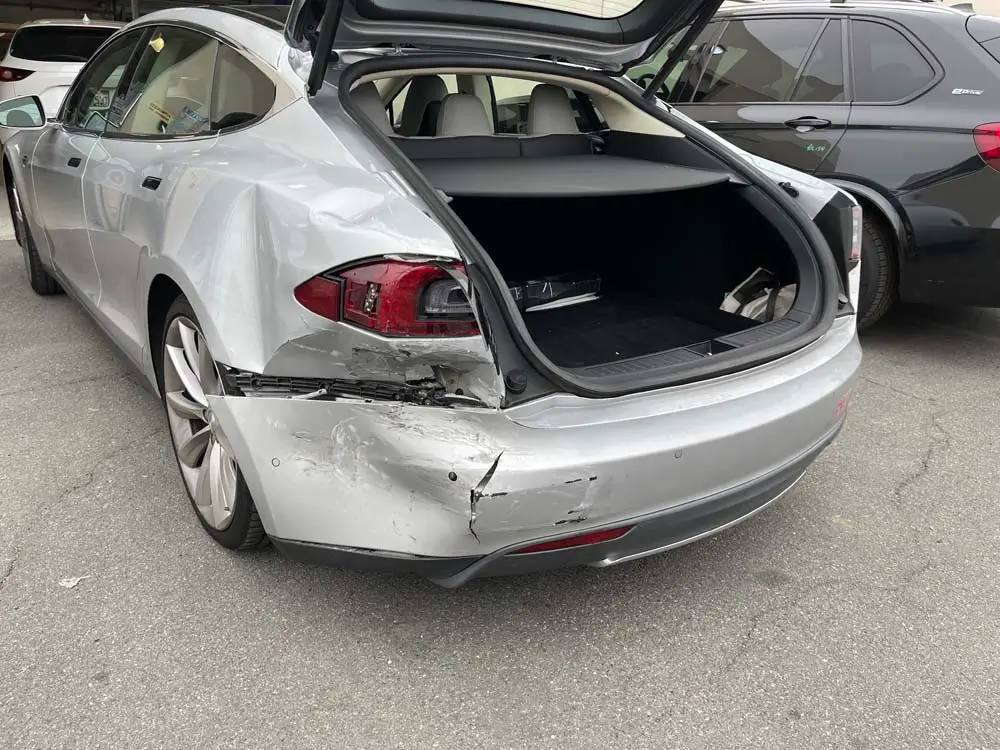
Tesla vehicles can use a combination of steel, aluminum, adhesives, reinforcements, cameras, sensors, wiring, and other electronic components. The exact construction varies across models, production years, and individual panels.
Before recommending PDR, a technician should determine:
- Which panel is damaged
- Whether it is steel, aluminum, or another material
- Whether the dent is cosmetic or connected to more extensive damage
- Whether the factory paint remains intact
- What components are located behind or near the repair area
- Whether safe access is available
- Whether Tesla’s repair information permits the proposed procedure
The repair decision should be based on the vehicle and damage—not the assumption that every Tesla panel requires the same method.
Are All Tesla Body Panels Aluminum?
No. Tesla vehicles use different materials depending on the model, model year, and panel.
Some exterior panels may be aluminum, while others may use steel or another construction. A technician should identify the material before selecting tools, pressure, access methods, or any temperature-control procedure.
Aluminum and steel respond differently during reshaping. Aluminum panels may require:
- Material-specific tools
- Small, controlled adjustments
- Careful surface-tension management
- Additional finishing time
- Temperature control only when permitted and appropriate
Manufacturer repair information should be consulted before applying heat or reshaping material near bonded areas, reinforcements, sensors, or other components.
Heat is not automatically required for every aluminum or Tesla dent.
Which Tesla Dents May Qualify for PDR?

PDR may be suitable when:
- The paint remains firmly bonded to the panel
- The dent is shallow or moderately deep
- The metal has not been severely stretched
- The panel is not punctured or torn
- The damage is limited to a repairable cosmetic area
- Safe tool access or an approved exterior pulling method is available
- Nearby components will not be compromised
- The repair is consistent with Tesla’s applicable procedures
Examples that may qualify include:
- Minor door dings
- Shopping-cart dents
- Shallow parking-lot dents
- Some hail dents
- Broad dents with intact paint
- Certain body-line dents after professional evaluation
Not every dent within these categories will qualify. Paint condition, previous refinishing, panel location, material, and metal stretch still affect the decision.
For broader eligibility guidance, see which dents can be repaired without repainting.
How Are Tesla Dents Evaluated?
A Tesla PDR evaluation may include:
- Identifying the model, model year, and affected panel
- Inspecting the paint for cracks, chips, separation, or previous refinishing
- Evaluating dent size, depth, shape, and metal stretch
- Determining the panel material
- Checking access behind the damaged area
- Identifying nearby wiring, cameras, sensors, reinforcements, adhesives, or trim
- Reviewing relevant manufacturer repair procedures
- Determining whether PDR, conventional repair, or replacement is appropriate
Specialized PDR lighting helps reveal low areas, high spots, and surface distortion that may be difficult to see under ordinary lighting.
A photograph may help with an initial assessment, but an in-person inspection is more reliable when panel material, access, previous repairs, or nearby components are uncertain.
How Is PDR Performed on a Tesla?
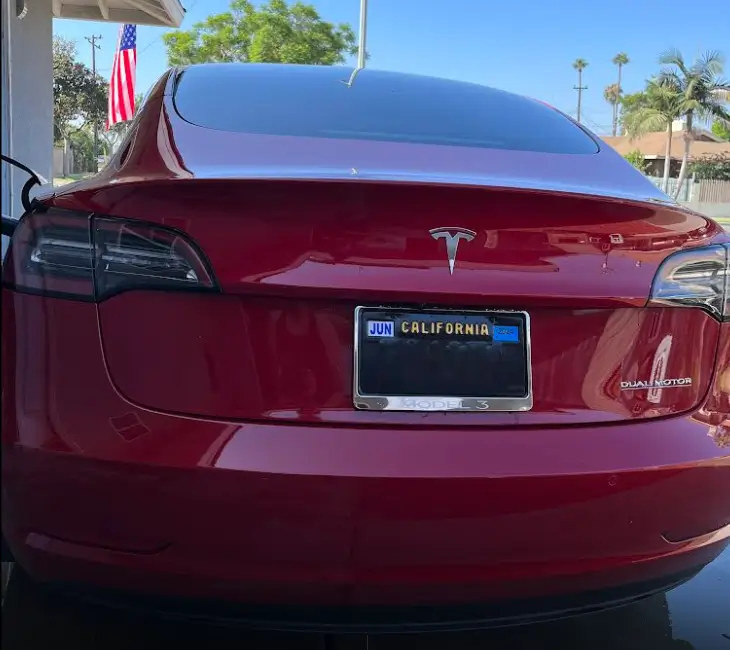
When a dent qualifies, the technician may use controlled pressure from behind the panel or an exterior glue-pulling method when rear access is restricted.
Depending on the damage, the process may involve:
- Removing permitted trim or interior components
- Accessing the back of the panel without drilling
- Applying gradual pressure with PDR hand tools
- Using controlled glue pulling from the exterior
- Lowering raised areas around the dent
- Restoring the panel’s contour under specialized lighting
- Inspecting the finish and reinstalled components
Tesla’s repair guidance for certain current models recognizes PDR as an acceptable method for cosmetic panel damage when tooling-access holes are not drilled. Vehicle-specific instructions must still be followed.
Learn more about glue pulling versus behind-the-panel PDR.
Do Tesla Cameras, Sensors, and Electrical Components Affect PDR?
They can, depending on the dent’s location and the particular vehicle.
Tesla configurations vary, so technicians should not assume that every model contains the same sensors or components behind a panel. Before removing trim or introducing tools, the repair area should be checked for:
- Cameras or related mounting areas
- Wiring and electrical connectors
- Safety-related components
- Intrusion beams and reinforcements
- Adhesive-bonded areas
- Interior trim and attachment points
PDR does not automatically require calibration.
Calibration, scanning, component replacement, or additional procedures may be necessary only when required by Tesla’s repair information, when a related component has been disturbed, or when the damage affects its operation or mounting position.
When Is PDR Not Appropriate for a Tesla Dent?
Conventional repair or panel replacement may be required when:
- The paint is cracked, chipped, or separated
- The dent contains a deeply collapsed fold
- The metal has been severely stretched
- The panel is torn or punctured
- A panel edge, mounting area, or reinforcement is distorted
- A bonded joint or factory attachment has been compromised
- Damage involves a safety-related component
- Previous body filler or unstable refinishing is present
- Safe tool access is unavailable
- Tesla’s repair procedures require replacement or another method
In some cases, metal may be reshaped before refinishing, but the completed repair would no longer be entirely paintless.
Review paintless versus traditional dent repair for a broader comparison.
Will PDR Damage Tesla Paint?
Proper PDR is intended to preserve the existing finish, but no repair method is risk-free in every situation.
The likelihood of paint damage depends on:
- Existing chips or cracks
- Previous repainting
- Dent sharpness
- Metal stretch
- Panel material
- Temperature and repair conditions
- Tools and pressure used
- Technician experience
A careful paint inspection should be completed before repair. Learn more about whether PDR can damage automotive paint.
How Long Does Tesla PDR Take?
Repair time depends on the dent—not simply the vehicle brand.
- A shallow, accessible dent may require less time than:
- A sharp body-line crease
- Damage on an aluminum panel
- A dent behind a reinforcement
- A repair requiring trim removal
- Multiple hail dents
- Damage near sensitive components
A reliable timeframe should be provided after the panel, access requirements, and repair method have been evaluated. Avoid relying on universal “same-day” or aluminum-versus-steel percentage claims.
Frequently Asked Questions
Can every auto body shop perform Tesla PDR?
A shop should understand the vehicle’s construction, panel material, nearby components, and applicable Tesla repair procedures. Ask how the damage will be evaluated and whether the shop has relevant training and equipment.
Can aluminum Tesla panels be repaired without repainting?
Some can, provided the paint remains intact, the material has not been damaged beyond repairable limits, and the proposed method follows applicable manufacturer guidance.
Can PDR repair a Tesla body-line dent?
Some body-line dents may qualify, but they require careful evaluation of crease depth, paint condition, metal stretch, panel material, and access. See whether PDR can repair body-line dents.
Does Tesla PDR always require heat?
No. Heat use depends on the material, repair conditions, nearby components, and manufacturer limitations. It should not be presented as a universal Tesla PDR requirement.
Will PDR affect Tesla resale value?
PDR preserves the existing paint when completed successfully, which may be preferable to unnecessary refinishing. The vehicle’s eventual value still depends on its overall condition, damage history, repair quality, market demand, and disclosure requirements.
Tesla Dent Evaluation in Huntington Beach
At ER Collision and Auto Body Shop in Huntington Beach, CA, we specialize in advanced paintless dent repair for Tesla vehicles.
With 15+ years of experience and I-CAR Gold Certification, Erik Reyna & his technicians provide:
✔ Precision aluminum dent repair
✔ Factory paint preservation
✔ Controlled, heat-assisted repair methods
✔ Safe handling around EV systems
Not sure if your Tesla dent qualifies for PDR?
We’ll evaluate your vehicle and recommend the best solution—before minor damage turns into a costly repair.