Can sun-damaged car paint be fixed without repainting?
Yes—if the damage is limited to oxidation and the clear coat is still intact, polishing or compounding can restore the paint. However, if the clear coat is peeling or the primer is exposed, repainting is the only reliable solution.
Sun-damaged car paint doesn’t always require a full repaint—but fixing it correctly depends on identifying the severity of the damage first.
The biggest mistake car owners make is using the wrong method. Polishing can restore faded or oxidized paint, but it will not fix peeling clear coat or deeper paint failure.
This 2026 guide will show you how to properly diagnose sun damage, choose the right repair method, and avoid costly mistakes—so you can restore your vehicle’s appearance efficiently and safely.
Signs of Sun-Damaged Car Paint (What to Look For)
Sun damage can appear in different ways depending on exposure, paint quality, and maintenance. Catching it early can mean the difference between a simple polish and a costly repaint.
Common warning signs include:
- Fading or dull color
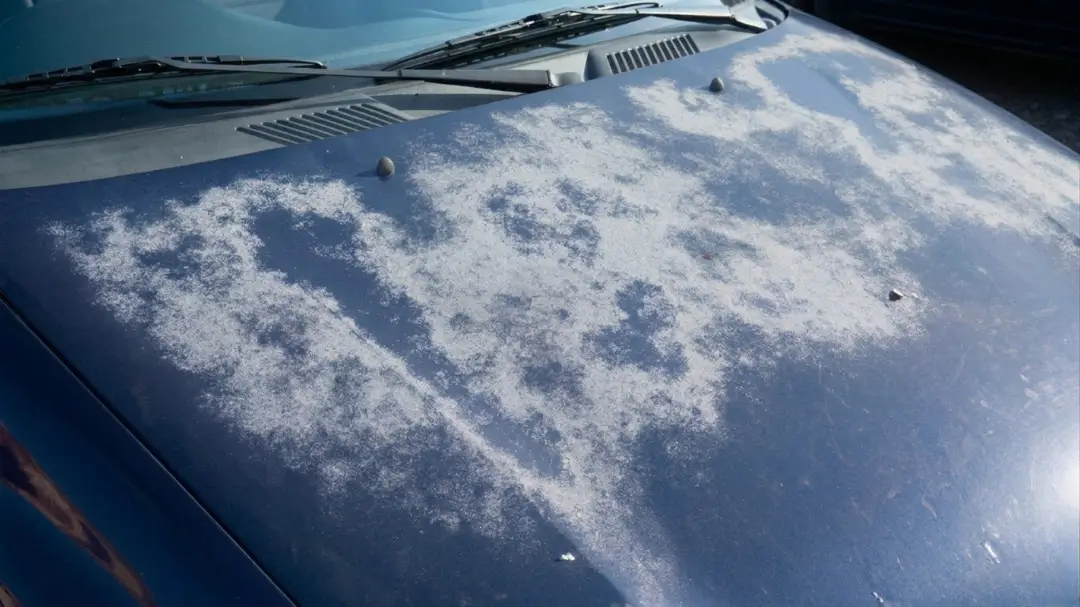
- Chalky or powdery residue (oxidation)
- Uneven gloss or patchy finish
- Paint looks better when wet but dull when dry
- White or cloudy spots
- Peeling or flaking clear coat
In coastal areas, these issues can accelerate due to environmental exposure. Learn how salt air can damage your car’s paint over time.
Pro Insight: Sun damage usually starts with oxidation. If addressed early, you can often restore the paint before clear coat failure begins.
Identify the Severity of Sun Damage (Before You Fix Anything)
Before jumping into repairs, you need to understand the condition of your paint. This determines whether DIY correction will work or if repainting is necessary.
Mild Damage (Light Oxidation)
- Fully restorable with polishing
- Surface still smooth with intact clear coat
Moderate Damage (Heavy Oxidation)
- Restorable with compound + polish
- May require multiple passes
If water temporarily restores shine, the clear coat is still present.
Pro Insight: Understanding the science helps you choose the right fix. According to the Automotive Training Centre, oxidation occurs when UV rays deplete the paint’s natural oils and resins.
Restoring that gloss requires specific compounds or polishes, depending on whether your vehicle has a conventional single-stage paint or a modern basecoat/clearcoat system.
Severe Damage (Clear Coat Failure)
- Not fixable with polishing
- Requires sanding and repainting
Extreme Damage (Paint Failure / Exposed Primer)
- Full repaint required
- No DIY correction possible
Tools & Materials (What You Actually Need)
Using the right tools makes a major difference in results and safety.
Prep & Cleaning
- pH-neutral car wash soap
- Microfiber towels
- Clay bar (removes embedded contaminants)
Paint Correction
- Dual-action (DA) polisher (recommended for beginners)
- Rubbing compound (cuts oxidation)
- Finishing polish (restores gloss)
Repair (For Severe Damage)
- Sandpaper (1500–3000 grit)
Essential for smoothing out rough edges or prepping the surface for paint. Using a sequential sanding process allows you to transition from leveling the damage to a finish smooth enough for polishing.
- Automotive primer
- Color-matched paint
- Clear coat
Protection
- Wax (short-term protection)
- Paint sealant (longer durability)
- Ceramic coating (best long-term UV protection)
Pro Insight: A DA polisher is much safer than a rotary and reduces the risk of burning through the clear coat.
Step-by-Step: Restore Sun-Damaged Car Paint
Now that you understand the damage level and have the right tools, here’s how to safely restore your paint.
1. Prepare the Surface
Thoroughly wash the vehicle to remove dirt and debris.
Use a clay bar if the surface feels rough.
Skipping this step can cause scratches during polishing.
2. Correct Oxidation
- Start with a test spot on a small section
- Apply compound using a DA polisher
- Follow with a finishing polish to restore gloss
If your microfiber towel turns slightly white during polishing, that’s oxidation being removed.
Avoid over-polishing — thin clear coat cannot be replaced without repainting.
3. Repair Peeling Clear Coat (If Present)
This is where many DIY attempts fail.
- Sand down the damaged edges to smooth transitions
- Apply primer if needed
- Apply color-matched paint
- Finish with clear coat
Many people consider budget options at this stage, but it’s important to compare quality first. Here’s a breakdown of Maaco vs a local body shop so you can choose the right repair solution.
4. Address Heavy Damage (Advanced)
For deeper oxidation:
- Use more aggressive compounding
- Wet sanding may be required (advanced users only)
Wet sanding removes clear coat — incorrect use can permanently damage paint.
5. Protect the Paint
Once restored, protection is critical:
- Wax → short-term shine (weeks)
- Sealant → mid-term protection (months)
- Ceramic coating → long-term UV resistance (best option)
Protection is what prevents the damage from returning.
Common Mistakes to Avoid
Even with the right tools, small mistakes can lead to poor results or permanent damage.
- Using polish on peeling clear coat → Will not fix the issue
- Skipping the test spot → Risk of overcorrection
- Polishing dirty paint → Causes scratches
- Using too much pressure or aggressive compounds → Can burn clear coat
- Expecting perfect DIY results → Some repairs require repainting
Pro Insight: Most DIY failures come from overcorrection — not undercorrection.
Polish vs Repaint: What’s the Right Choice?
| Condition | Polish / Compound | Repaint |
|---|---|---|
| Light oxidation | Recommended | Not needed |
| Moderate oxidation | Effective | Usually not needed |
| Clear coat peeling | Won’t work | Required |
| Deep cracks / exposed primer | Not possible | Required |
| Goal: Improve appearance | Good option | Best for perfection |
| Cost | Low ($30–$150 DIY) | High ($400–$5000+) |
Recommendation: Always attempt paint correction first if the clear coat is intact.
If you’re planning to go through insurance instead of paying out of pocket, read how to get insurance to cover car paint damage.
Common Problem Areas
Roof & Hood
- Highest UV exposure
- Most likely to fail first
Sun Spots
- May respond to light polishing
- Vinegar solution can help with mineral deposits
- Wet sanding may be required in stubborn cases
Can Sun-Damaged Paint Be Fully Restored?
- Light oxidation → fully restorable
- Moderate damage → partially restorable
- Severe damage → repaint required
The earlier you act, the better the results.
Cost to Fix Sun-Damaged Paint
- DIY correction → $30–$150
- Professional paint correction → $150–$600+
- Panel repaint → $400–$1,500+
- Full repaint → $1,500–$5,000+
These are estimated ranges, for a more detailed breakdown, check our guide on car paint cost.
How to Prevent Sun Damage
- Park in shaded or covered areas
- Use a car cover when possible
- Wash regularly to remove contaminants
- Apply wax, sealant, or ceramic coating consistently
Frequently Asked Questions
How long does it take to fix sun-damaged car paint?
It depends on severity. Light oxidation can be corrected in a few hours, while heavy damage or repainting may take several days, especially if multiple panels are affected.
Can sun-damaged car paint be repaired without repainting?
Yes—if the damage is limited to surface oxidation. Polishing or paint correction can restore gloss and color. If the clear coat is peeling or has failed, repainting is the only reliable solution.
Can ceramic coating or wax restore faded paint?
No. Neither ceramic coating nor wax can restore damaged paint. They only protect the surface after correction. Oxidation must be removed first through polishing or compounding.
How do you restore sun-damaged and faded car paint?
The process typically includes washing, decontamination, polishing or compounding to remove oxidation, and finishing with a protective layer like sealant or ceramic coating.
Can buffing remove sun damage from car paint?
Buffing can remove light to moderate oxidation if enough clear coat remains. It cannot fix peeling clear coat or deep UV damage.
How do I know if my clear coat has failed?
Signs include peeling, flaking, white or milky patches, rough texture, and little to no improvement after polishing. In these cases, repainting is required.
Why does my car paint look shiny when wet but dull when dry?
Water temporarily fills surface imperfections, making the paint appear glossy. Once dry, oxidation or clear coat damage becomes visible again.
Which cars show sun damage the fastest?
Vehicles parked outdoors, especially darker colors and red paint, tend to show fading sooner due to higher heat absorption and UV sensitivity.
Can a body shop match the original paint after sun damage?
Yes. A skilled body shop can closely match the original finish using professional color matching and blending techniques.
Should I polish my car every year?
Only when necessary. Polishing removes a thin layer of clear coat, so it should be done carefully and not as a routine unless the paint condition requires it.
Can I fix sun-damaged car paint at home?
Light oxidation can often be improved with DIY polishing. However, moderate to severe damage—especially clear coat failure—requires professional refinishing.
Is it worth fixing sun-damaged paint?
Yes. Early correction improves appearance, maintains resale value, and prevents more costly repairs later.
What is the best product for sun-faded car paint?
There’s no one-size-fits-all product. Light oxidation may need a polish, heavier damage may require a compound, and failed clear coat requires repainting—not just products.
When to Seek Professional Help
You should consult a professional if:
- Clear coat is peeling extensively
- Paint is cracked or exposed
- Polishing does not improve the finish
- You want a factory-level finish
If the damage goes beyond what DIY correction can safely fix, professional refinishing ensures proper surface preparation, accurate color matching, and long-term durability.
At ER Collision & Auto Body Shop in Huntington Beach, CA, Erik Reyna and his team bring over 15+ years of experience along with I-CAR Gold Certification, offering expert paint correction and refinishing services to restore your vehicle’s appearance properly and safely.
Besides car painting, shop is offering full collision repair services including insurance claim, bumper & glass repairs.