A windshield defogger may stop clearing the glass because of incorrect settings, weak airflow, poor heat output, an AC dehumidification problem, or excess moisture inside the vehicle. The first step is identifying whether condensation is inside or outside the windshield.
Most front windshield defoggers use the vehicle’s heating, ventilation and air conditioning system. A problem clearing the glass does not automatically mean the AC compressor has failed or the system needs refrigerant.
At ER Collision and Auto Body Shop in Huntington Beach, car AC diagnostics and repair can help investigate climate-control problems that affect cooling and windshield clearing.
If You Cannot See Clearly, Stop Driving
Pull over safely if condensation obstructs your view. Clear the windshield before continuing; a small clear patch is not enough for safe visibility.
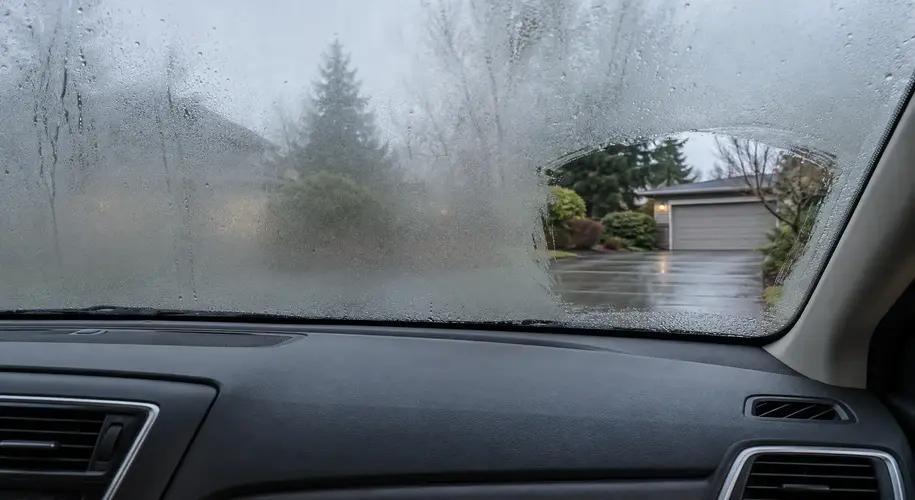
For condensation inside the glass:
- Select the front windshield defrost or maximum-defrost setting.
- Increase the fan speed.
- Select warm air, following the vehicle’s instructions.
- Enable AC if the system does not activate it automatically.
- Select outside air rather than recirculation, unless the vehicle controls this automatically.
Many vehicles coordinate fan speed, air distribution, fresh-air intake, and AC requests through maximum-defrost mode. Follow your owner’s manual because the controls and operating limits vary by vehicle.
Is the Fog Inside or Outside the Windshield?
The location of the condensation changes what will help.
| What you notice | Likely situation | What to do first |
|---|---|---|
| Wipers clear the moisture | Condensation is outside | Use the wipers and reduce excessive cooling of the windshield |
| Wipers do not clear it, but the interior surface is misted | Condensation is inside | Use front defrost, suitable warmth and outside air |
| Interior fog returns repeatedly | Moisture remains in the cabin or clearing performance is inadequate | Check settings, airflow and cabin dampness |
| A persistent film appears with a sweet smell | A coolant leak may be involved | Arrange an inspection rather than treating it as ordinary condensation |
On humid days, very cold glass can collect condensation on its outside surface. Turning the AC colder may make that situation worse.
Match the Symptom to the System
| Defogger symptom | Start by checking |
|---|---|
| No airflow from any cabin vent | Blower power supply, motor, controls and related wiring |
| Weak airflow from all vents | Cabin filter, air intake and blower operation |
| Strong dashboard airflow but little at the windshield | Air-distribution controls, mode door or ducting |
| Strong airflow that stays cold after warm-up | Heating system, temperature controls and coolant circulation where applicable |
| Warm airflow but slow clearing | AC dehumidification, fresh-air operation and excess cabin moisture |
| Fan works only at certain speeds | Blower resistor, control module or related electrical faults |
These patterns help direct testing. They do not confirm which component needs replacement.
At our Huntington Beach shop, we compare airflow from the dashboard and windshield outlets to help distinguish a blower problem from an air-routing fault.
Common Causes of a Windshield Defogger Not Working
1. The Settings Are Trapping Moisture Inside
Recirculation can retain moisture from passengers, wet clothing, and damp carpets. For interior condensation, use the windshield-clearing settings described above and allow automatic defrost controls to manage fresh-air intake where fitted.
2. Airflow Is Restricted or the Blower Is Not Working Properly
The defogger needs sufficient air moving across the glass.
A clogged cabin filter or blocked fresh-air intake can restrict airflow. If the fan is silent, intermittent or available only at certain speeds, an electrical or blower-control problem may be involved.
HELLA’s interior-blower guidance explains that blower-speed problems can involve the motor, resistor, or control module. A fan that works at only certain speeds therefore needs electrical and blower-control checks.
Inspect or replace the cabin filter according to the vehicle’s procedure. Do not assume a filter replacement will solve a blower or air-distribution fault.
3. Air Is Not Reaching the Windshield Vents
If the dashboard vents blow strongly but the windshield vents receive little air, the problem may involve airflow routing.
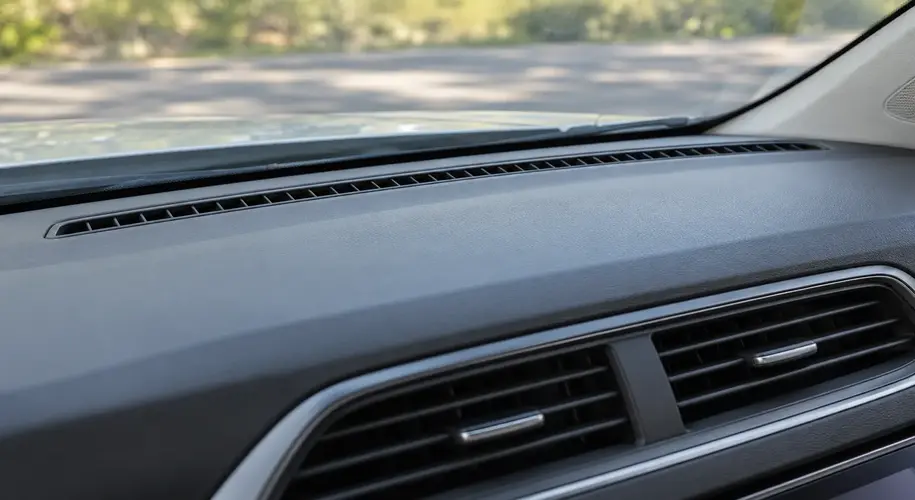
Possible causes include:
- A mode-door actuator or linkage fault
- A vacuum-control fault on systems that use vacuum-operated doors
- Disconnected or damaged ducting
- A climate-control command or calibration problem
A blend door generally controls air temperature, while a mode door controls where air travels. Identifying the affected function helps avoid replacing the wrong actuator.
4. The Heater Is Not Warming the Air
Some delay is normal while a conventional engine warms up. However, air that remains cold after normal operating temperature is reached requires investigation.
On vehicles using engine coolant for cabin heat, possible causes include low coolant, restricted heater-core flow, a thermostat problem or a heater-control fault. A temperature-door fault can also prevent warm air from reaching the vents.
Electric vehicles and some hybrids use different heating arrangements, so diagnosis must match the vehicle.
Check coolant only when the engine is completely cool and according to the owner’s manual. If an overheating warning appears, stop safely and address that warning first.
5. The AC Is Not Removing Moisture Effectively
A refrigeration or compressor-control fault may reduce moisture removal when operating conditions allow AC use.
However, low outside temperatures can also restrict compressor operation normally. Persistent fogging therefore requires assessment of airflow, heating, cabin moisture, and AC performance—not an automatic recharge.
For an explanation of automatic AC operation during defrost and normal low-temperature restrictions, see our guide to using car AC in winter.
6. Excess Moisture Keeps Returning
Even a functioning defogger may struggle with persistent cabin dampness.
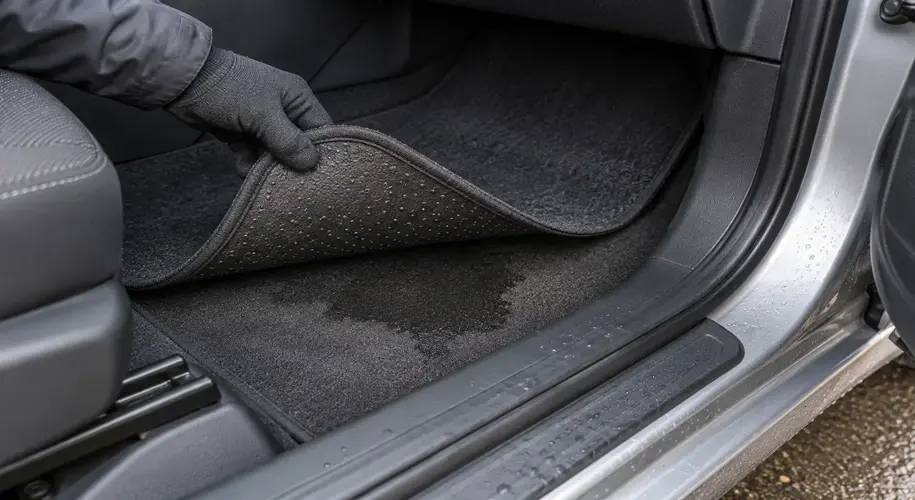
Look for wet floor mats, damp carpets, water entering around seals, or drainage problems. Remove wet items and have recurring water entry investigated.
A heater-core leak needs particular attention. Nissan’s heater troubleshooting guide lists falling coolant level, interior window fog or film, and a sweet cabin smell as possible signs of heater-core trouble. These clues warrant inspection; they do not confirm a heater-core leak by themselves.
What to Record Before Your Inspection
At our Huntington Beach shop, we ask drivers whether airflow is weak, the air stays cold, or the carpets feel damp, because persistent windshield fogging can involve more than the AC system.
Tell the technician:
- Whether condensation forms inside or outside the windshield.
- Whether the problem occurs during rain, cold starts, or humid weather.
- Whether air reaches the windshield vents and becomes warm.
- Whether every fan speed works.
- Whether carpets are damp or a film repeatedly forms on the glass.
- Whether you notice a sweet smell or have observed coolant loss.
These details help distinguish a clearing-system fault from recurring moisture inside the vehicle. Do not open refrigerant lines or add refrigerant solely because the windshield fogs.
For routine cabin-filter care and airflow checks, see our car AC maintenance guide.
Frequently Asked Questions
Why Does Warm Air Blow but the Windshield Stay Foggy?
Warm air may not clear the glass effectively if airflow is weak, recirculation retains moisture, or the cabin is unusually damp. AC dehumidification may also need checking.
Is the Rear Defogger the Same System?
Usually not. Rear-window defoggers commonly use an electrical heating grid, while the front windshield usually relies on HVAC airflow. Some vehicles also have electrically heated front glass.
How Much Does Defogger Repair Cost?
The price depends on whether the fault involves a filter, blower controls, an actuator, heating components, water entry, or the refrigerant circuit. Our car AC repair cost guide provides planning references for AC-related work. Heating, blower, and water-entry repairs require their own estimates.
Get Help With Persistent Windshield Fogging
If the windshield repeatedly fogs or airflow does not reach the glass, arrange an inspection. If visibility becomes obstructed while driving, pull over safely before continuing.
Owned by Erik Reyna, who has more than 15 years of automotive repair experience, ER Collision and Auto Body Shop in Huntington Beach can assess your climate-control symptoms and explain the recommended next steps.
Request an inspection and describe when the fogging occurs, which settings you use, and whether you notice weak airflow, damp carpets, or unusual odors.