Car insurance generally does not cover worn brake pads, routine rotor replacement, or other maintenance. It may cover brake-system damage caused by an accident or another covered event. The cause of the damage, your coverage, and the policy’s terms determine whether the repair qualifies.
For Huntington Beach drivers, the key question is whether the brakes need ordinary maintenance or were damaged in a covered loss.
If your brakes feel unreliable, arrange inspection and towing as needed. Resolving the insurance question should not delay addressing a safety concern.
Does Insurance Cover Worn Brake Pads and Rotors?
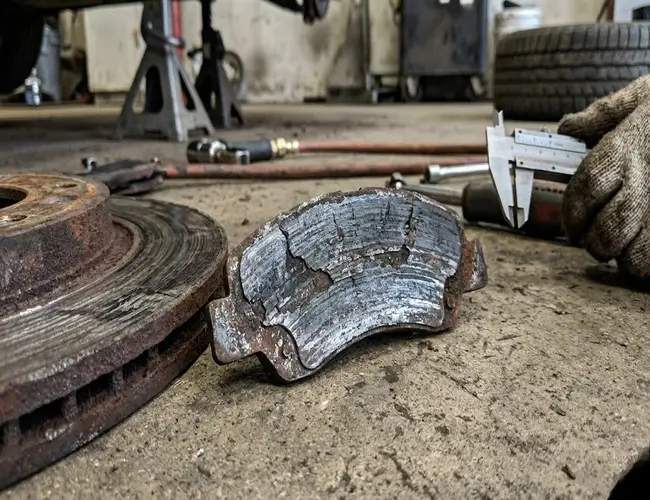
Generally, no. Brake pads wear through normal use, and rotors may require service or replacement as they wear. Standard auto insurance usually excludes these maintenance costs.
A repair recommendation alone does not establish coverage. Ask the shop to explain what failed, what caused the problem, and whether the findings indicate ordinary wear or damage from a particular event.
If noise prompted your visit, our guide to why brakes squeak explains why squeaking alone does not confirm worn pads or accident damage.
If the work is routine maintenance and you will be paying yourself, our guide to brake repair costs and comparing estimates explains what to check in the parts, labor, and additional charges.
What If the Brakes Were Damaged in an Accident?
Brake-system repairs may qualify when a covered collision caused the damage. Depending on responsibility and available coverage, the claim might involve your collision insurance or another driver’s liability insurance.
However, a brake problem discovered after an accident is not automatically accident-related. The inspection needs to establish the connection.
Ask the repairer to document:
- Which component is damaged.
- What the inspection found.
- How the findings relate to the reported impact.
- Whether existing wear also contributes to the repair.
- What additional inspection or disassembly is needed.
Describe the timing accurately. “The pedal changed immediately after the impact” is useful information when true; it should not replace a diagnosis.
If shaking began after the collision, our guide to brake vibration when stopping explains the possible causes and diagnostic checks. The timing and inspection findings both matter when assessing whether the damage relates to the accident.
What If Brake Failure Caused the Accident?
The failed component and the resulting crash damage are separate coverage questions.
A worn or failed brake component may be excluded as maintenance or mechanical breakdown, while resulting collision damage may be considered under collision coverage. Do not assume that excluding the brake repair automatically excludes every part of the claim.
Responsibility also needs investigation. Progressive’s explanation of single-vehicle accidents notes that a manufacturer defect or incorrect brake installation can affect who may be responsible for the crash.
Tell the insurer what happened without guessing at the cause. Keep maintenance records, recent brake-service invoices, photographs, and inspection findings. Ask how any potentially relevant removed parts should be preserved before they are discarded.
My Brakes Started Grinding After Collision Repairs-What Should I Do?
Report the symptom promptly to the repairer and insurer. Explain when it began, whether it occurs during braking, and whether stopping performance or pedal feel changed.
Request an inspection and written findings rather than accepting an unsupported assumption in either direction. If braking is affected or grinding persists, arrange professional assistance before continuing to drive.
Will Insurance Pay for OEM Brake Parts?
OEM parts are supplied through the vehicle manufacturer, while aftermarket parts come from other manufacturers. Insurance approval does not automatically mean every replacement will be OEM.
Payment depends on the policy, any applicable OEM endorsement, the repair requirements, and the proposed alternative.
Progressive’s explanation of aftermarket parts and insurance notes that aftermarket quality varies and that choosing OEM parts can sometimes leave the owner paying a price difference. Confirm the proposed parts and any additional payment before authorizing work.
Before approving the work, ask:
- What brand, product line, and part number are proposed?
- Are the parts appropriate for this vehicle and brake package?
- Does the shop identify a specific concern with the proposed alternative?
- Has the insurer reviewed supporting documentation?
- What amount, if any, would I owe for my preferred parts?
Our OEM-versus-aftermarket parts guide explains the broader comparison.
Can the Insurer Require a Particular Huntington Beach Repair Shop?
The California Department of Insurance’s guidance on choosing an auto repair shop explains that an insurer cannot require a particular shop, although recommendations are permitted under specified conditions.
Choosing your shop and obtaining agreement on repair costs are related but separate matters. Confirm the estimate, authorized work, and any unresolved payment difference before repairs begin.
What If the Insurer Calls It Wear and Tear?
Ask for the decision and its basis in writing. Clarify whether the disagreement concerns coverage, the cause of damage, the proposed parts, or the repair price.
Then compare the insurer’s explanation with the shop’s findings:
| Point of disagreement | Useful next step |
|---|---|
| The problem is considered ordinary wear | Request findings explaining wear versus event-related damage |
| A component was omitted from the estimate | Ask whether additional documentation supports a revised estimate |
| The proposed part is disputed | Request the specific fit, specification, or repair-procedure concern |
| The approved amount differs from the shop’s price | Ask both parties to identify the disputed line items |
New documentation may support reconsideration, but submitting it does not guarantee approval.
For unresolved insurer-handling concerns, the California Department of Insurance provides consumer assistance.
What Documents Should You Request Before Approving Repairs?
Keep a clear record of what is proposed, approved, and completed:
- Written estimate: Components, parts, labor, and diagnostic charges.
- Inspection findings: The condition identified and why repair is recommended.
- Insurance correspondence: Approved items, disputed items, and coverage explanations.
- Repair authorization: The work you approved and associated charges.
- Final invoice: Work completed and parts supplied.
- Warranty information: Applicable parts and labor coverage.
California’s Bureau of Automotive Repair explains estimate, authorization, and invoice requirements in its repair documentation guidance. Insurer approval should not be confused with your authorization for the shop to perform work.
Should You Wait for Insurance Approval Before an Inspection?
Ask the insurer and shop how inspection charges, disassembly, and any required reinspection will be handled. Agree on those charges before authorizing the work.
Avoid assuming that paying for repairs first guarantees reimbursement. Equally, do not continue driving with unreliable brakes while waiting for a claim decision.
Ask about safe transportation and how the vehicle can be inspected while preserving relevant evidence.
Brake Inspection and Repair in Huntington Beach
At ER Collision and Auto Body Shop, Erik Reyna’s team with 15+ years of automotive repair experience provides brake inspections and repairs in Huntington Beach.
When requesting help, provide your vehicle’s year, make, model, symptoms, recent repair history, and whether the concern followed an accident. Inspection findings can help establish the repair scope; insurance payment depends on the applicable coverage and claim decision.
If stopping performance is reduced, the pedal sinks, or the vehicle is difficult to control, stop safely and arrange towing.