To maintain your car’s AC, follow the cabin-filter service schedule, check accessible airflow openings for debris, and arrange an inspection if cooling or airflow changes. Refrigerant service should follow the vehicle’s requirements and inspection findings—not an automatic annual top-off.
These checks support airflow and help identify developing problems, but they cannot prevent every leak or component failure.
Check and Replace the Cabin Air Filter
Check and replace the cabin air filter according to your owner’s manual. Dusty driving conditions or debris buildup may justify earlier inspection.
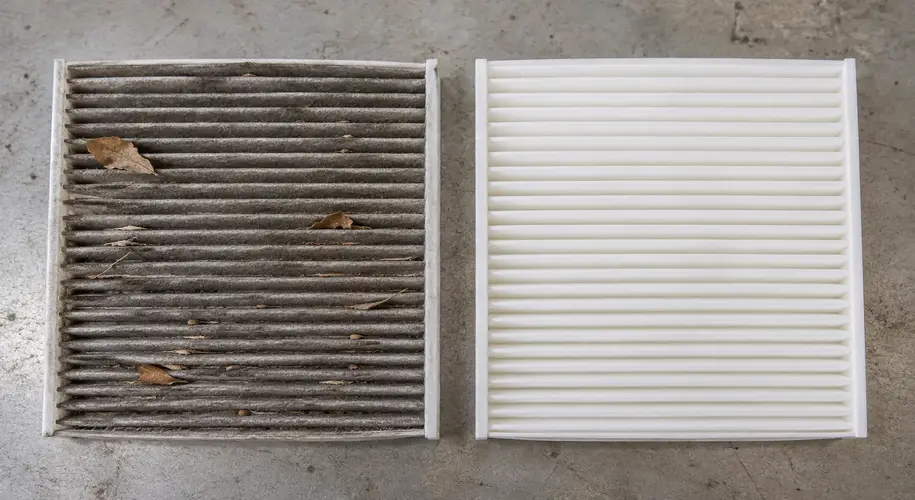
A restricted filter reduces the amount of air reaching the cabin. If airflow is weak, checking the filter is a useful starting point; replacing it does not repair a refrigerant leak or compressor fault.
During cabin-filter inspections, we check how the filter sits in its housing as well as its condition. We also look for debris around the housing before installing the replacement.
Inspect the Condenser’s Airflow Path
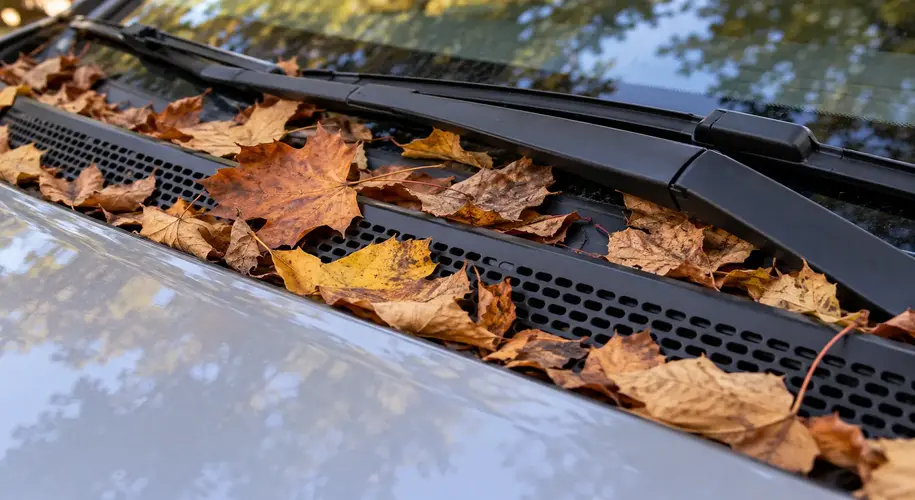
With the vehicle off and cool, look for leaves or debris blocking the visible airflow path through the grille. Do not remove guards or reach near cooling fans.
The condenser releases heat to outside air, so blockage or damaged fins can affect cooling. Have damage or difficult-to-reach debris assessed professionally. Avoid high-pressure washing or tools that can bend the fins.
If cooling remains weak after blockage has been addressed, arrange an inspection.
Follow the Vehicle’s Guidance for Year-Round AC Use
Follow your owner’s manual for AC use during colder months; there is no single weekly running schedule for every vehicle.
Some manufacturers recommend periodic operation to circulate refrigerant and oil. Some vehicles also use AC automatically during demisting, while low outside temperatures may limit compressor operation.
For more detail on dehumidification, automatic defrost operation, and low-temperature restrictions, see our guide to winter AC use and cold-weather limits.
When to Arrange an Inspection
Arrange an assessment if cooling becomes persistently weaker, airflow drops, or new abnormal noises develop.
If a cooling problem has already appeared, see why car AC blows warm air for symptom patterns and possible causes.
Avoid Unnecessary Refrigerant Top-Offs
Do not treat refrigerant top-offs as routine maintenance. Adding refrigerant does not repair a leak, and an incorrect charge can impair cooling. If performance declines, arrange an assessment before adding refrigerant.
The EPA’s vehicle AC servicing requirements explain that technicians performing paid AC service must hold Section 609 certification and use approved refrigerant-handling equipment.
What You Can Check—and What Needs Professional Service
Use the table below to distinguish routine owner checks from work that requires professional assessment.
| Owner checks | Professional assessment |
|---|---|
| Follow the cabin-filter inspection and replacement schedule | Investigate persistent airflow restrictions |
| Note changes in cooling, airflow, or noise | Diagnose refrigerant, compressor, and control faults |
| Look for visible debris without disassembly | Assess condenser damage and cooling-fan operation |
| Follow the owner’s climate-control instructions | Perform refrigerant recovery and charging when needed |
Inspection findings should determine whether the vehicle needs refrigerant service, further testing or replacement parts.
If an inspection identifies a fault, our car AC repair cost guide explains the difference between diagnostic, recharge, and component-replacement expenses.
Common Car AC Maintenance Questions
How Often Should I Replace My Cabin Air Filter?
Follow the inspection and replacement schedule in your owner’s manual. Dusty conditions or visible debris may justify checking it sooner.
Should I Run My Car AC During Winter?
Follow your vehicle’s instructions. Some manufacturers recommend periodic operation, and some vehicles use AC automatically during demisting. See our winter AC guide for operating considerations and cold-weather limits.
Should I Schedule an AC Inspection Before Summer?
Consider an inspection before hot weather if cooling has weakened or you have an unresolved AC concern. If the system works normally, follow the vehicle’s maintenance schedule.
Need Help With Car AC Maintenance in Huntington Beach?
If you are unsure which maintenance items are due, ER Collision and Auto Body Shop can assess cabin airflow, filter condition, and visible condenser condition as part of a car AC inspection.
Request an inspection and share your vehicle’s maintenance history and any changes you have noticed.