It’s one of the most common maintenance questions we hear — and it’s also one of the most misunderstood.
Some people still believe every 3,000 miles is mandatory. Others say 5,000 or 7,500 miles is fine. Many newer vehicles running full synthetic oil can safely go 10,000 miles or more between services.
So what’s actually correct?
The honest answer is: it depends on your vehicle, your oil type, and how you drive.
At ER Collision and Auto Body Shop in Huntington Beach, we’ve serviced vehicles for over 15 years. In our shop, we regularly see engines develop premature wear simply because oil intervals were stretched too far under heavy traffic and short-trip driving conditions.
If you’ve ever wondered what long-term neglect can do internally, here’s a closer look at what happens if you skip car oil changes.
That’s why we verify manufacturer oil specifications, confirm the correct viscosity grade, and consider real-world driving habits — not just a mileage sticker — before recommending service.
Why the Old 3,000-Mile Rule Isn’t Universal Anymore
Years ago, conventional oil and older engine designs required frequent changes.
Modern engines are built with tighter tolerances, cleaner combustion systems, and are often engineered specifically for synthetic oil.
Today, most manufacturers recommend:
- 5,000–7,500 miles for many vehicles
- Up to 10,000 miles for certain models using full synthetic oil
However, those intervals assume normal driving conditions — not constant stop-and-go traffic, coastal humidity, or frequent short trips.
What Actually Determines Your Oil Change Interval?
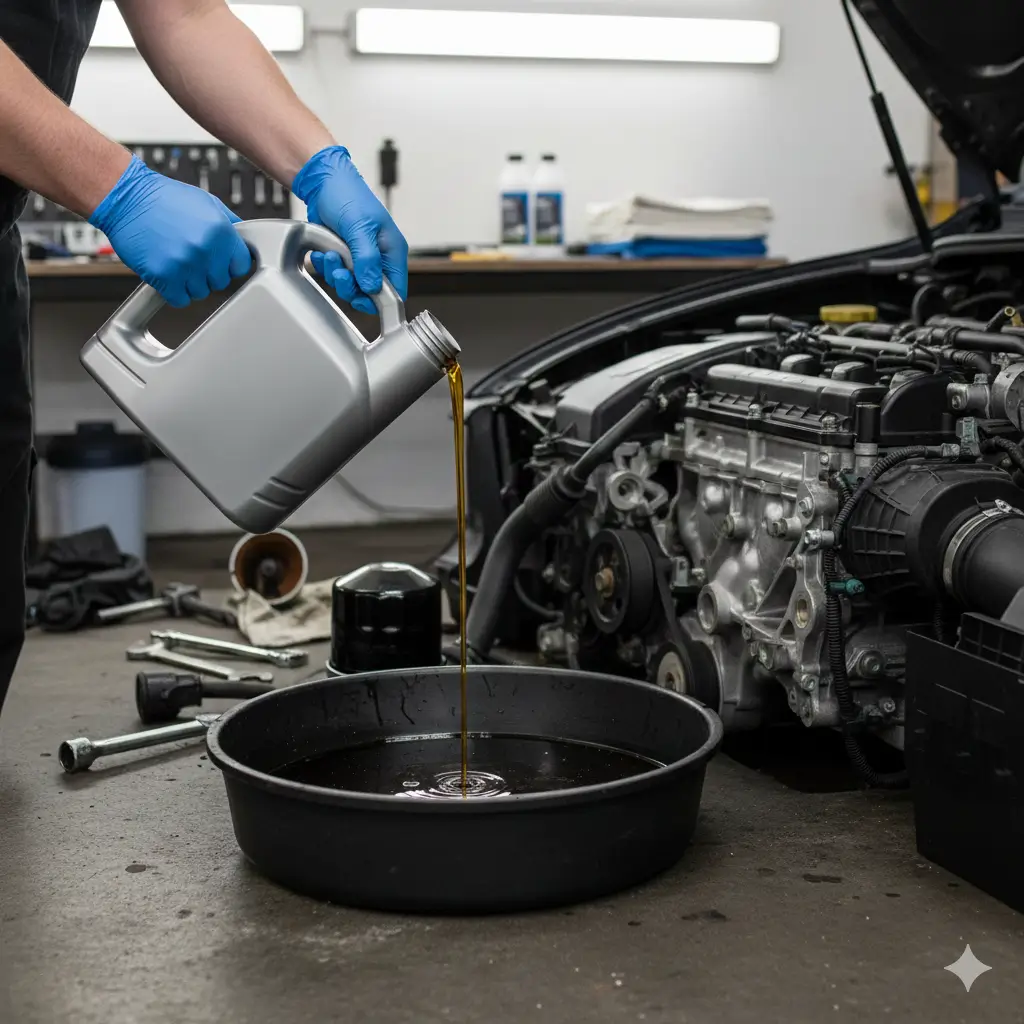
Manufacturer Specifications
Your owner’s manual is the primary reference point. It specifies:
- Correct oil viscosity (such as 0W-20 or 5W-30)
- Required oil type
- Recommended service interval
Using the wrong oil grade or ignoring intervals can increase engine wear and potentially affect warranty coverage.
When performing a car oil change in Huntington Beach, we confirm oil capacity, viscosity, and manufacturer interval data before every service to ensure proper engine protection.
Driving Conditions (Severe vs Normal)
Many drivers fall into “severe driving conditions” without realizing it.
Severe conditions include:
- Frequent short trips under 10 minutes
- Stop-and-go traffic
- Extended idling
- High ambient temperatures
- Towing or hauling
In Southern California traffic, engines often run hot while airflow is limited. Under these conditions, oil breaks down faster due to increased thermal stress and oxidation.
We often recommend slightly shorter intervals for drivers who primarily operate in heavy traffic or short city routes.
Oil Type: Synthetic vs Conventional
Full synthetic oil offers:
- Greater resistance to heat breakdown
- Improved cold-start flow
- Reduced sludge formation
- More stable viscosity under stress
Conventional oil can still protect properly — but typically requires shorter change intervals.
The correct oil type depends on manufacturer design, mileage, and operating conditions.
Oil Life Monitoring Systems
Many modern vehicles include an Oil Life Monitoring System (OLMS).
These systems estimate oil degradation based on:
- Engine temperature cycles
- RPM patterns
- Load conditions
- Trip duration
They do not chemically test the oil — they calculate wear based on engine operation data.
When the oil life indicator reaches a low percentage, service should be scheduled.
What Happens If You Wait Too Long?
Engine oil performs multiple critical functions:
- Lubrication
- Heat dissipation
- Contaminant suspension
- Corrosion prevention
As oil ages:
- Additives break down
- Viscosity changes
- Sludge can form
- Internal friction increases
Over time, delayed oil service may contribute to:
- Increased engine wear
- Reduced fuel efficiency
- Timing chain strain
- Overheating
- Long-term internal damage
While skipping one interval may not immediately destroy an engine, repeated delays significantly increase wear over time.
Is Dark Oil Always a Sign It’s Bad?
Not necessarily.
Oil naturally darkens as it collects combustion byproducts.
However, oil that appears:
- Thick or sludgy
- Gritty
- Extremely low
- Burnt in odor
Should be inspected promptly.
Color alone is not a reliable indicator — service interval and driving conditions matter more.
Time vs Mileage — Which Matters More?
Even if you drive very little, oil degrades over time due to moisture accumulation and oxidation.
Most manufacturers recommend changing oil at least every 6–12 months, even if mileage is low.
Practical Oil Change Guidelines for Most Drivers
While manufacturer guidance should always be followed, general real-world intervals:
- Conventional oil: 3,000–5,000 miles
- Synthetic blend: 5,000–7,500 miles
- Full synthetic: 7,500–10,000 miles (vehicle-dependent)
If you operate under severe driving conditions, lean toward the shorter end of the range.
How Professional Oil Changes Protect Your Engine
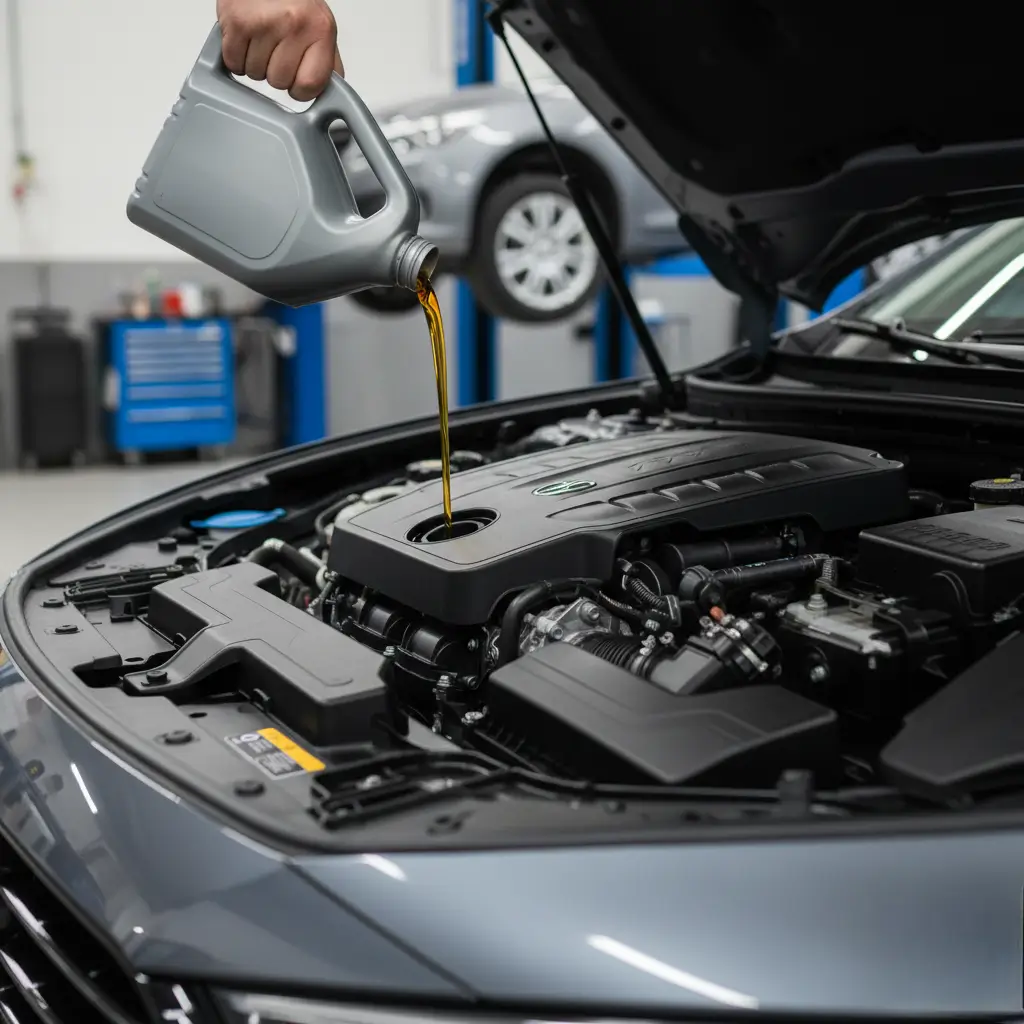
A proper oil change involves more than draining and refilling.
At ER Collision and Auto Body Shop, every oil service includes:
- Verification of correct viscosity grade
- OEM-quality oil and filter installation
- Fluid level checks
- Basic inspection for leaks
- Visual check of belts and hoses
We provide:
- Same-day service in most cases
- Free pickup & delivery within 5 miles
- Clear, no-pressure recommendations
- Written workmanship warranty
Our goal is simple: protect your engine correctly between services.
Common Questions Drivers Ask
Can I go 10,000 miles with synthetic oil?
Some vehicles allow it under normal conditions. Severe driving may require shorter intervals.
Does fresh oil improve gas mileage?
Proper viscosity reduces internal friction, which may slightly improve efficiency.
What happens if oil is overfilled?
Overfilling can cause aeration and increased crankshaft resistance, reducing lubrication effectiveness.
Is it safe to delay a few hundred miles?
A small delay is usually not catastrophic, but repeated overextensions increase long-term wear risk.
Schedule Your Oil Change in Huntington Beach
If you’re unsure whether you’re due, a quick inspection can confirm oil condition and proper service timing.
Serving Huntington Beach, Costa Mesa, Newport Beach, and surrounding Orange County communities, we provide accurate, manufacturer-recommended oil change services focused on long-term engine reliability.
Routine oil service remains one of the simplest and most cost-effective ways to prevent major mechanical repairs later.
In addition to Oil change, we provide complete car mechanical repair services for drivers throughout Huntington Beach and surrounding Orange County communities.