A small, accessible dent may be repaired with paintless dent repair (PDR) in approximately one to three hours.
More complex dents can require several hours or a full working day, while extensive hail damage or dents across multiple panels may take several days.
These are general planning ranges, not guaranteed completion times.
The actual turnaround depends on the dent’s depth, shape and location, along with the paint condition, panel material, tool accessibility, number of dents and required disassembly.
| Damage condition | General planning range |
|---|---|
| Small, accessible door ding | Approximately 1–3 hours |
| Moderate or complex dent | Several hours to a full day |
| Body-line dent or restricted access | Inspection required |
| Multiple dents or hail damage | One or more days |
| Damage requiring paintwork | Conventional repair timeline applies |
A professional inspection is the most reliable way to confirm whether the damage qualifies for PDR and establish a vehicle-specific timeframe.
Why Does PDR Take More Than a Few Minutes?
PDR does not simply “pop” a panel back into place.
A technician makes a series of controlled adjustments while monitoring the panel under specialized lighting. The goal is to restore the original contour without creating high spots, overstretching the metal or damaging the existing finish.
A professional PDR repair may involve:
- Inspecting the paint and dent geometry
- Identifying the panel material and access points
- Removing permitted trim or interior components
- Applying controlled pressure or exterior pulling
- Lowering high spots and refining the contour
- Rechecking the surface under specialized lighting
- Reinstalling components and completing a final inspection
The time required reflects the number and precision of these operations, not merely the dent’s visible diameter.
What Factors Affect PDR Repair Time?
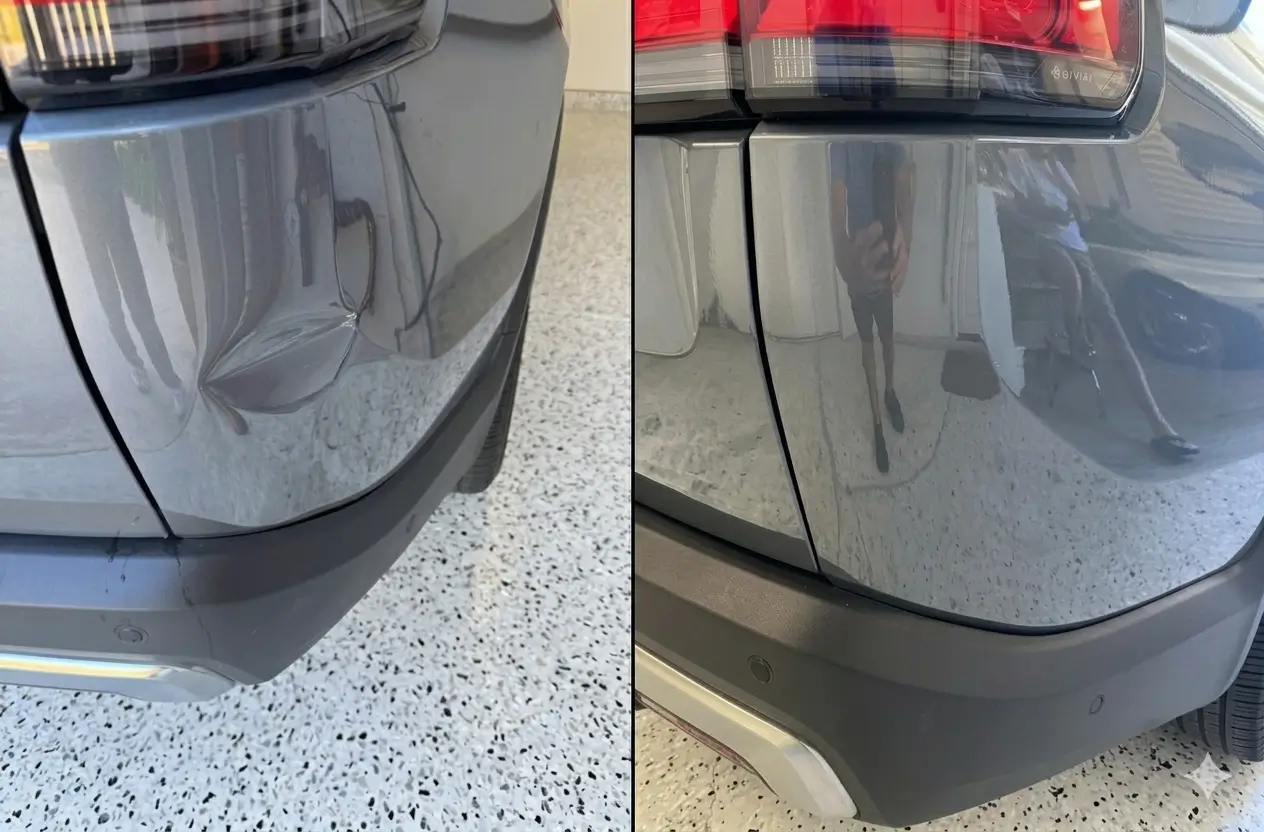
Dent depth and shape
A shallow, rounded dent is generally less complex than a sharp crease. Deep dents, folded metal and severely stretched areas require more controlled metal movement and may not qualify for complete PDR.
Dent location and accessibility
A small dent can take longer when it is near a panel edge, door seam, wheel opening, body line, brace or reinforcement. Double-wall construction and tight interior spaces can also restrict access.
When the back of the dent is accessible, a technician may use PDR rods or hand tools. When direct access is limited, exterior glue pulling may be considered. The chosen method and any required disassembly can affect the turnaround.
Learn how glue pulling differs from behind-the-panel PDR.
Paint condition
PDR is generally intended for damage where the paint remains securely bonded to the panel. Cracks, chips, separation or unstable previous refinishing can change the repair recommendation.
If the panel requires paint correction or refinishing, the vehicle will follow a conventional body-repair schedule rather than a PDR-only timeline.
Body-line involvement
Body-line dents often require additional time because the technician must restore a precise formed contour while managing tension in the surrounding metal.
Repairability depends on the crease’s sharpness, metal stretch, paint condition, panel material and tool access. See whether PDR can repair body-line dents.
Number of dents
Repairing one door ding is different from correcting dozens of hail dents across a hood, roof and trunk.
Hail-damage timing depends on:
- Dent count and concentration
- Number of affected panels
- Roof or headliner access
- Panel material
- Paint condition
- Whether some areas require conventional repair
Learn more about hail damage repaired without repainting.
Required disassembly and nearby components
A technician may need to remove and reinstall trim, liners, lamps or interior panels to obtain safe access. One-time-use clips, fasteners or moldings may also require replacement.
Cameras, sensors, wiring, airbags and intrusion beams can affect tool placement and disassembly. A dent near a sensor does not automatically require calibration.
Scanning, calibration or component procedures apply when required by the manufacturer and the specific repair operations.
Previous repairs or repair attempts
Previous paintwork, body filler or unsuccessful dent-pulling attempts can affect whether PDR remains appropriate. Additional inspection may be needed to evaluate paint stability, altered metal tension and the condition beneath the visible surface.
When Is Same-Day PDR Realistic?
Same-day repair may be realistic when:
- There is one small or moderate dent
- The paint remains intact
- The panel is accessible
- The metal is not severely stretched
- Limited or no disassembly is required
- No related components are damaged
- The shop has scheduling availability
At ER Collision & Auto Body Shop in Huntington Beach, we commonly find that access and location matter as much as visible dent size.
An accessible door ding may be completed during one appointment, while a similarly sized dent behind a reinforcement or across a body line can require additional tools, disassembly and repair time.
Same-day PDR is therefore a possible outcome, not a promise that should be made before inspection.
Is PDR Faster Than Conventional Dent Repair?
PDR is generally faster for qualifying damage because it avoids several refinishing operations, including sanding, primer application, color matching, spraying and paint curing.
Conventional repair may require metal repair, surface preparation, body filler when appropriate, primer, repainting, blending, curing and reassembly.
However, PDR is not automatically the correct method merely because it is faster. When the paint is damaged or the metal is outside practical PDR limits, conventional repair remains the appropriate option.
Compare paintless and traditional dent repair for a complete repair-method explanation.
Does a Faster Repair Cost Less?
PDR may cost less for eligible damage because it generally uses fewer refinishing materials and avoids several paint-related labor operations.
However, dent complexity, access, panel material, dent count and disassembly can still affect the estimate.
Review dent repair and panel replacement costs for a detailed pricing explanation.
Frequently Asked Questions
Can I drive immediately after PDR?
PDR does not require paint-curing time. The vehicle can generally be driven after the repair, final inspection and reinstallation of removed components, provided no other work requires additional waiting time.
How long does a small door ding take?
An accessible door ding with intact paint may take approximately one to three hours. A smaller dent can take longer when access is restricted or the damage crosses a body line.
How long does hail-damage PDR take?
Hail repair may take one or more days depending on dent count, affected panels, accessibility, panel material and whether some areas require conventional repair.
Why can a small dent take longer than a larger one?
Location and access can matter more than diameter. A small dent behind a reinforcement or along a sharp contour may require more complex tools and controlled metal movement.
Get a PDR Time Estimate in Huntington Beach
ER Collision & Auto Body Shop in Huntington Beach is an I-CAR Gold Class collision repair facility serving surrounding Orange County communities.
Erik Reyna and his team bring more than 15 years of collision-repair experience.
Our team evaluates the dent’s depth, shape and location, along with the paint condition, panel material, accessibility, body-line involvement, required disassembly and nearby components.
When the damage qualifies, our paintless dent repair service may provide a shorter turnaround than conventional repair while preserving the existing finish.
Request a professional evaluation for an appropriate repair recommendation and vehicle-specific timeframe.