Choose a car wrap when the existing paint is sound and you want a removable appearance change. Choose professional painting when the coating is peeling, the body needs repair, or you want to restore the finish.
For California drivers, the long-term choice also depends on sun exposure, parking, maintenance, and how long you plan to keep the vehicle.
Car Wrap vs. Paint: Key Differences
| Factor | Car wrap | Automotive paint |
|---|---|---|
| Main purpose | Removable color or finish change | Refinishing or restoring a vehicle |
| Starting surface | Needs a stable, properly prepared finish | Damaged areas can be repaired during preparation |
| Long-term upkeep | Film ages and eventually needs removal or replacement | Finish needs washing and care; damaged areas can be refinished |
| If a panel is damaged | Film may need removal and replacement after the repair | The affected area can be repaired and refinished |
| Best fit | Customizing sound paint | Failed coatings, body repair, or lasting refinishing |
A wrap sits over the vehicle’s existing finish. Painting involves preparing the surface and applying a new coating system. That difference matters most when the current paint is already damaged.
How California Conditions Affect Wraps and Paint
Outdoor parking exposes both finishes to sunlight, heat, and contamination. In coastal areas such as Huntington Beach, vehicles may also collect salt-containing residue and moisture. Neither option eliminates the need for cleaning and inspection.
Wrap film can weather differently across a vehicle. The hood, roof, and trunk receive more direct sun than many vertical panels. As one product-specific example, 3M’s Wrap Film Series 2080 warranty lists different coverage periods for vertical and horizontal applications, subject to its warranty zone and terms. A warranty period is not a promise that every wrap will look new for that long.
Automotive paint also weathers. If the clear coat is sound, some dullness may respond to careful paint correction. Once the coating lifts or peels, polishing cannot reattach it; the affected area needs a refinishing assessment. See our guides to sun-damaged car paint and peeling clear coat for those separate conditions.
Can You Wrap Over Damaged Paint?
Have the paint assessed before wrapping if it is peeling, rusting, cracked, or previously repaired. Film follows the surface underneath it. It may change the color you see, but it will not level a dent, stop corrosion, or restore adhesion to loose clear coat.
Pay particular attention to:
- Peeling or lifting clear coat
- Rust, bubbling paint, or exposed metal
- Deep chips and scratches
- Cracked filler or unstable previous repairs
- Uneven paint on a previously refinished panel
Removal is another consideration. The condition of the underlying paint affects the risk of paint lifting when film is taken off. 3M’s application guidance calls for particular caution with unsound paint, and its wrap warranty does not cover paint pulled during removal. An installer and body shop can help assess a questionable finish before you commit to wrapping it.
A mildly dull panel is a different question from a peeling one. If there is no visible coating failure, an inspection can establish whether paint correction is worthwhile before you choose a wrap.
What Affects a Car Wrap’s Lifespan in California?
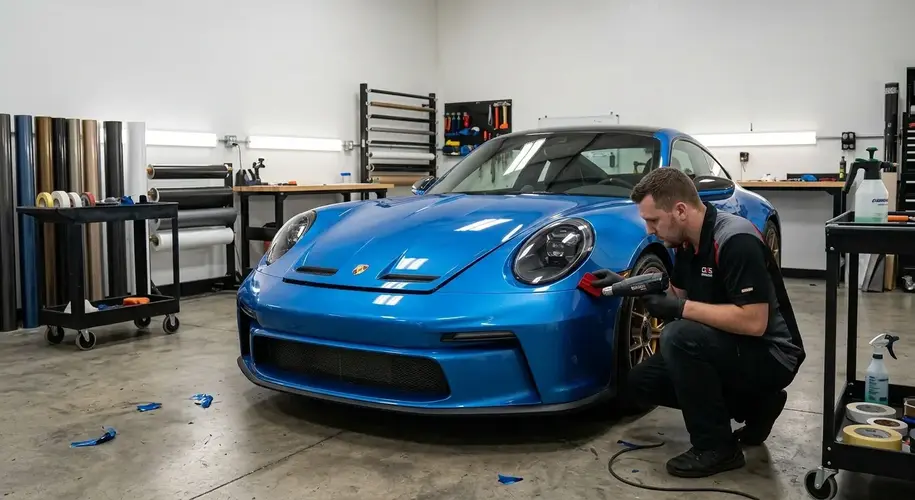
There is no useful single lifespan for every wrap. Film type, placement, installation, outdoor exposure, cleaning, and parking conditions all affect how it ages.
Watch for fading, cracking, brittleness, shrinkage, or lifting edges. If those signs appear, ask an installer whether a panel can be replaced or whether more of the wrap needs attention. Do not assume aging film can remain on the vehicle indefinitely; removal can become more difficult as its condition changes.
Follow the specific film manufacturer’s maintenance and removal guidance. If the vehicle has weak or previously repaired paint, discuss removal with a professional before trying to peel the film off yourself.
Which Costs Less Over Time?
A wrap and a repaint solve different problems, so compare the work your vehicle actually needs, not just two full-vehicle prices.
If the paint is sound and you want a temporary new look, compare the wrap quote with the cost of your desired paint finish. Include eventual film removal or replacement in your long-term budget.
If clear coat is failing or the body needs repair, get an estimate for that work first. A wrap quote does not replace the cost of fixing the underlying damage. The scope of a repaint also varies widely with preparation, bodywork, materials, and how many panels need refinishing. For those pricing factors, read our car paint cost guide.
What Happens If a Wrapped Panel Is Damaged?
A damaged wrapped panel may need its film removed before body and paint repair. New film can be installed when the repaired finish is ready under the paint and wrap manufacturers’ instructions.
Ask the installer whether the original film is still available. A replacement piece may look different beside older, sun-exposed film, even if it is the same product and color. Depending on the result you want, replacing a larger wrapped area may make sense.
Painted panels also require assessment after damage. A body shop can determine whether the repair can stay on one panel or whether adjacent panels need blending for a consistent finish.
Which Should You Choose for Your Vehicle?
| Your situation | Better starting point | Why |
|---|---|---|
| Paint is stable and you want a removable color or finish change | Consider a wrap | The film can customize an already sound finish. |
| Paint is sound, but you are unsure about a previous repair | Get a paint and wrap assessment | The underlying coating’s condition matters during installation and removal. |
| Clear coat is peeling, or rust or body damage needs repair | See a body shop first | Covering the area will not correct the damage. |
| You want a lasting restoration or permanent color change | Discuss painting | Refinishing addresses the underlying surface as part of the job. |
Keeping a vehicle for many years does not automatically rule out a wrap. It means you should account for its maintenance and eventual replacement when comparing the two options.
If your main goal is protection against road debris rather than a color change, ask about paint protection film (PPF). It serves a different purpose from a decorative color-change wrap.
Planning a Wrap or Repaint in Huntington Beach?
Before paying for a wrap or repaint, establish whether the existing finish is sound and which panels need attention.
Erik Reyna and the team at ER Collision and Auto Body Shop can inspect peeling paint, chips, previous repairs, and body damage, then explain the appropriate paint or refinishing work.
Call (714) 866-9453, or explore our car paint shop services to request an inspection.