Yes—advanced Paintless Dent Repair can fix many body line dents, including some sharp creases, without sanding, body filler, or repainting.
However, body line dents are more technically demanding than ordinary door dings. Whether PDR is suitable depends on the depth of the crease, paint condition, metal stretch, panel material, dent location, and technician experience.
Some body line dents can be restored to a near-original appearance. More severe damage may require conventional body repair and refinishing.
What Is a Body Line Dent?
A body line is a formed contour that runs across a vehicle panel. These lines help define the vehicle’s shape, influence how light reflects across the surface, and add rigidity to the panel.
A body line dent occurs when an impact pushes or folds the metal directly along one of these contours.
Unlike a shallow dent on a relatively flat area, a body line dent affects a precisely shaped part of the panel. The technician must correct the dent while also rebuilding the original contour of the line.
What Determines Whether a Body Line Dent Can Be Repaired?
A technician will evaluate several factors before recommending PDR:
- Whether the paint is still intact
- The depth and sharpness of the crease
- The amount of metal stretch
- The dent’s position on the panel
- Access behind the damaged area
- Whether the panel is steel or aluminum
- Whether the damage reaches a panel edge or reinforcement
- The technician’s experience with complex body line repairs
The sharper, deeper, or more stretched the dent is, the more technically demanding the repair becomes.
Why Are Body Line Dents Difficult to Repair?
Body lines are visual reference points. Even a small amount of remaining distortion can affect the way light reflects across the panel.
When a body line is struck:
- The metal may compress along the contour
- Tension can spread into the surrounding panel
- The original line may become flattened or displaced
- The panel’s reflections may appear twisted or uneven
- The impact may create a sharp crease rather than a rounded dent
A technician is not simply pushing out a low spot. The repair requires controlled metal movement to restore the original contour without creating high spots, damaging the paint, or flattening the body line.
Can PDR Repair Sharp Body Line Creases?
Some sharp body line creases can be repaired with PDR, but sharpness alone does not determine repairability.
The technician must also consider:
- How deeply the metal has been folded
- Whether the paint has fractured
- How much the surrounding metal has stretched
- Whether tools can safely reach the damaged area
- Whether the dent is located near an edge, brace, or reinforcement
A narrow crease with intact paint may still qualify for advanced PDR. However, a deeply collapsed fold or severely stretched panel may be better suited for traditional repair.
An in-person inspection is the most reliable way to determine what result is realistically possible.
Steel vs. Aluminum Body Line Dents
The panel material can significantly affect the repair process.
Steel Panels
Steel generally has more natural spring-back than aluminum and may respond more predictably to controlled pressure.
Steel body line dents can still be difficult, especially when the metal has been sharply creased or overstretched, but the material is often more forgiving during reshaping.
Aluminum Panels
Aluminum responds differently to pressure and can become harder as the metal is repeatedly worked.
Aluminum repairs may require:
- Specialized tools
- Controlled heat
- Careful pressure management
- Additional finishing time
- A technician experienced with aluminum panels
This is especially relevant for vehicles that use aluminum exterior panels, including certain Tesla and Ford models.
Improper aluminum repair techniques can damage the paint, create surface distortion, or make the dent more difficult to correct.
For more information about model-specific repair considerations, read our guide to Tesla dents repaired with PDR.
Why Some Body Line Dents Require Repainting?
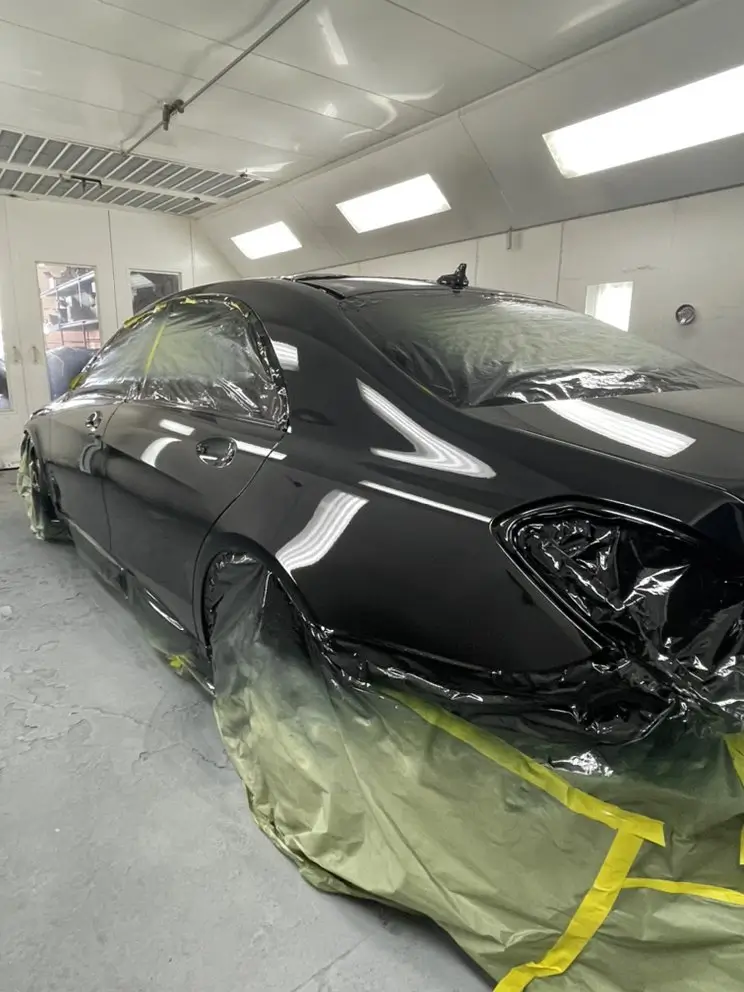
Not every body line dent is a good candidate for paintless repair.
Conventional body repair may be recommended when:
- The paint is cracked, chipped, or deeply scratched
- The metal has been severely stretched
- The body line has formed a sharp or collapsed fold
- The damage extends into a panel edge
- A brace or reinforcement has been affected
- Previous repairs or body filler are present
- The original contour cannot be restored safely through PDR alone
When the damage qualifies for PDR, preserving the factory finish may help avoid unnecessary sanding, filling, and repainting.
However, traditional repair remains the appropriate professional method when the paint, metal, or panel structure has been damaged beyond practical PDR limits.
How Professionals Repair Body Line Dents?
Advanced PDR is a controlled metal-reshaping process.
Depending on the dent, the technician may:
- Inspect the damage under specialized lighting.
- Determine the direction of the impact and surrounding metal tension.
- Remove trim or interior components when necessary to access the panel.
- Apply small, controlled pushes from behind the dent.
- Use external pulling methods when rear access is limited.
- Tap down raised areas and release tension around the crease.
- Gradually rebuild the body line’s original contour.
- Refine the surface until reflections flow naturally across the panel.
The repair is usually completed through many small adjustments rather than one forceful push.
Working too aggressively can create high spots, crack the paint, overstretch the metal, or permanently distort the body line.
Tools Used for Precision Body Line Repair
Professional PDR technicians use several specialized tools to control the metal accurately.
PDR Rods and Hand Tools
Rods and hand tools are inserted behind the damaged panel when access is available.
They allow the technician to apply controlled pressure to specific points along the dent. Different tool lengths, angles, and tip shapes may be used depending on the panel and dent location.
Glue Pulling
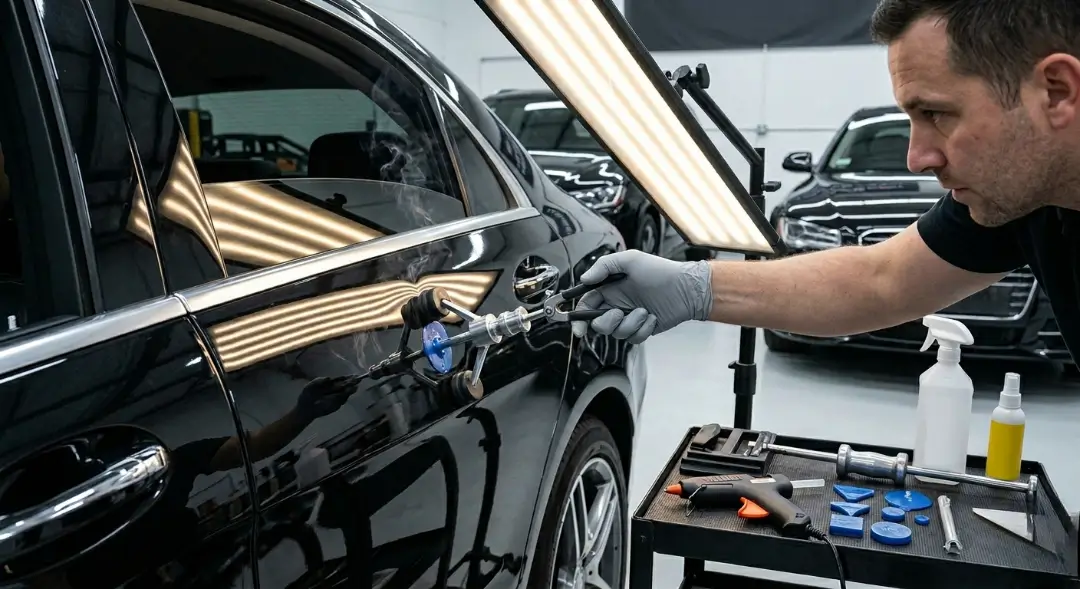
Glue pulling is performed from the exterior of the panel when access behind the dent is limited.
It can help:
- Reduce the initial depth of the dent
- Move sections of the crease gradually
- Create access to areas blocked by braces or reinforcements
- Support a combination repair strategy
Sharp body line dents often require multiple techniques rather than glue pulling alone. The technician may combine exterior pulling, behind-the-panel pressure, and controlled tapping.
Learn more in our comparison of glue pulling vs. traditional PDR techniques.
Knockdowns and Blending Tools
Knockdowns and blending tools are used to lower raised areas and manage tension around the dent.
This step is especially important on body lines because over-pushing one section can create a visible high spot or change the shape of the contour.
PDR Lights and Line Boards
A PDR light or reflective line board helps the technician read the panel’s surface.
Straight, evenly spaced reflections generally indicate a smooth panel. Bent, compressed, or distorted reflections reveal remaining lows, highs, and irregularities.
These tools allow the technician to identify imperfections that may not be visible under ordinary lighting.
What Results Can You Realistically Expect?
The final result depends on:
- Dent depth
- Crease sharpness
- Paint condition
- Metal stretch
- Panel material
- Dent location
- Previous repairs
- Technician experience
Some qualifying body line dents can be restored to a near-original appearance.
When a crease is extremely sharp or the metal has been stretched, a small amount of distortion may remain visible under specialized inspection lighting.
A reputable technician should explain the likely outcome before beginning the repair instead of promising that every dent will become completely invisible.
Why Texture Matching Matters?
Removing the dent is only part of a high-quality repair.
Factory-painted panels often have a subtle surface texture commonly called orange peel. This texture affects how light reflects across the finish.
If the repaired area becomes unnaturally smooth or uneven, it may create a visible shiny spot even when the dent itself has been removed.
An experienced technician must restore the panel’s shape while preserving a natural-looking surface that blends with the surrounding factory finish.
When Is PDR Not Suitable for a Body Line Dent?
PDR may not be the right repair method when:
- The paint has separated from the panel
- The metal has been severely stretched
- The crease has created a deep or collapsed fold
- The panel has been punctured or torn
- The dent extends into a damaged edge
- A structural reinforcement has been compromised
- Previous body filler is present in the repair area
- The panel cannot be accessed or moved safely
- The panel requires replacement
In some cases, PDR techniques may still be used to reduce the dent before refinishing. This is often described as push-to-paint or push-to-prep.
The metal is reshaped to reduce the amount of filler and refinishing work required, but the complete repair is no longer entirely paintless.
How to Inspect a Body Line Dent Before Your Appointment
A home inspection cannot replace a professional evaluation, but it may help you identify visible warning signs.
1. Check the Paint
Look closely for:
- Cracks
- Chips
- Scratches
- Paint separation
- Exposed metal
You can gently run a clean fingernail across the damaged area. If it catches, the finish may be fractured.
Do not press firmly or attempt to flex the panel.
2. Check the Reflection
View the dent under a single light source, such as a garage light or streetlight.
A narrow, sharply distorted reflection may indicate:
- A concentrated crease
- Increased tension around the body line
- A more technically demanding repair
Reflections alone cannot confirm whether the metal has been overstretched. A professional inspection is still necessary.
3. Look at the Dent’s Location
Damage near the following areas may be more difficult to repair:
- Panel edges
- Door seams
- Wheel openings
- Braces
- Reinforcements
- Double-layered metal
- Tight corners
These locations may limit tool access or affect how the metal moves during repair.
Body Line Dent Repair Options
| Body Line Dent Condition | Likely Repair Direction |
|---|---|
| Paint is intact and the metal is moderately displaced | Advanced PDR may be suitable |
| Paint is chipped or cracked | Metal correction and refinishing may both be needed |
| The crease is extremely sharp or deeply folded | Traditional repair may be more appropriate |
| The metal is severely stretched | Complete PDR restoration may not be possible |
| The dent reaches a panel edge or reinforcement | Professional inspection is required |
| The dent is on an aluminum panel | Specialized aluminum repair techniques may be required |
| Previous body filler is present | Conventional repair may be necessary |
For a broader explanation of both repair methods, see our complete comparison of paintless vs. traditional dent repair.
Why Body Line Dent Repair Requires Specialized Experience
Body line dents are especially sensitive to improper pressure and poor metal control.
Inexperienced repairs can cause several forms of secondary damage.
Oil-Canning
Oil-canning occurs when the panel loses tension and begins to flex or move when pressed.
This can happen when the metal is overstretched or worked too aggressively.
High Spots
Excessive pushing can create raised areas that become highly visible in reflected light.
High spots may also place additional stress on the paint.
Flattened Body Lines
A technician may reduce the dent but fail to restore the original contour.
The body line may appear rounded, uneven, too wide, or incorrectly positioned.
Paint Damage
Uncontrolled pressure, aggressive pulling, or improper heat use can crack, lift, or separate the finish.
Permanent Panel Distortion
Repeated repair attempts can overstretch the metal and make a later professional correction more difficult.
Once significant secondary damage occurs, conventional body repair and repainting may become necessary.
Frequently Asked Questions
Will a body line dent pop back out in the sun?
Generally, no.
Body line dents involve displaced or deformed metal rather than a simple temporary panel flex. Normal sunlight or outdoor temperature changes are unlikely to restore the original shape.
Attempting to heat the dent yourself can damage the paint or make the repair more difficult.
Why is body line PDR more expensive?
Body line repairs frequently take longer than ordinary door-ding repairs because the technician must restore a precise contour while controlling the tension in the surrounding metal.
The repair may also require specialized access, multiple tools, exterior pulling, controlled tapping, and additional finishing time.
Can PDR fix a body line dent if the paint is chipped?
The metal may still be reshaped using PDR-related techniques, depending on the severity of the damage.
However, because the finish is already damaged, the complete repair would not be entirely paintless. Touch-up paint or professional refinishing may still be required afterward.
Can PDR repair a body line dent on an aluminum panel?
Yes, some aluminum body line dents can be repaired with PDR.
Aluminum requires different tools, pressure control, and repair techniques than steel. Controlled heat may also be used when appropriate.
The panel should be evaluated by a technician with experience repairing aluminum dents.
Is PDR safe for luxury vehicles?
Yes, when performed by a properly trained technician.
PDR is often preferred for qualifying damage on luxury and collector vehicles because it can preserve:
- Original factory paint
- Finish consistency
- Vehicle appearance
- Long-term value
- Originality
Repairability still depends on the condition and location of the damage.
Can PDR repair a dent located on a door edge?
Door-edge and panel-edge dents can be more difficult because the metal is reinforced, folded, or less accessible.
Some may qualify for PDR, while others require conventional repair. An in-person inspection is necessary.
Can a flattened body line be restored?
In many cases, an experienced technician can rebuild a flattened or displaced body line.
The result depends on the amount of metal stretch, paint condition, panel material, and whether previous repair attempts have created additional damage.
How long does body line dent repair take?
Repair time varies based on the dent’s size, depth, location, panel material, and accessibility.
A minor body line dent may be completed relatively quickly, while a sharp crease or aluminum-panel repair may require considerably more time.
An inspection is necessary before providing an accurate timeline.
How do I know whether my body line dent qualifies for PDR?
A professional evaluation is the most reliable way to determine eligibility.
The technician will inspect:
- Paint condition
- Dent depth
- Crease sharpness
- Metal stretch
- Panel material
- Tool access
- Damage near edges or reinforcements
- Previous repairs
Photos can help with an initial assessment, but some forms of metal stretch and paint damage may only become clear during an in-person inspection.
Final Recommendation
Body line dents are complex, but they are not automatically beyond the limits of Paintless Dent Repair.
Advanced PDR may provide an effective solution when:
- The paint remains intact
- The metal is not severely stretched
- The panel can be accessed safely
- The original contour can be restored without refinishing
The quality of the result depends heavily on the technician’s understanding of metal movement, panel tension, body line geometry, lighting, and finish texture.
For complex body line damage, choose a technician who provides a realistic assessment rather than automatically promising a perfect repair or recommending repainting without first evaluating PDR eligibility.
Expert Body Line Dent Repair in Huntington Beach
At ER Collision and Auto Body Shop in Huntington Beach, California, we evaluate and repair complex dents, including damage located directly along vehicle body lines.
With more than 15 years of experience and I-CAR Gold Class recognition, our team focuses on:
- Precision metal reshaping
- Factory-finish preservation when possible
- Steel and aluminum panel evaluation
- Advanced dent-repair techniques
- Honest and realistic repair recommendations
Not sure whether your body line dent qualifies for PDR?
Contact ER Collision and Auto Body Shop for a professional inspection. We will evaluate the paint, metal, dent location, and panel condition before recommending the most appropriate repair method.