No, not all dents can be repaired without repainting. While Paintless Dent Repair (PDR) is the preferred, factory-preserving method for many vehicle dings, its feasibility depends on the physical limits of the vehicle’s paint system and metal structure.
PDR is most likely to work when the paint remains securely bonded, the dent can be accessed safely, and the panel can be reshaped without compromising the finish. A technician must inspect the dent to determine whether those conditions are met.
If an impact has cracked the paint, sharply folded the panel, torn the metal, or affected structural safety components, conventional body repair and refinishing are required.
What Does “Fixed Without Repainting” Mean?
Fixing a dent without repainting means using specialized Paintless Dent Repair (PDR) techniques to mechanically manipulate and massage stretched metal back into its original factory geometry.
Unlike traditional collision repair, PDR eliminates:
- Sanding down the factory e-coat or primer.
- Applying polyester body filler (Bondo).
- Panel blending and aftermarket clear-coat spraying.
Qualifying PDR can retain the existing painted finish and avoid color matching. Any backside coating damage caused during access or tool use should still be addressed.
Qualification Matrix: Which Dents Qualify for PDR?
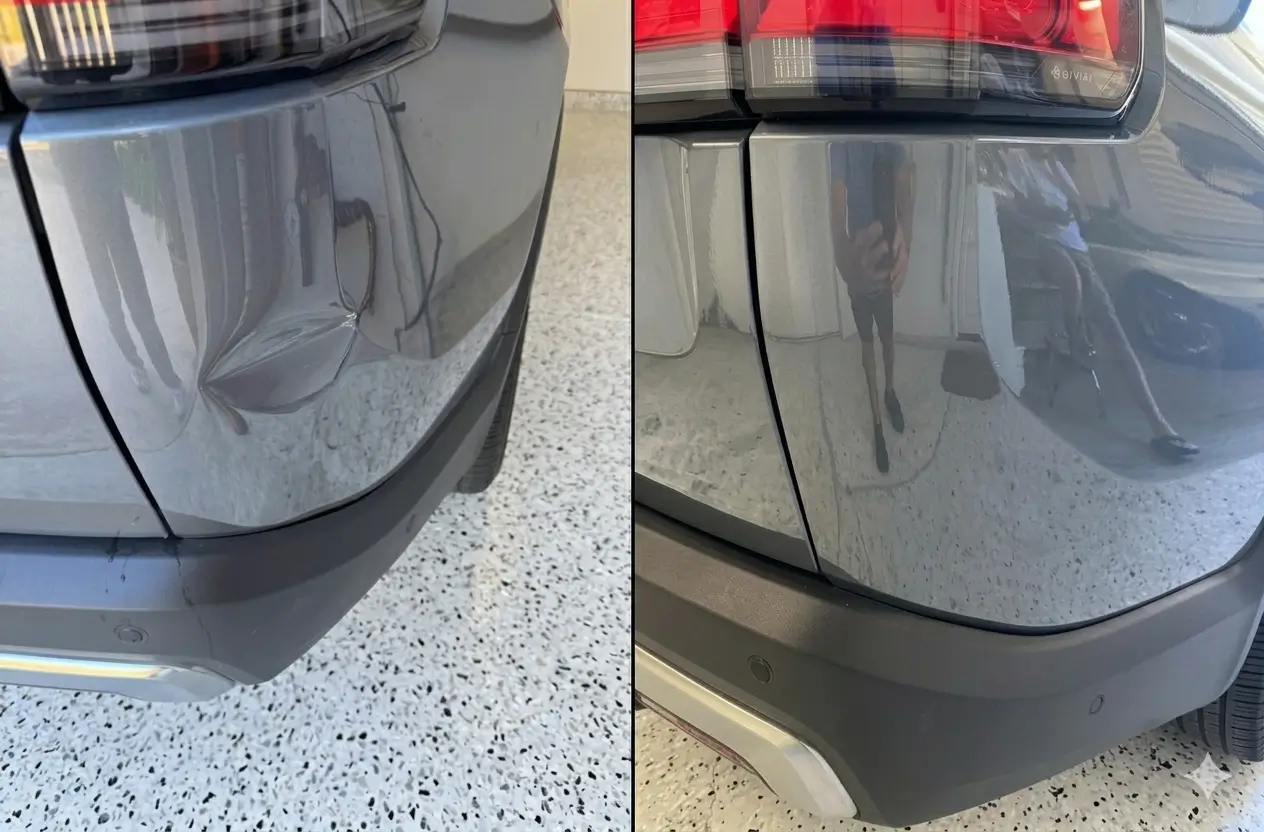
Not all damage is created equal. The physical location, depth, paint stability, and material substrate dictate whether a dent can receive paintless correction.
| Damage Attribute | Qualifies for PDR | Requires Conventional Body Repair / Paint |
| Paint Condition | Completely intact, securely bonded, no micro-cracks. | Cracked, chipped, peeling, scraped, or flaking. |
| Metal State | Dents that can be reshaped while preserving the finish and meeting applicable repair requirements. | Severely stretched, torn, punctured, or sharply creased/folded. |
| Panel Access | Reached via inner panel openings, factory access holes, or clean glue-pulling surfaces. | Areas where neither safe backside access nor suitable exterior pulling is available. |
| Previous Repairs | Factory-original paint and panel structure. | Filler or poorly bonded paint that makes paintless correction unsuitable. |
| Common Scenarios | Door dings, shopping cart impacts, shallow creases, broad body-line depressions. | Deep highway collision impacts, sharp metal folds, severe panel edge crushing. |
5 Key Factors That Determine PDR Feasibility
1. Paint Condition & Coating Integrity
Intact, securely bonded paint is the single most critical requirement for PDR. During metal manipulation, the clear coat must flex alongside the metal substrate.
Existing cracks or poor paint adhesion increase the risk of lifting or further cracking during repair.
2. Dent Depth, Geometry, and Metal Stretch
A broad, wide dent covering 10 inches may be simple to repair if the displacement is shallow. Conversely, a small 1-inch dent caused by a sharp object can severely stretch the metal at its center point.
Severe stretching can make paintless restoration more difficult or unsuitable. Dent shape, material, access, and finish condition must be assessed together.
3. Panel Location and Structural Restrictions
Dents situated on open door panels, fenders, or hoods generally provide straightforward tool access. Dents located directly over internal intrusion beams, door edges, roof-line boxed frames, or double-walled quarter panels limit backside access, requiring specialized exterior pulling techniques.
4. Substrate Material: Steel vs. Aluminum
Modern vehicles utilize different grades of high-strength steel and structural aluminum.
Steel: Repairability varies with the steel grade, panel construction, dent shape, and manufacturer’s repair limits.
Aluminum: Repair techniques may differ from those used on steel. Alloy, panel design, damage, and access determine the difficulty.
Specialty Vehicle Note: For EV-specific considerations, lightweight aluminum construction, and high-voltage safety clearance, read our specialized guide on Tesla and EV Paintless Dent Repair in Huntington Beach.
5. Body-Line and Crease Involvement
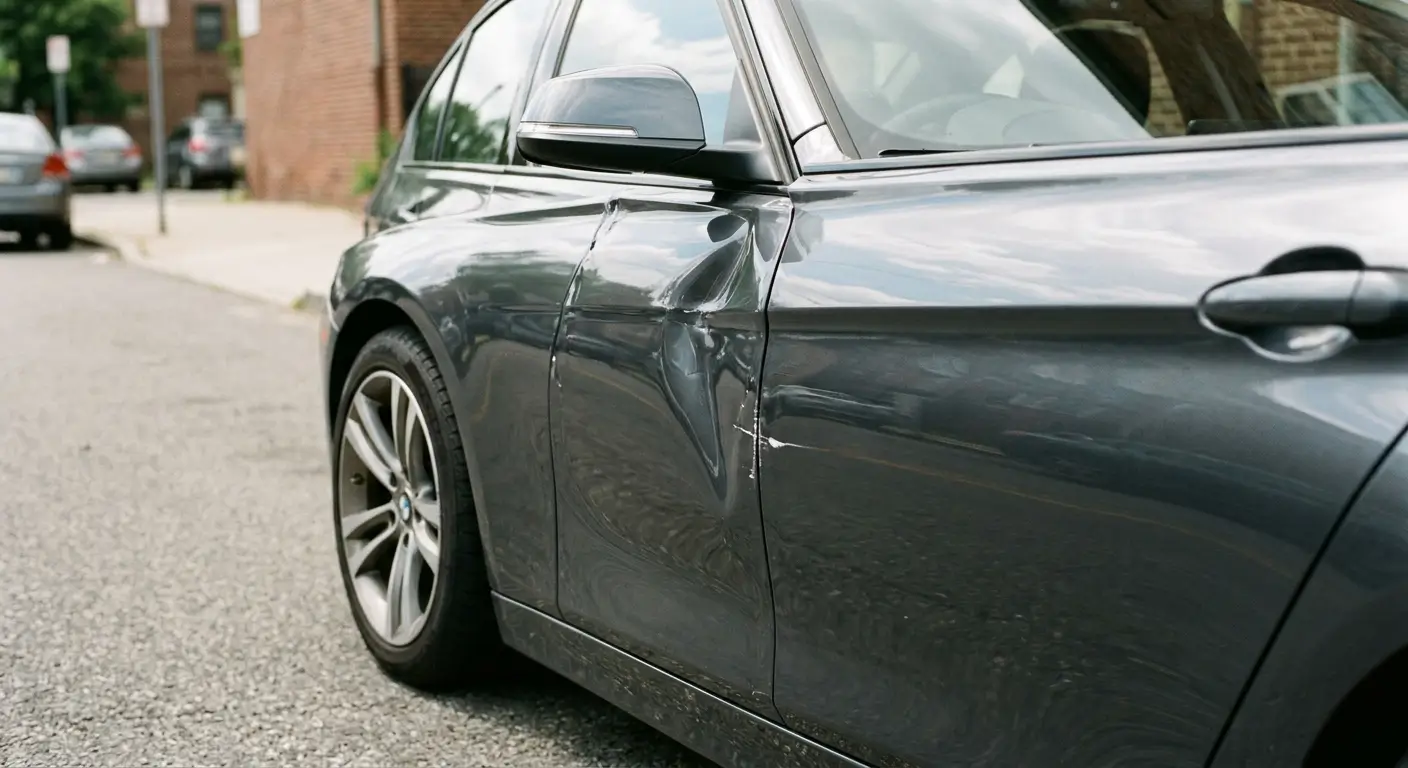
Body lines are formed contours stamped directly into a panel to provide aesthetic character and structural rigidity. While once considered impossible for PDR, experienced technicians can rebuild flattened or depressed body lines using high-definition LED line boards and specialized body-line tools.
Technical Repair Methods: Glue Pulling vs. Behind-the-Panel PDR
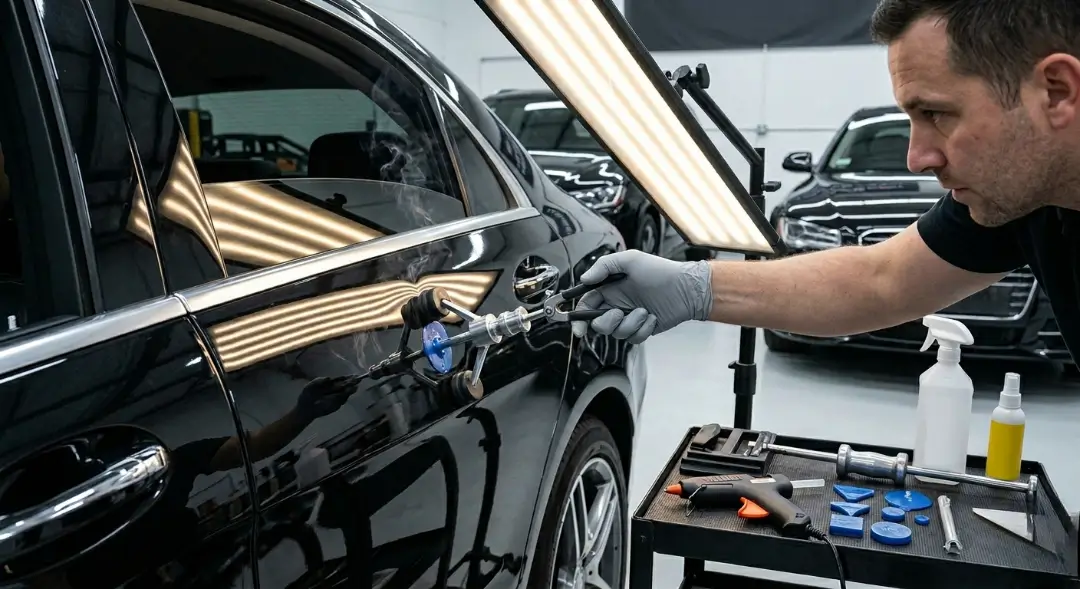
To safely reshape metal without marring the finish, technicians deploy two core methods, often combining both on complex repairs.
Method 1: Behind-the-Panel Lever Access (Traditional Rod PDR)
Technicians gain direct access to the back of the damaged metal by removing minor interior trim, tail lights, or wheel liner fasteners. Custom-bent stainless steel or carbon fiber rods may apply precise micro-pushes from behind the dent while monitoring surface reflections under high-intensity PDR light arrays.
Method 2: Exterior Glue Pulling (GPR)
When double-wall construction, structural pillars, or inner reinforcements completely block backside tool access, technicians use exterior Glue Pull Repair (GPR).
Preparation: The panel surface is cleaned to remove wax or contaminants.
Tab Selection: A high-tensile polycarbonate tab matching the dent’s exact geometry is selected.
Adhesive Application: Specialized, temperature-formulated hot glue is applied to the tab and placed on the dent center.
Controlled Extraction: A lifter hand-tool or slide hammer applies calibrated outward force to lift the low area.
Knockdown & Stress Relief: The tab is released using isopropyl alcohol, and any micro-high spots are tapped down using nylon or polished brass knockdowns.
How Long Does Paintless Dent Repair Take?
Some small, accessible dents can be repaired in a day. Complex dents, disassembly, parts needs, and shop scheduling can extend the turnaround time.
| Damage Type | Estimated Turnaround Time | Primary Labor Drivers |
| Minor Door Ding (1″–2″, accessible) | 1 to 3 Hours | Direct tool setup, light pressure adjustments, fine tap-down. |
| Complex Body-Line / Deep Crease | 4 to 8 Hours (Same Day) | Tension relieving, gradual metal pushing, high-definition lighting checks. |
| Multiple Dents (3–10 dings across panels) | 1 Full Working Day | R&I (Removal & Installation) of trim, lamps, or door cards. |
Severe Damage Note: If your vehicle has suffered widespread storm damage spanning every panel, refer to our specialized guide on fixing hail damage without repainting.
If you are choosing between structural repair methods, explore our detailed breakdown on Paintless Dent Repair vs. Traditional Body Repair.
Paint Safety: Can PDR Damage Your Car’s Paint?
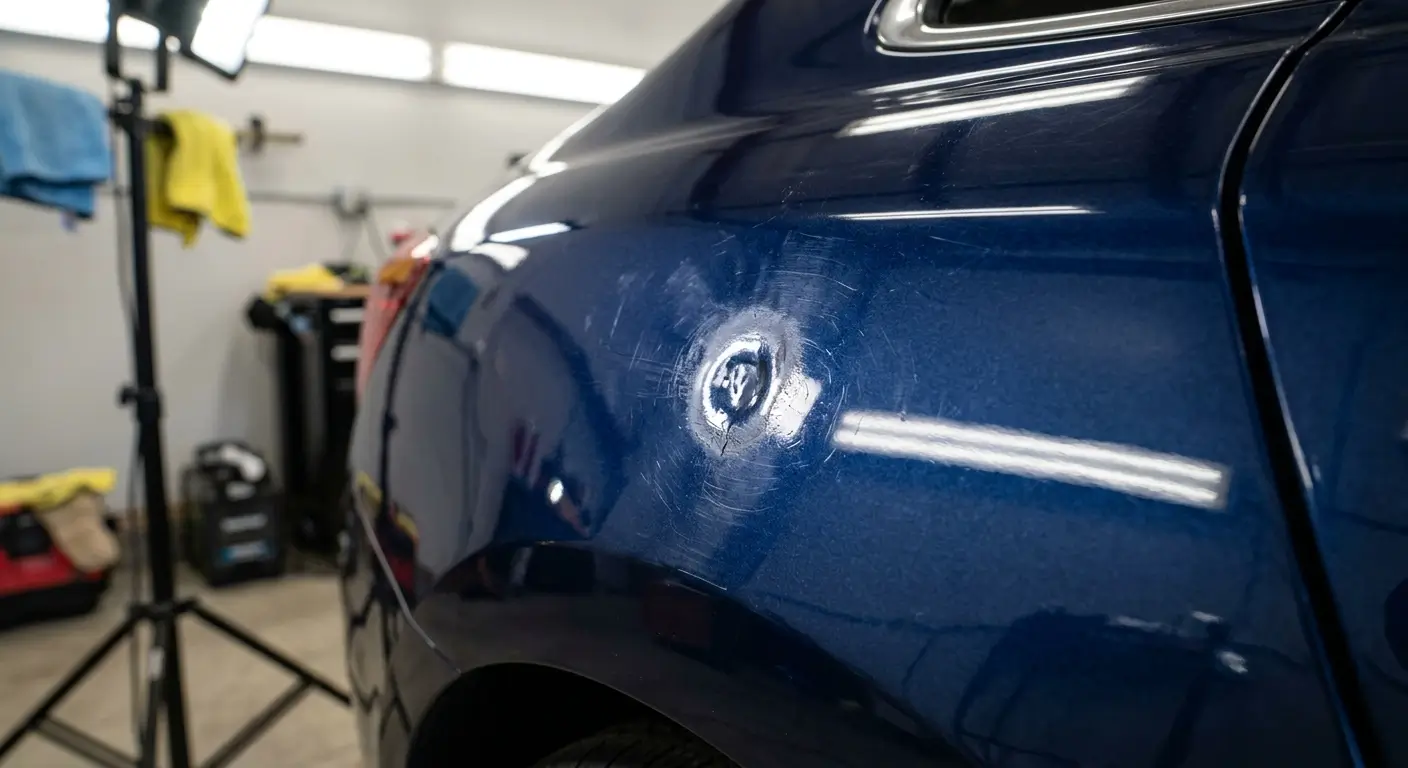
PDR is designed to preserve the existing finish, but any dent repair carries some risk of paint damage, particularly when the coating is cracked, previously repainted, or poorly bonded.
Factors that increase that risk include:
Pre-existing Clear-Coat Cracks: Applying force behind micro-cracks may cause the paint to flake or spread.
Repainted Panels with Poor Adhesion: Non-factory paint jobs may lack proper e-coat primers. Exterior glue pulling on a repainted panel can peel weak aftermarket clear coats.
Improper Force or Uncontrolled Heat: Forcing metal outward too fast without releasing surrounding tension creates sharp “high spots” that stress the clear coat.
Risks of DIY Dent Repair Kits
DIY dent kits can worsen a dent or damage compromised paint, especially when the dent’s shape and panel access are difficult to assess
Four Common DIY Repair Risks:
Lack of Optical PDR Lighting: Professional technicians rely on specialized LED line boards to read metal tension and low spots. Without this lighting, DIYers pull blindly.
Creation of High Spots: Pulling an exterior tab too hard stretches the center of the dent upward, creating a sharp raised bump (high spot) that is significantly harder for a professional to repair.
Over-Stretching the Substrate: Pulling cold metal incorrectly can permanently stretch the panel beyond repair, forcing a full body shop repair and repaint.
Paint Lifting: Using low-grade, high-tack DIY adhesives on sun-baked or compromised clear coats can lift the paint cleanly off the primer.
If your goal is to protect your vehicle’s condition, avoid unverified DIY hacks. For drivers approaching the end of an auto lease, see our localized guide on Lease Return Dent Repair in Huntington Beach to understand how proper PDR prevents costly dealership penalties.
Frequently Asked Questions
Can every small dent be repaired without repainting?
No. If a small dent has a sharp impact point that fractured the clear coat or crushed a panel edge, it requires traditional body work and repainting despite its small size.
Does a large dent automatically require repainting?
No. As long as the paint finish remains undamaged and the metal hasn’t been overstretched, even broad, large-scale dents spanning several inches can be successfully repaired with PDR.
Is PDR cheaper than traditional body shop repairs?
Often, when the dent qualifies. PDR avoids refinishing work, but the actual cost comparison depends on dent complexity, access, panel material, and labor rates.
For localized Orange County pricing ranges, consult our guide on Dent Repair Costs in Huntington Beach.
Will filing an insurance claim for PDR raise my monthly rates?
Filing a PDR claim does not automatically raise your premium. The effect depends on the cause of damage, fault determination, your policy, and applicable California rating rules. Read our complete analysis on whether PDR insurance claims raise premiums in California.
Request a Professional PDR Evaluation in Huntington Beach
At ER Collision and Auto Body Shop in Huntington Beach, CA, Erik Reyna and his team bring over 15 years of certified collision repair experience. As an I-CAR Gold Class facility, we evaluate paint flexibility, metal elasticity, panel access, and substrate materials to give you an honest, safety-first recommendation.
Contact us today to schedule an in-person dent inspection or upload photos for a fast repair estimate!