If your steering wheel shakes or the brake pedal pulses when slowing down, you may be experiencing brake vibration.
This issue is usually noticeable at moderate to higher speeds and can feel like:
- Steering wheel shaking
- Pedal pulsation
- Vehicle shuddering under braking
Brake vibration often indicates uneven braking force somewhere in the system. Identifying the cause early helps prevent more extensive repairs.
Why Does My Car Shake When I Brake?
Brake vibration typically happens when braking components no longer make smooth, even contact. If you’re unsure whether your symptoms require professional attention, scheduling a proper brake repair service in Huntington Beach.
Common causes include:
Uneven or Warped Brake Rotors
Brake rotors must remain flat and evenly surfaced.
Over time, repeated heating and cooling cycles can cause:
- Thickness variation
- Surface irregularities
- Heat spots
When pads press against an uneven rotor, braking force fluctuates — which creates vibration or pulsation.
This is one of the most common reasons drivers feel shaking while braking. According to AAA, feeling a vibration on the pedal when you apply the brakes indicates warped brake rotors, and a professional inspection can help determine whether they should be resurfaced or replaced.
If you’re also noticing unusual noises along with vibration, you may want to review why your brakes are making noise in this guide on why brakes squeak.
Rotor Thickness Variation (Not Always “Warped”)
Many people use the term “warped rotors,” but in most cases the issue is uneven rotor thickness rather than physical warping.
Small variations in rotor thickness create changes in braking pressure with each rotation, leading to:
- Steering wheel vibration
- Pedal pulsation
- Slight pulling sensations
A proper inspection measures rotor thickness to determine if resurfacing or replacement is needed.
Worn or Uneven Brake Pads
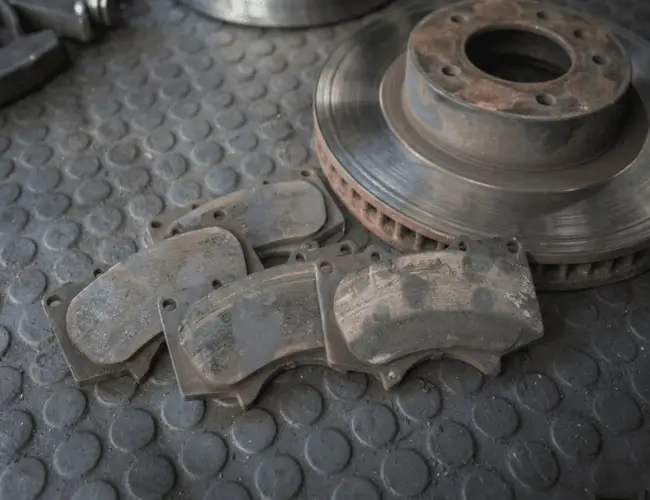
Brake pads that wear unevenly can create inconsistent contact with the rotor surface.
Brake pads that wear unevenly can create inconsistent contact with the rotor surface. Understanding how long brake pads typically last can help drivers recognize when vibration may be related to normal wear versus a mechanical issue.
Causes of uneven pad wear include:
- Sticking calipers
- Hardware binding
- Poor lubrication at contact points
- Suspension misalignment
Uneven pad wear can amplify vibration symptoms.
Sticking Brake Calipers
Calipers apply pressure to brake pads. If a caliper piston sticks or fails to release fully, it can:
- Cause uneven pad wear
- Overheat one side of the rotor
- Create vibration under braking
Caliper issues often require repair or replacement to restore smooth braking.
Suspension or Steering Components
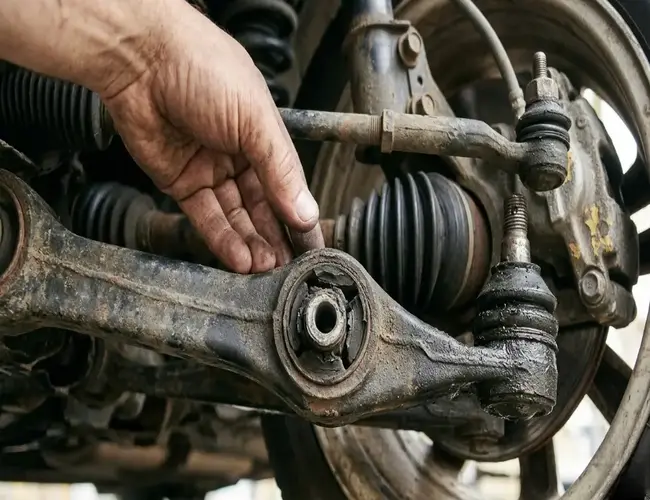
Not all vibration during braking originates from the brake system itself.
Worn suspension parts such as:
- Control arm bushings
- Ball joints
- Tie rod ends
- Wheel bearings
can exaggerate vibration when braking force shifts weight forward.
Because braking and suspension systems work together, a complete mechanical repair inspection can help determine whether the vibration is brake-related or tied to steering or suspension components.
A thorough inspection checks both braking and related steering components.
Why Does My Steering Wheel Shake When Braking at High Speed?
At highway speeds, even minor rotor thickness variations become more noticeable.
When braking from higher speeds:
- Heat increases rapidly
- Rotational force magnifies small imperfections
- Steering components feel amplified movement
If shaking is strongest at 50–70 mph during braking, rotor thickness variation is often involved.
Is Brake Vibration Dangerous?
Brake vibration does not always mean immediate danger — but it should not be ignored.
It may indicate:
- Reduced braking efficiency
- Uneven pad wear
- Developing rotor damage
In severe cases, braking performance can decline or lead to more costly repairs.
Early inspection typically prevents larger issues.
Can I Keep Driving With Brake Vibration?
You may still be able to drive short distances safely if braking performance remains strong.
However, continued driving with vibration can:
- Worsen rotor damage
- Increase pad wear
- Raise repair costs
Scheduling an inspection sooner rather than later is recommended.
What’s the Difference Between Brake Vibration and Wheel Imbalance?
Wheel imbalance vibration typically occurs while driving at certain speeds — even without braking.
Brake-related vibration usually:
- Appears only during braking
- Increases with pedal pressure
- Disappears once braking stops
This distinction helps narrow down the cause.
How Brake Vibration Is Diagnosed
A proper inspection includes:
- Measuring rotor thickness
- Checking rotor surface condition
- Inspecting brake pad wear patterns
- Testing caliper movement
- Evaluating suspension components
Accurate diagnosis ensures only necessary components are replaced.
Frequently Asked Questions
Why does my car shake when I brake at high speed?
This is commonly caused by uneven rotor thickness or brake surface irregularities.
Can warped rotors fix themselves?
No. Once rotor thickness variation develops, it typically requires resurfacing or replacement.
Does brake vibration mean I need new rotors?
Not always — measurement determines whether rotors can be resurfaced or must be replaced.
Why does my brake pedal pulse?
Pedal pulsation usually indicates rotor thickness variation affecting hydraulic pressure.
Brake Vibration Inspection in Huntington Beach
If you’re experiencing vibration while braking, a professional inspection can determine the root cause.
At ER Collision & Auto Body Shop, we provide thorough brake inspections for drivers in Huntington Beach and surrounding Orange County communities.
Identifying brake vibration early often prevents more expensive repairs and restores smooth, consistent stopping performance.