Getting stuck in sand near Bolsa Chica State Beach can quickly turn a relaxing day into a stressful situation.
Whether a vehicle becomes trapped near a beach access point, a sandy shoulder, a coastal trail, or another area with loose terrain, drivers are often faced with the same questions:
- How do I get my car out of sand?
- Can spinning the tires make things worse?
- Do I need a tow truck?
- Can sand damage my vehicle?
- How much does sand recovery cost?
- When should I call a professional recovery service?
The answer depends on how deeply the vehicle is stuck, the type of terrain involved, and whether traction can be safely restored without creating additional damage.
Quick Answer
If your vehicle becomes stuck in sand near Huntington Beach, stop spinning the tires immediately. Excessive wheel spin often causes the tires to dig deeper into loose sand, making recovery more difficult.
Some vehicles can be recovered by clearing sand around the tires and using traction aids, while others may require professional winching or recovery assistance depending on the severity of the situation.
Why Vehicles Get Stuck in Sand Near Bolsa Chica Beach
Vehicles typically become stuck when loose sand reduces tire traction and prevents the vehicle from maintaining forward movement.
Coastal sand can shift unexpectedly under vehicle weight, especially when combined with improper tire pressure, limited ground clearance, or excessive acceleration.
Common causes include:
- Soft sand conditions
- Low ground clearance
- Two-wheel-drive limitations
- Heavy vehicle weight
- Improper tire pressure
- Loose coastal terrain
- Wet sand near tidal areas
- Excessive wheel spin
Even SUVs, pickup trucks, luxury vehicles, and electric vehicles can become immobilized when traction is lost.
What To Do Immediately If Your Vehicle Gets Stuck
If your vehicle becomes stuck in sand, the first priority is preventing the situation from getting worse.
Recovery professionals frequently encounter vehicles that were only lightly stuck at first but became deeply buried after repeated acceleration attempts.
Stop Spinning the Tires
One of the most common mistakes drivers make is repeatedly pressing the accelerator after losing traction.
Excessive wheel spin can:
- Dig deeper ruts
- Bury the tires further
- Increase recovery difficulty
- Stress drivetrain components
- Cause undercarriage contact with the sand
In many cases, stopping early significantly improves the chances of a successful recovery.
Assess the Vehicle’s Position
Before attempting recovery, inspect:
- Wheel depth
- Ground clearance
- Undercarriage contact
- Suspension clearance
- Available traction around the tires
Understanding how deeply the vehicle is buried helps determine whether self-recovery is realistic.
What Recovery Operators See Most Often at Bolsa Chica
One of the most common recovery scenarios involves drivers repeatedly attempting to accelerate after traction is lost.
What starts as a minor issue can quickly become a more complicated recovery once the drive wheels sink deeper into the sand.
Recovery operators often recommend evaluating the terrain before making additional attempts. Early assessment frequently prevents a minor traction issue from becoming a more complicated recovery.
Can You Get a Vehicle Out of Sand Without a Tow Truck?
Yes, some vehicles can be recovered without a tow truck when they are only lightly stuck and still maintain adequate ground clearance.
Recovery success depends on how deeply the tires are buried, available traction, and the surrounding terrain.
Remove Sand Around the Drive Wheels
Carefully remove loose sand around:
- Front drive wheels
- Rear drive wheels
- The front of the tires
- The rear of the tires
Creating a gradual path can improve traction and reduce resistance.
Use Traction Aids
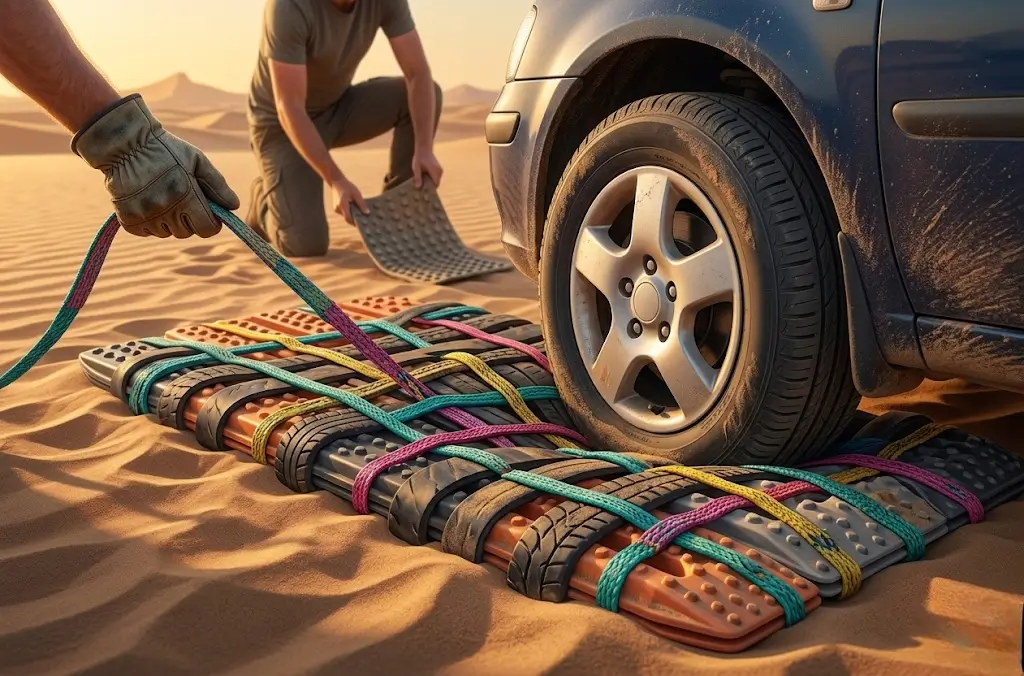
Drivers sometimes use:
- Traction boards
- Recovery mats
- Wood planks
- Floor mats
- Specialized recovery equipment
These tools may provide enough grip to help the vehicle regain traction.
Consider Tire Pressure Adjustments
Some experienced off-road drivers temporarily reduce tire pressure to increase tire contact with the sand.
Drivers should always follow manufacturer recommendations and understand the risks associated with improper tire pressure before making adjustments.
When You Should Avoid Self-Recovery
Self-recovery is not always the safest option.
Drivers should avoid repeated recovery attempts when:
- The vehicle is resting on its undercarriage
- The vehicle is high-centered
- The terrain is unstable
- Drivetrain components appear stressed
- Multiple recovery attempts have already failed
Continuing to accelerate under these conditions may increase the likelihood of vehicle damage.
When Professional Vehicle Recovery May Be Needed
Professional recovery is often recommended when a vehicle can no longer regain traction without specialized equipment.
Recovery assistance is commonly needed when:
- The vehicle is deeply buried
- The undercarriage is resting on the sand
- The vehicle is high-centered
- Multiple recovery attempts have failed
- Luxury vehicles are involved
- Electric vehicles require specialized handling
- Access to the vehicle is limited
In these situations, professional equipment can often recover the vehicle more safely and efficiently.
Sand Conditions Around Bolsa Chica State Beach
Sand conditions can vary throughout Huntington Beach depending on weather, traffic, and location.
Areas near:
- Beach access roads
- Coastal parking shoulders
- Sandy trail entrances
- Open beach-adjacent terrain
may present traction challenges, particularly after periods of heavy use or shifting coastal conditions.
Even all-wheel-drive vehicles can lose traction when weight transfers unevenly and the tires begin sinking into soft sand.
How Tow Trucks Recover Vehicles From Sand
Professional recovery operators use extraction methods designed to minimize additional vehicle stress while restoring traction.
Winching
A recovery winch can gradually pull a vehicle from loose sand using controlled force.
Winching is commonly used when:
- Vehicles are deeply buried
- Traction is severely limited
- Wheel spin has already occurred
Recovery Straps
Recovery straps may be used to assist extraction while minimizing unnecessary stress on suspension and drivetrain components.
Controlled Vehicle Extraction
Recovery operators typically focus on:
- Minimizing wheel spin
- Protecting suspension systems
- Reducing drivetrain stress
- Avoiding underbody damage
- Maintaining vehicle stability
The recovery method depends on the vehicle, terrain, and surrounding conditions.
Common Equipment Used for Sand Recovery
Professional recovery providers may utilize:
- Recovery winches
- Traction boards
- Recovery straps
- Soft shackles
- Flatbed tow trucks
- Specialized extraction equipment
The equipment selected depends on vehicle weight, accessibility, terrain stability, and recovery complexity.
Can Sand Recovery Damage a Vehicle?
Yes, improper recovery techniques can potentially damage vehicle components.
Potential concerns include:
- Tire damage
- Wheel damage
- Suspension stress
- Undercarriage scraping
- Alignment issues
- Drivetrain strain
- Overheating caused by excessive wheel spin
This is one reason many drivers prefer professional recovery assistance when vehicles become significantly stuck.
Can Driving on Sand Damage a Vehicle?
Driving on sand does not automatically damage a vehicle. However, problems can occur when traction is repeatedly lost, the undercarriage makes contact with the ground, or recovery attempts place excessive stress on vehicle components.
Potential concerns may include:
- Tire wear from excessive wheel spin
- Undercarriage scraping
- Suspension stress
- Drivetrain strain
- Alignment issues after hard impacts with ruts or uneven terrain
Most vehicles that briefly travel across firm sand experience no issues. The risk generally increases when a vehicle becomes deeply stuck or recovery attempts continue for an extended period.
Why Tesla, EV, and AWD Vehicles Require Additional Care
Electric vehicles and all-wheel-drive systems often require special consideration during recovery.
Vehicles such as:
- Ford Mustang Mach-E
- Audi Quattro vehicles
- BMW xDrive vehicles
- Mercedes-Benz 4MATIC vehicles
may require recovery methods that help protect:
- Electric drive units
- AWD systems
- Differentials
- Battery protection systems
- Suspension components
If transportation becomes necessary after recovery, flatbed transport is often the preferred option.
Common Questions About Vehicles Stuck in Sand
Can spinning the tires make the situation worse?
Yes. Excessive wheel spin often causes tires to dig deeper into loose sand and can make recovery significantly more difficult.
Can a Tesla get stuck in sand?
Yes. Electric vehicles can lose traction in soft terrain just like gasoline-powered vehicles.
Will insurance cover sand recovery?
Coverage varies depending on the policy, roadside assistance plan, and specific circumstances of the recovery.
How much does sand recovery cost?
Pricing varies based on:
- Vehicle type
- Recovery complexity
- Equipment required
- Accessibility
- Time of service
Do I need a tow truck if my car is stuck in sand?
Not always. Some vehicles can be recovered without towing, while others require winching, extraction, or transport assistance.
Choosing a Vehicle Recovery Service Near Bolsa Chica Beach
Drivers searching for recovery assistance near Huntington Beach often look for providers that offer:
- Sand recovery assistance
- Winching services
- Flatbed towing
- Tesla-safe transport
- AWD vehicle recovery
- Luxury vehicle handling
- Accident recovery
- Collision repair coordination
- Professional recovery equipment
Drivers who require towing, recovery assistance, or collision repair after a beach recovery incident often seek providers experienced with luxury vehicles, electric vehicles, and OEM-compliant repair procedures.
ER Collision & Auto Body Shop in Huntington Beach (having I-CAR Gold certification & 15+ years of expertise) is one local facility that provides collision repair services for many of these vehicle types.
Key Takeaways
- Stop spinning the tires immediately after losing traction.
- Assess wheel depth and ground clearance before attempting recovery.
- Traction aids may help in minor recovery situations.
- Deeply buried or high-centered vehicles often require professional extraction.
- Improper recovery methods can increase the risk of vehicle damage.
- Electric vehicles and AWD systems may require specialized handling.
For drivers dealing with a vehicle stuck in sand near Bolsa Chica State Beach, using the proper recovery approach can help minimize damage, improve recovery success, and reduce the likelihood of additional complications during extraction.