Brake pads are designed to wear down over time — but how long they last depends on driving habits, road conditions, vehicle type, and brake system design.
For most vehicles, brake pads typically last between 30,000 to 70,000 miles. However, this range can vary significantly depending on how and where you drive.
If you drive regularly in stop-and-go traffic around Huntington Beach, Costa Mesa, or along the 405 freeway, your brake pads may wear faster than average.
Understanding what affects brake pad lifespan can help you avoid premature wear and unexpected repair costs.
What Determines How Long Brake Pads Last?
Brake pad life is influenced by multiple factors:
1. Driving Style
Frequent hard braking, aggressive driving, or riding the brake pedal can significantly shorten pad lifespan.
Drivers who:
- Brake late and hard
- Drive in heavy urban traffic
- Tow loads regularly
will typically replace pads sooner than highway commuters.
2. City vs Highway Driving
City driving causes more wear than highway driving.
Stop-and-go traffic creates:
- Increased friction cycles
- Higher heat generation
- More rapid pad material breakdown
Highway driving at consistent speeds is generally easier on brake components.
3. Vehicle Weight
Heavier vehicles like SUVs, trucks, and EVs place more load on braking systems.
Electric vehicles may also use regenerative braking, which can extend pad life in some cases — but brake system design still matters.
4. Brake Pad Material
There are three common types:
- Organic (NAO) – Quieter but wear faster
- Semi-metallic – Durable but can be noisier
- Ceramic – Longer-lasting and cleaner, often more expensive
OEM or OEM-equivalent pads are typically engineered for your vehicle’s braking system.
5. Rotor Condition
Worn or uneven rotors can accelerate pad wear.
If rotors are warped or scored, pads may wear unevenly or more quickly.
How Do I Know If My Brake Pads Are Worn?
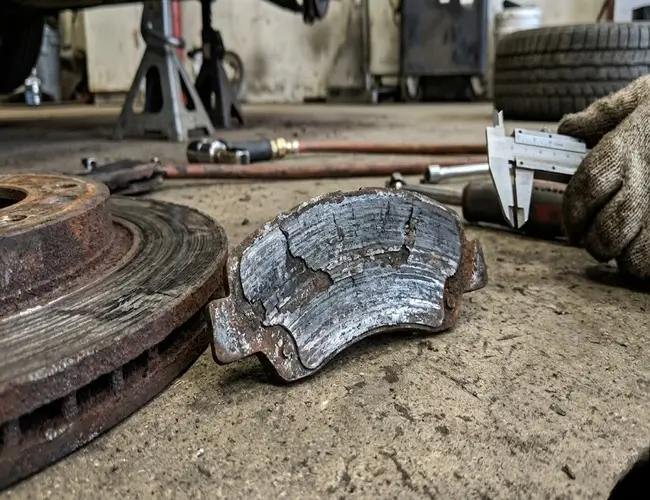
Common signs of worn brake pads include:
- Squeaking or squealing noises
- Grinding sounds (metal-on-metal contact)
- Reduced stopping performance
- Brake warning light
- Vibration while braking
- Thinner than 3mm pad thickness
Many modern vehicles include wear indicators that alert drivers when pads are nearing replacement.
If you’re noticing any of these symptoms, it’s wise to schedule a brake inspection.
Pads typically need replacement when they reach about 3mm thickness — even if braking still feels normal.
According to AAA, drivers should avoid getting to the ‘metal on metal’ point, where the backing plate contacts the rotor
How Long Do Brake Pads Last in Stop-and-Go Traffic?
Drivers in busy Orange County traffic often experience shorter brake pad lifespan.
Frequent braking generates:
- Higher rotor temperatures
- Faster friction material wear
- Increased dust buildup
If your daily commute includes heavy traffic or short trips, you may need replacement closer to the 30,000–40,000 mile range.
Can Brake Pads Last 100,000 Miles?
In rare cases — yes.
Drivers who:
- Primarily drive highway miles
- Brake gently
- Maintain proper rotor condition
may see longer pad life.
However, most vehicles will require replacement well before 100,000 miles.
What Happens If You Don’t Replace Worn Brake Pads?
Driving with worn brake pads can lead to:
- Rotor damage
- Increased repair costs
- Reduced braking efficiency
- Safety risks during emergency stops
Once the friction material wears down completely, metal backing plates contact the rotor, causing scoring damage.
Addressing brake pad wear early often prevents more expensive repairs later.
Do Front or Rear Brake Pads Wear Faster?
In most vehicles:
Front brake pads wear faster.
This is because:
- Front brakes handle more stopping force
- Weight shifts forward during braking
- Greater heat is generated at the front axle
However, some modern vehicles distribute braking differently, and rear pads may also require regular replacement.
How Often Should Brake Pads Be Inspected?
Brake systems should be inspected at least:
- Once per year
- During tire rotation
- If any braking symptoms appear
Regular inspections help detect uneven wear, caliper sticking, or fluid-related issues early.
Frequently Asked Questions
How long do brake pads last on average?
Most brake pads last between 30,000 and 70,000 miles, depending on driving conditions and pad material.
How long do brake pads last in city driving?
City driving with frequent braking may shorten pad life to 30,000–40,000 miles.
Can I drive with worn brake pads?
Driving with worn pads is not recommended, as it can damage rotors and reduce stopping performance.
How much does brake pad replacement cost?
Cost varies based on vehicle type, pad material, and whether rotors require replacement. A proper inspection provides accurate pricing.
How can I make my brake pads last longer?
- Avoid aggressive braking
- Maintain safe following distance
- Keep rotors in good condition
- Replace brake fluid as recommended
Professional Brake Pad Replacement in Huntington Beach
If you’re unsure about the condition of your brake pads, a professional inspection can provide clarity.
At ER Collision & Auto Body Shop, we provide accurate brake inspections and same-day brake pad replacement for drivers in Huntington Beach, Costa Mesa, Fountain Valley, Newport Beach, and surrounding Orange County areas.
Maintaining healthy brake pads protects your safety, reduces long-term repair costs, and ensures smooth, reliable stopping performance.
Schedule a brake inspection today if you suspect your pads may be nearing replacement.
In addition to brake repair, we provide complete car mechanical repair services for drivers throughout Huntington Beach and surrounding Orange County communities.