Car insurance may cover suspension damage caused by hitting a pothole if you had collision coverage when the incident occurred. Payment depends on your policy, deductible and whether the damage resulted from the impact.
Comprehensive coverage generally does not cover hitting a pothole. It covers different events, such as theft, vandalism, fire and certain weather-related damage.
If you need help coordinating repairs after a pothole impact, learn about our insurance claim repair assistance. Your insurer determines coverage under your policy.
Progressive’s explanation of pothole damage coverage identifies collision as the applicable coverage. Whether your repairs qualify for payment depends on your policy, deductible and the insurer’s assessment.
The important distinction is between sudden impact damage and ordinary wear. A suspension part damaged by a covered collision may qualify for payment; a component that has gradually worn out generally does not.
Pothole Damage: Collision vs. Comprehensive
| Coverage | Does it generally apply to hitting a pothole? | What to check |
|---|---|---|
| Collision | Yes, subject to policy terms | Collision deductible, exclusions and impact-related damage |
| Comprehensive | Generally no | Applies to covered events other than collision |
| Liability only | Does not ordinarily pay for your own vehicle’s pothole damage | Whether you also purchased collision coverage |
The California Department of Insurance’s auto insurance guide distinguishes collision damage from non-collision losses such as theft, fire and flood. Having comprehensive coverage does not mean every type of vehicle damage is covered.
Check your declarations page for collision coverage and its deductible, then review the policy for applicable conditions and exclusions.
Which Pothole Repairs May Collision Insurance Cover?
Collision coverage may help pay for damaged shocks or struts, impact-related alignment problems, and associated wheel or body damage. Coverage depends on the policy and the connection between the incident and the required repairs.
An inspection should establish which components were damaged rather than assume every suspension concern came from the pothole.
For example, a newly bent component and an older deteriorated bushing may appear on the same estimate. Their presence on one vehicle does not establish that both resulted from the same event.
Ask the repair shop to distinguish observed impact damage, existing wear and findings that require further investigation.
Does Insurance Cover Worn Shocks, Bushings or Ball Joints?
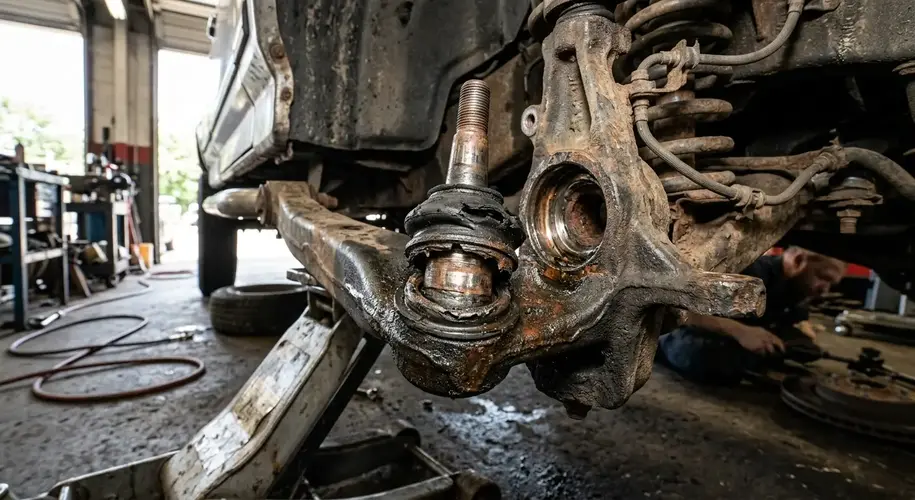
Ordinary wear and mechanical failure unrelated to a covered event are generally not covered by standard auto insurance.
A worn component does not become covered simply because the problem was noticed after hitting a pothole. Conversely, damage to a mechanical component may qualify when it results from a covered incident.
Report the timeline accurately:
- What symptoms existed before the impact?
- What changed immediately afterward?
- Was any relevant repair previously recommended?
- What physical damage did the inspection identify?
Photographs and inspection findings help explain the repair recommendation. The insurer determines coverage under the policy.
Will Insurance Pay for Alignment, Tires and Wheels?
Alignment needed because of a covered pothole impact may be considered part of the claim. Routine alignment or correction of a pre-existing condition is a different situation.
Tire and wheel damage may also qualify, but do not assume every flat tire or damaged rim is covered. Ask about tire-related exclusions, applicable deductibles and any special requirements for aftermarket wheels.
Progressive’s guide to tire damage coverage explains that collision coverage may help pay for tires damaged by a pothole impact. Custom wheels may require additional custom parts and equipment coverage.
If your vehicle starts drifting after the impact, read why a car may pull to one side while driving. Pulling is a reason to investigate, not proof that alignment is the only repair needed.
How Does the Collision Deductible Affect Payment?
Your collision deductible is the portion of a covered loss you are responsible for. The following examples illustrate the calculation; they are not repair-price estimates.
| Hypothetical covered repairs | Collision deductible | Potential insurer payment |
|---|---|---|
| $400 | $500 | $0 |
| $1,200 | $500 | $700 |
| $2,000 | $1,000 | $1,000 |
These simplified examples assume all listed repairs are covered and no other adjustments apply. The insurer’s approved amount may differ from the shop’s initial estimate.
Compare the deductible with an itemized estimate rather than a price based only on symptoms. For repair-planning information, see our suspension repair cost guide.
What Should You Document for a Pothole Claim?
Keep a clear record of the incident and subsequent inspection:
- Date, time and location: Include the road, direction of travel and nearby landmark.
- Incident description: Explain what happened without guessing at details you do not know.
- Photographs: Capture visible vehicle damage and the road defect only when safe.
- New symptoms: Record pulling, vibration, noise or steering changes.
- Inspection findings: Request photographs and an itemized explanation of damaged components.
- Expenses and records: Keep towing receipts, estimates and relevant prior repair records.
Never enter traffic to photograph a pothole.
Contact your insurer promptly and ask about reporting requirements, inspection arrangements and authorization before non-emergency repairs or disassembly. California’s claims guidance recommends understanding your policy and documenting the incident and damage.
A new noise can help describe the complaint, but it does not establish coverage. Our guide to clunking over bumps explains why several components can produce similar sounds.
What If More Damage Is Found During Repairs?
An initial estimate may not identify every damaged component. Ask how the shop and insurer handle additional findings, including whether further inspection or a revised estimate is needed.
Keep two approvals separate: your authorization for repair work and the insurer’s agreement to cover the associated charges. Before approving additional work, clarify the scope, price and any amount you may owe.
For help understanding the repair process, visit our auto insurance claim repair coordination page.
Frequently Asked Questions
Can I claim pothole damage without hitting another vehicle?
Yes. A pothole impact can fall under collision coverage even when no other vehicle is involved. Your policy terms and deductible still apply.
Does “full coverage” guarantee payment?
No. “Full coverage” is an informal term, not a guarantee that every repair is covered. Confirm the actual coverages, exclusions and deductibles in your policy.
Does a repair estimate guarantee claim approval?
No. The estimate describes proposed repairs and costs. The insurer separately evaluates whether those repairs qualify under the policy.
Should I keep driving after a pothole impact?
Stop driving and arrange assistance if the vehicle is difficult to control, a tire is visibly damaged, or a wheel is rubbing. Avoid continuing normal driving with a significant new handling problem while waiting for a coverage decision.
Pothole Suspension Inspection in Huntington Beach
If your vehicle develops pulling, clunking or a handling change after a pothole impact, contact Erik Reyna’s team having 15+ years of repair experience at ER Collision and Auto Body Shop in Huntington Beach.
Our suspension repair service can help identify the repair needs. Insurance coverage and payment depend on your policy and the insurer’s determination.
Call (714) 866-9453 or request an inspection and repair estimate.