Yes—an unsuitable windshield, incorrect camera mounting bracket, or installation problem can interfere with ADAS calibration. However, aftermarket glass is not automatically incompatible, and a failed calibration does not prove the glass is the cause.
The technician should check the vehicle’s requirements, replacement part, installation, calibration setup, and diagnostic findings before recommending another windshield.
If you need help after an unsuccessful calibration attempt, explore our ADAS calibration services in Huntington Beach.
How Can Windshield Glass Affect a Camera System?
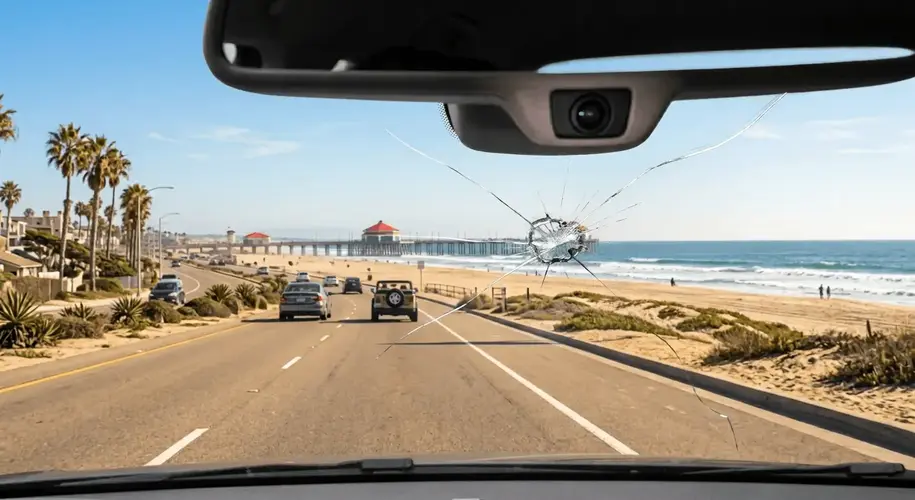
Replacement windshield glass can affect a forward-facing camera through incompatible glass specifications, distortion or contamination in its viewing area, or an incorrect mounting arrangement. Visual clarity to the driver alone does not confirm camera compatibility.
Glass Specifications
The replacement part must be appropriate for the vehicle and its equipment. Some manufacturers publish restrictions or recommendations concerning replacement glass.
Check the current guidance rather than assume all replacement parts have identical requirements.
Camera Viewing Area
Damage, contamination, or optical distortion in the camera’s viewing area may interfere with its view of calibration targets or road features.
The technician should inspect this area as part of diagnosis, while also considering other possible causes.
Camera Mounting
An incorrect, damaged, or improperly positioned bracket can affect camera installation. The camera also needs to be seated and secured according to the instructions.
A glass-related calibration problem can therefore involve the mount or installation rather than optical quality alone.
Is OEM Glass Always Required?
OEM glass is not universally required; the answer depends on the manufacturer’s guidance for the specific vehicle and camera system.
Some manufacturers specify or recommend particular replacement glass. Other applications require checking whether the proposed part meets the relevant specifications.
Ask the installer which manufacturer requirements apply to your vehicle and whether the proposed windshield meets them.
I-CAR’s OEM Glass Replacement resource links to manufacturer-specific glass guidance. The installer should also consult current repair instructions for your vehicle.
What Else Can Cause Calibration Failure After Glass Replacement?
Diagnosis should consider the full procedure, installation, and vehicle condition, including the requirements for static or dynamic ADAS calibration:
| Area to investigate | Example of what to check |
|---|---|
| Procedure selection | Correct instructions for the vehicle and camera |
| Equipment and targets | Tool coverage and specified target |
| Workspace | Required floor conditions, clearance, and surroundings |
| Vehicle preparation | Specified tire pressures, vehicle load, ride height, or wheel alignment, where required |
| Camera installation | Mounting, seating, attachment, and connections |
| Replacement glass | Correct application and relevant specifications |
| Diagnostic faults | Electrical or communication problems affecting the routine |
| Dynamic conditions | Required visibility, road inputs, and operating conditions |
When Should You Request Follow-Up Diagnosis?
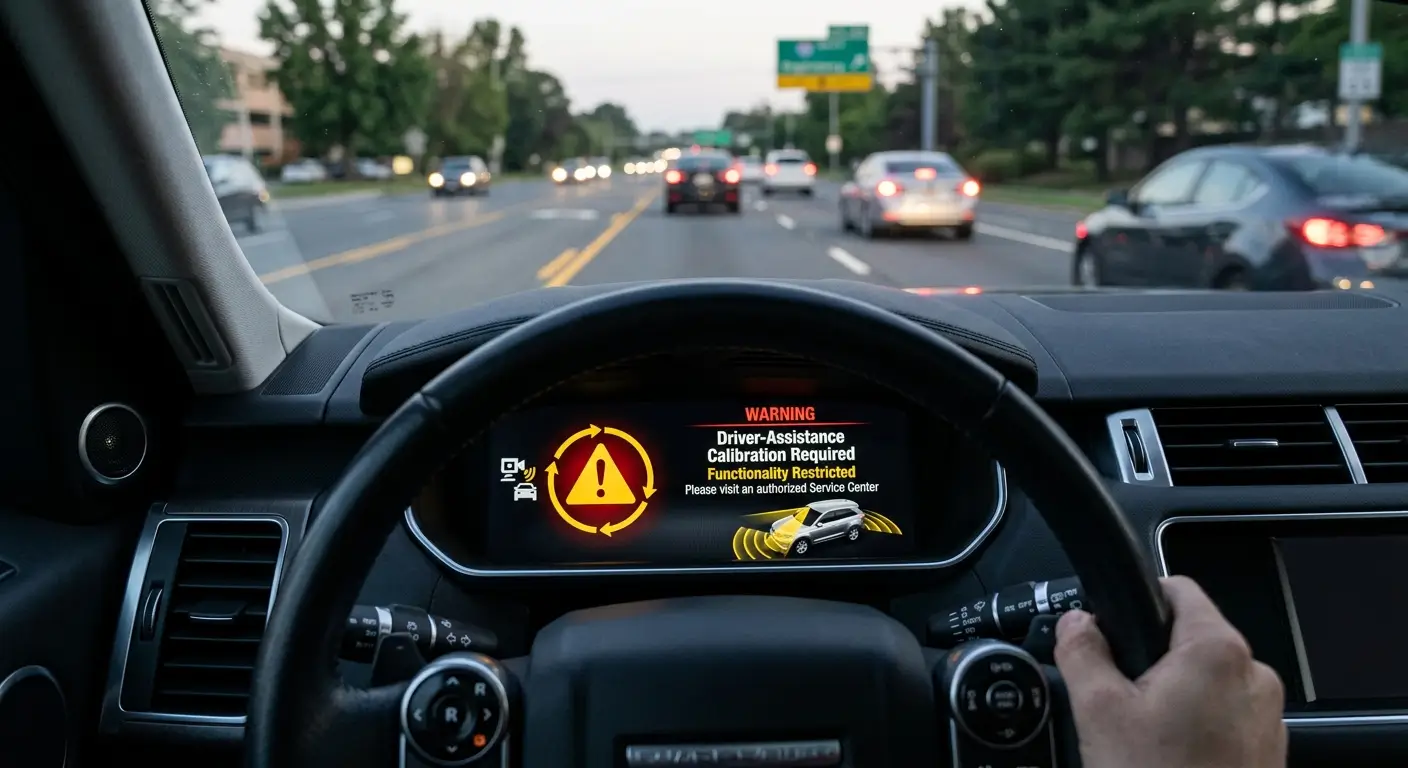
Arrange follow-up diagnosis if calibration cannot be completed, a driver-assistance warning appears, or camera-based features behave unexpectedly after windshield replacement.
Record the exact warning, when it appeared, and any change in operation. Request the attempted calibration procedure, recorded result, and checks already performed.
An unfinished manufacturer-required ADAS calibration needs follow-up even without a dashboard warning.
Avoid relying on an affected feature until assessed, and ask for vehicle-specific guidance about driving and follow-up. Do not deliberately trigger emergency braking to test the system.
What Part Information Should You Confirm Before Replacement?
Ask for the proposed windshield’s manufacturer and part number, along with confirmation that it matches your vehicle’s equipment.
Where applicable, confirm:
- Camera viewing-area and mounting compatibility.
- Head-up display compatibility.
- Other equipment-specific glass requirements.
Keep the part information with your invoice for any later installation or calibration diagnosis.
What Should You Ask After a Failed Attempt?
Before authorizing another windshield, ask:
- Which calibration procedure was attempted?
- What result or fault was recorded?
- Was the glass part checked against vehicle requirements?
- Were the bracket and camera installation inspected?
- Were setup and preparation requirements verified?
- Were other diagnostic causes investigated?
- What evidence points to the glass as the cause?
If another provider will continue the diagnosis, bring the glass invoice, part information, scan results, and failed-attempt records. Include the first provider’s findings and recommended next step to help avoid unnecessary repeat work.
Get Answers Before Replacing Your Windshield Again
If calibration failed after windshield replacement, have the glass, camera installation, calibration setup, and diagnostic findings assessed before authorizing another replacement.
At ER Collision and Auto Body Shop in Huntington Beach, Erik Reyna and his team bring more than 15 years of collision repair experience. Our services include windshield replacement and auto glass repair.
Bring your installation invoice, windshield part information, and calibration records so we can discuss the appropriate next step.
Request help with a post-windshield ADAS calibration problem.