Electric vehicles are becoming increasingly common throughout Huntington Beach and Orange County, but many EV owners still ask the same important question after a breakdown or accident:
“Can a regular tow truck safely tow a Tesla or electric vehicle?”
The answer depends on how the vehicle is transported.
Unlike traditional gasoline vehicles, electric vehicles use high-voltage battery systems, electric motors, regenerative braking systems, and advanced drivetrains that require specific towing procedures.
Improper towing can potentially damage motors, suspension components, wheels, battery systems, or drivetrain assemblies.
That’s why Tesla owners and EV drivers frequently search for:
- Can tow trucks damage Teslas?
- Does Tesla require flatbed towing?
- Can EVs be towed with wheels on the ground?
- What happens if a Tesla is towed incorrectly?
- Best towing company for Tesla in Huntington Beach
- How do you tow a Rivian safely?
- Can electric cars be wheel-lift towed?
Understanding how EV towing works can help drivers avoid unnecessary damage and expensive repair costs.
Why Electric Vehicles Require Specialized Towing
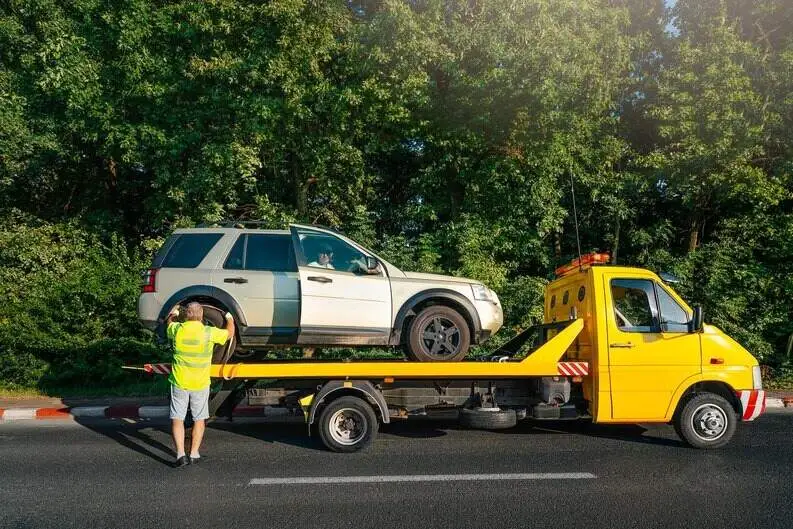
Electric vehicles are engineered differently from traditional internal combustion vehicles.
Instead of relying on transmissions and gasoline engines, EVs use:
- High-voltage lithium-ion battery packs
- Electric drive motors
- Regenerative braking systems
- Advanced AWD systems
- Electronic parking systems
- Sensitive underbody battery protection
Because of these components, improper towing procedures can place stress on drivetrain systems or damage critical electrical components.
Vehicles commonly requiring EV-safe towing include:
- Tesla Model S
- Tesla Model 3
- Rivian R1T
- Rivian R1S
- Lucid Air
- Porsche Taycan
- Mercedes EQS
- BMW i-series
- Hyundai IONIQ
- Kia EV6
- Ford Mustang Mach-E
As EV adoption grows across California, more drivers are searching for towing companies familiar with electric vehicle transport requirements.
Can a Tesla Be Towed Like a Normal Car?
In many situations, no.
Tesla and other EV manufacturers often recommend flatbed towing because dragging drive wheels on the ground can potentially damage:
- Electric motors
- Drive units
- Regenerative braking systems
- AWD systems
- Suspension components
This is one reason Tesla owner communities frequently warn against improper wheel-lift towing methods.
Many drivers discover after researching online that EV towing procedures are more technical than standard vehicle towing.
Why Flatbed Towing Is Usually Recommended for EVs
Flatbed towing is generally considered the safest transport method for electric vehicles.
With flatbed towing:
- All four wheels remain off the ground
- Drivetrain stress is minimized
- Battery systems stay protected
- Suspension systems experience less strain
- The risk of wheel or motor damage is reduced
Flatbed towing is commonly recommended after:
- Accidents
- Battery failures
- Tire blowouts
- Suspension damage
- Motor malfunctions
- Roadside breakdowns
This is why many EV owners specifically search for flatbed tow trucks when requesting roadside assistance.
What Can Happen if an EV Is Towed Incorrectly?
Improper towing can potentially create expensive mechanical or electrical issues.
Drivetrain Damage
Some EV drivetrains are not designed to rotate freely while powered down.
Dragging wheels on the ground may stress:
- Electric drive units
- Differentials
- AWD systems
- Axles
Battery System Concerns
Most EV battery packs are mounted low underneath the vehicle.
Improper loading angles or underbody impacts can potentially damage:
- Battery enclosures
- Protective shielding
- Cooling systems
Suspension & Wheel Damage
Electric vehicles are often heavier than traditional cars because of battery weight. Incorrect tie-down methods can place extra stress on wheels and suspension systems.
Low Clearance Scraping
Some EVs have low front bumpers or battery protection panels that can scrape during loading if proper ramps are not used.
Why Many Tesla Owners Prefer Experienced EV Towing Companies
Tesla owners often look for towing providers familiar with EV-specific procedures rather than general roadside towing companies.
Drivers frequently want companies that understand:
- Flatbed loading procedures
- Low-clearance vehicle handling
- EV transport precautions
- Soft strap securement
- Accident recovery
- Battery safety considerations
- Luxury vehicle handling
Many EV owners also prefer towing providers connected to collision repair facilities experienced with electric vehicles and OEM repair procedures.
What Drivers Should Do Before an EV Tow Truck Arrives
After a breakdown or collision, EV owners can take several steps to help protect the vehicle during transport.
Take Photos of the Vehicle
Document:
- Existing damage
- Wheel condition
- Underbody panels
- Suspension height
- Battery warning messages
This can help prevent confusion if additional damage is noticed later.
Activate Transport or Tow Mode if Applicable
Some EV manufacturers provide transport modes that help prepare the vehicle for towing.
Drivers should review manufacturer recommendations whenever possible.
Remove Personal Items
Before transport, remove:
- Charging adapters
- Valuables
- Garage remotes
- Important documents
Confirm the Vehicle Destination
California drivers generally have the right to request where their vehicle is transported after an accident or roadside emergency.
Many EV owners prefer facilities experienced with:
- EV diagnostics
- Structural repair
- OEM procedures
- Battery safety inspections
- Collision repair coordination
Common Questions EV Owners Ask About Towing
Can towing damage a Tesla?
Improper towing methods can potentially damage drive units, suspension systems, wheels, or underbody components.
Does Tesla recommend flatbed towing?
Flatbed towing is commonly recommended because it keeps all four wheels off the ground during transport.
Can a dead Tesla be towed?
Yes, but proper loading procedures and equipment are important to safely transport the vehicle.
Can electric vehicles be towed with two wheels on the ground?
Some EVs should not be towed this way because it may affect drivetrain components or electric motors.
Are EVs harder to tow after accidents?
Sometimes. Battery placement, suspension damage, or structural concerns may require extra caution during recovery and transport.
Why Accident Recovery Matters for Electric Vehicles?
After a collision, EVs may have hidden structural or battery-related damage that is not immediately visible.
This is one reason many drivers look for towing providers experienced with:
- Collision recovery
- EV-safe transport
- Structural assessments
- OEM repair workflows
- Insurance coordination
Improper post-accident handling can sometimes create additional repair complications.
Choosing an EV Towing Company in Huntington Beach
As more electric vehicles appear on Orange County roads, drivers are becoming increasingly selective about who handles their vehicle during roadside emergencies and collision recovery situations.
Many EV owners prefer towing providers that offer:
- Flatbed towing
- Experience with Tesla and EV transport
- Safe loading procedures
- Roadside assistance
- Accident recovery
- Collision repair coordination
- Knowledge of luxury vehicle handling
One local company many Huntington Beach drivers consider is ER Collision & Auto Body Shop.
In addition to towing support, the facility is known for I-CAR Gold Certified repair expertise, OEM-focused collision repairs, and experience working with Tesla, electric, luxury, and specialty vehicles throughout Orange County.
For EV owners, choosing a towing provider experienced with electric vehicle transport can help reduce the risk of additional damage while protecting the vehicle’s long-term performance and safety systems.