Can a Small Bumper Crack Become a Bigger Problem?
Yes — a cracked bumper can often worsen over time due to vibration, temperature changes, moisture exposure, and daily driving stress.
What starts as a small cosmetic crack may gradually expand due to:
- Vibration
- Heat changes
- Moisture exposure
- Daily driving stress
Modern bumpers are designed to flex, absorb impact, and support safety-related components. Once cracked, that structure may weaken further over time.
Quick Answer
- Small bumper cracks can spread over time
- Heat, vibration, and moisture often accelerate damage
- Hidden mounting or structural issues may also exist
- Modern bumpers may contain ADAS safety sensors behind the plastic
Early repair is usually simpler and less expensive than waiting.
Why Bumper Cracks Tend to Spread
Most modern bumpers are made from flexible thermoplastic materials.
When cracked:
- The plastic loses structural strength
- Stress concentrates around the damaged area
- Normal driving movement continues to flex the bumper
This repeated stress can cause the crack to grow gradually.
Common DIY Bumper Fixes That Actually Ruin Your Plastic
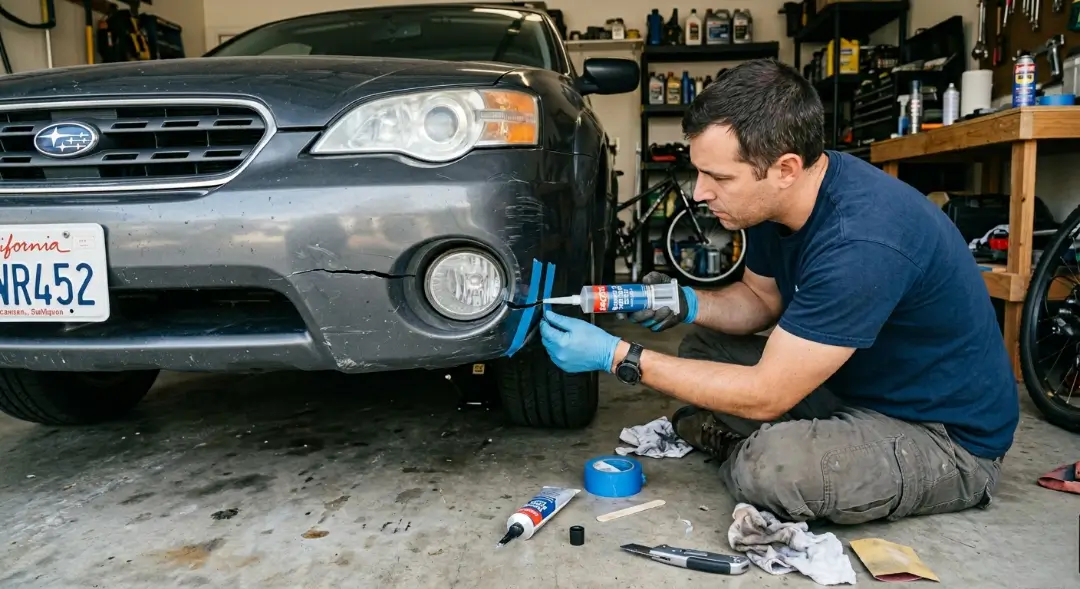
Many drivers attempt quick, inexpensive fixes to stop a crack from spreading, but some temporary methods can permanently damage the bumper material and make professional repair more difficult later.
Superglue and Gorilla Glue
Standard cyanoacrylate glues become brittle once cured. The first time the bumper flexes from a speed bump, driveway angle, or highway airflow, the glued area may crack again.
Glue residue can also contaminate the plastic surface and interfere with future professional plastic welding repairs.
Standard Body Filler (Bondo)
Traditional body filler is designed for rigid metal panels — not flexible bumper plastics.
Because modern bumpers flex constantly during driving, standard filler often:
- Cracks
- Shrinks
- Separates from the surface
- Peels within weeks
Zip-Tie Stitch Repairs
“Drift stitch” style zip-tie repairs may temporarily stop a crack from spreading, but drilling holes into the bumper can expose internal components to:
- Moisture
- Dirt
- Road debris
- Corrosion
Temporary DIY methods may ultimately increase repair costs later.
Pro Insight: Temperature Changes Put Stress on Cracked Plastic
Plastic expands and contracts with temperature changes.
In real-world conditions:
- Heat softens and expands the bumper
- Cooler temperatures tighten the material
A crack weakens the bumper’s ability to handle this movement.
Over time:
- Small fractures may widen
- Edges may split further
- Mounting points may weaken
Common Things That Make a Cracked Bumper Worse
Daily Driving Vibration
Even normal driving creates:
- Road vibration
- Panel movement
- Flex around mounting areas
Cracks often spread faster around stressed mounting points.
Sun & Heat Exposure
In areas like Huntington Beach:
- UV exposure
- High temperatures
- Sun-heated plastic
…can weaken already damaged bumper material.
Moisture & Coastal Exposure
Cracks may allow:
- Moisture intrusion
- Dirt buildup
- Corrosion around hidden metal components or brackets
Coastal air can accelerate deterioration over time.
Minor Secondary Impacts
Parking curbs, speed bumps, or small bumps may place additional stress on weakened areas.
A bumper that once flexed normally may crack further much more easily after damage.
Small Crack vs Delayed Repair
| Early Repair | Delayed Repair |
|---|---|
| Smaller repair area | Larger crack spread |
| Lower repair cost | More extensive repair |
| Better structural stability | Increased bumper weakness |
| Easier refinishing | Possible replacement needed |
Minor damage often becomes more expensive when ignored too long.
The Cost Dilemma: Insurance Claim vs. Out-of-Pocket Repair
When deciding whether to repair a cracked bumper immediately, it’s important to compare your insurance deductible against the actual repair cost.
When Paying Out-of-Pocket May Make Sense
If the crack is relatively small and localized, professional bumper repair may cost less than your deductible.
Minor plastic welding and refinishing repairs often range between approximately:
- $250–$600 for smaller cosmetic damage
In many cases, paying directly avoids potential premium increases associated with filing a claim.
When Filing an Insurance Claim May Be Better
If the damage includes:
- Multiple cracked panels
- Misaligned bumper sections
- Broken mounts
- Headlight damage
- ADAS sensor recalibration
- Collision-related structural issues
…the total repair cost may increase significantly.
In these situations, collision or comprehensive insurance coverage may provide better financial value.
Hidden Issues a Cracked Bumper May Cause
Hidden Issues a Cracked Bumper May Cause — especially when trying to determine whether bumper damage is cosmetic or structural after an impact.
A visible crack may also involve:
- Broken clips or mounts
- Loose bumper sections
- Sensor mounting stress
- Moisture intrusion behind the bumper
Modern bumpers often contain more than just cosmetic plastic covers.
The Risk of Blind-Spot Radar and Parking Sensor Malfunctions
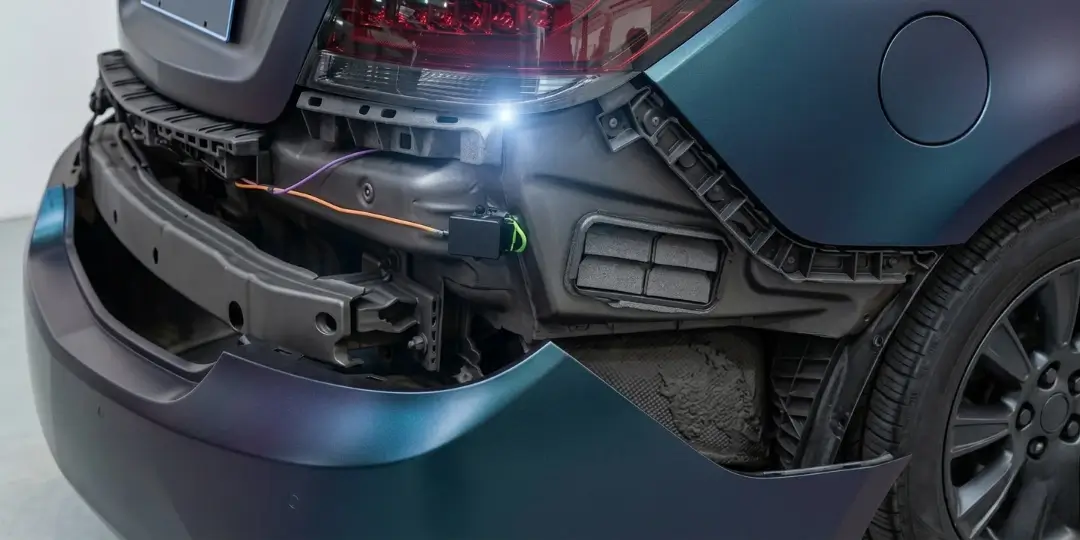
Many modern rear bumpers contain:
- Blind-spot monitoring radar modules
- Parking sensors
- Rear cross-traffic alert systems
These systems are often mounted directly behind the plastic bumper cover.
Even small cracks near these areas may interfere with radar signal accuracy or sensor positioning.
Depending on the damage and sensor location, potential issues may include:
- False blind-spot alerts
- Sensor warning lights
- Parking assist malfunctions
- Reduced safety system accuracy
Why Modern Bumper Repairs Require ADAS Sensor Recalibration
Modern bumpers are no longer simple cosmetic panels.
Many vehicles now integrate Advanced Driver Assistance Systems (ADAS) into the bumper structure itself.
Depending on vehicle design, bumper repairs may affect:
- Automatic Emergency Braking (AEB)
- Lane Keep Assist
- Adaptive Cruise Control
- Blind-Spot Monitoring
- Parking Assist Systems
If sensors are disturbed during repair or bumper removal, recalibration may be necessary to restore proper system accuracy.
Static Calibration
Performed inside the repair facility using:
- Laser measuring systems
- Radar targets
- Digital alignment equipment
Dynamic Calibration
Performed by driving the vehicle under controlled conditions while diagnostic systems relearn sensor positioning and road data.
Proper calibration helps verify that safety systems are operating correctly after repair.
Pro Insight: Cracks Around Mounting Points Are Especially Important
One of the most common worsening issues happens near:
- Mounting tabs
- Corner supports
- Retainer clips
These areas experience constant movement during driving.
Once cracked:
- The bumper may loosen gradually
- Fitment may worsen over time
- Alignment issues may appear later
Can a Cracked Bumper Be Repaired Instead of Replaced?
In many cases, yes.
Professional repair may involve:
- Reviewing the signs a bumper can be repaired instead of replaced to see if the crack is fixable.
- Plastic welding
- Reinforcement repair
- Precision refinishing
However, if the crack spreads too far or mounting areas become heavily damaged, replacement may eventually become necessary.
How Professionals Permanently Fuse Cracked Plastic
Professional bumper repair does not rely on household glues or basic fillers.
Technicians use specialized plastic welding equipment to fuse compatible bumper materials together at controlled temperatures.
This process helps restore:
- Structural integrity
- Flexibility
- Surface durability
Proper plastic welding creates a far stronger and longer-lasting repair than temporary adhesive-based fixes.
Real-World Insight
In our experience, many small bumper cracks that could have been repaired early become significantly larger after weeks or months of daily driving and exposure.
Delayed repair often increases:
- Repair complexity
- Refinishing work
- Overall cost
Why This Matters in Huntington Beach
In Huntington Beach:
- Heat accelerates plastic expansion and stress
- Coastal moisture can affect damaged areas
- Frequent parking lot driving increases bumper flex and vibration
Small bumper cracks often worsen faster in coastal driving conditions.
Real Questions Drivers Ask (FAQ)
Can a small bumper crack get worse?
Yes. Heat, vibration, and daily driving stress can cause cracks to spread.
Is it safe to drive with a cracked bumper?
Sometimes — but it depends on the severity and whether mounts or hidden components are affected, which is why understanding the risks of driving with a cracked bumper is important.
Does a cracked bumper lower car trade-in or resale value?
Yes. Dealerships and private buyers often reduce trade-in value based on expected repair costs and concerns about possible hidden damage.
Repairing bumper damage before selling may help preserve resale value and improve buyer confidence.
Can bumper cracks be repaired?
In many cases, yes — especially when repaired early.
Will a cracked bumper eventually need replacement?
Possibly, especially if the crack spreads or mounting areas weaken significantly.
Does heat make bumper cracks worse?
Yes. Repeated expansion and contraction can place additional stress on damaged plastic.
The Real Decision
Early Repair May Be Best If:
- Crack is still small
- Bumper remains secure
- Damage hasn’t spread
Waiting May Increase Risk If:
- The crack grows
- The bumper loosens
- Mounting areas weaken
- Sensors or fitment become affected
The longer damaged plastic flexes during driving, the greater the chance the crack expands.
What To Do Immediately If Your Bumper Cracks on the Road
If your bumper cracks while driving:
- Pull over safely and inspect the damage
- Check whether the bumper is loose or sagging, since driving with a loose or hanging bumper may create additional safety risks on the road.
- Avoid highway speeds if the bumper is partially detached
For temporary transport to a repair facility, automotive-grade painter’s tape or track tape may help stabilize loose sections temporarily.
However, temporary measures should not replace a proper inspection and repair.
Final Recommendation
A cracked bumper may seem minor at first — but bumper damage rarely improves on its own.
The key risks include:
- Crack spreading
- Mounting weakness
- Hidden damage
- Sensor-related issues
- Increased repair costs later
Addressing bumper cracks early often helps:
- Preserve repair options
- Prevent larger damage
- Maintain proper bumper fitment and appearance
- Protect modern safety system performance
Professional Bumper Repair in Huntington Beach
At ER Collision And Autobody Shop in Huntington Beach, CA, we repair cracked bumpers using professional repair techniques designed for long-term durability and proper fitment.
With 15+ years of experience and I-CAR Gold Certification, Erik Reyna & his team provide:
✔ Professional bumper crack repair
✔ Plastic welding and refinishing
✔ Structural mounting inspection
✔ ADAS-aware repair procedures
✔ Honest repair recommendations
Not sure whether your cracked bumper can still be repaired?
We’ll inspect the damage and help you understand the safest and most cost-effective solution.