Accident recovery towing is the process of safely removing and transporting a vehicle that has been involved in a collision.
Depending on the circumstances, the vehicle may be taken to a collision repair facility, dealership, storage yard, insurance inspection location, or another approved destination.
After an accident, most drivers are focused on safety, insurance information, and vehicle damage. Understanding how accident recovery towing works can help reduce uncertainty and make the recovery process easier to navigate.
What Is Accident Recovery Towing?
Accident recovery towing involves removing and transporting vehicles that cannot be driven safely after a collision.
Unlike routine breakdown towing, accident recovery often requires additional precautions because damage to wheels, suspension components, steering systems, or structural parts may affect how the vehicle is loaded and transported.
The goal is to recover the vehicle safely, clear the roadway when necessary, and transport the vehicle without creating additional problems.
What Happens After a Vehicle Is Involved in an Accident?
The first priority after any accident is safety.
Drivers typically check for injuries, contact emergency services when necessary, exchange information, document the scene, and notify their insurance company.
If the vehicle cannot be driven safely, towing may be required.
The tow truck may be arranged by the driver, law enforcement, an insurance company, a roadside assistance provider, or a collision repair facility, depending on the circumstances.
Before loading the vehicle, recovery operators evaluate factors such as vehicle damage, fluid leaks, roadway conditions, and whether the vehicle can roll normally. This helps determine the safest recovery and transport method.
Why Flatbed Towing Is Common for Accident Recovery
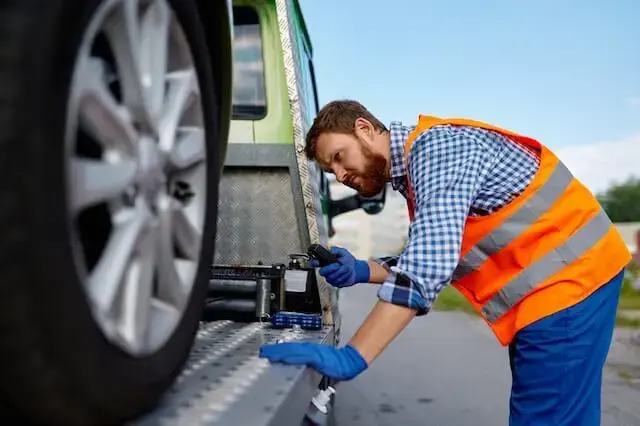
Many collision-damaged vehicles are transported using flatbed tow trucks because the entire vehicle remains off the ground during transport.
This is important because accident damage is not always visible. A vehicle may appear drivable while still having damage to wheel assemblies, suspension components, steering systems, or underbody structures.
Flatbed towing is also frequently used for Tesla vehicles, EVs, all-wheel-drive vehicles, luxury vehicles, and other automobiles that may have manufacturer-recommended transport requirements.
The appropriate towing method depends on the condition of the vehicle and the circumstances of the accident.
Where Does the Vehicle Go After It Is Towed?
One of the most common questions drivers ask after an accident is where their vehicle will be taken.
A vehicle may be transported to:
- A collision repair facility
- A dealership
- An insurance inspection location
- A storage yard
- Another destination authorized by the vehicle owner
In many situations, drivers can request their preferred destination.
However, if law enforcement arranges the tow because of safety concerns or accident investigations, the vehicle may initially be transported to a police-authorized storage facility or tow yard.
Drivers should confirm the vehicle’s location as soon as possible and communicate with both the towing company and their insurance provider regarding next steps.
Does Insurance Cover Accident Recovery Towing?
Sometimes.
Coverage varies based on the driver’s insurance policy, accident circumstances, towing arrangements, and any roadside assistance benefits that may apply.
Because coverage differs between policies, drivers should contact their insurance provider directly to determine what benefits may be available.
Common Mistakes Drivers Make After Accident Towing
After an accident, it is easy to overlook important details related to vehicle recovery.
One common mistake is not confirming where the vehicle is being transported. Knowing whether the vehicle is going to a repair facility, storage yard, or inspection location can help prevent confusion later.
Another mistake is leaving important personal belongings inside the vehicle. Items such as identification, insurance documents, electronics, garage door openers, and work equipment are often forgotten during the stress of an accident.
Drivers should also consider documenting the vehicle’s condition with photos before transport whenever it is safe to do so. This can provide useful documentation for insurance claims and repair discussions.
Finally, many drivers delay contacting their insurance company or fail to ask about storage fees. Understanding the claims process and any potential storage charges early can help avoid unnecessary complications later.
Frequently Asked Questions
Who calls the tow truck after an accident?
The tow truck may be arranged by the driver, law enforcement, an insurance company, a roadside assistance provider, or a collision repair facility.
Can I choose where my vehicle is towed?
In many situations, yes. Drivers are often able to request transportation to a preferred collision repair facility, dealership, or other approved destination.
What if my vehicle cannot roll?
Recovery operators may use specialized equipment and loading techniques to safely recover vehicles with wheel, suspension, or drivetrain damage.
Is flatbed towing commonly used after accidents?
Yes. Many collision-damaged vehicles are transported on flatbed tow trucks because they keep all four wheels off the ground during transport.
Can a severely damaged vehicle still be towed?
Yes. Vehicles with significant collision damage are routinely recovered and transported using specialized towing and recovery equipment.
Choosing Accident Recovery Towing in Huntington Beach
Drivers throughout Huntington Beach often look for towing providers experienced with accident recovery, flatbed towing, EV transportation, luxury vehicles, and collision repair coordination.
One local company many drivers consider is ER Collision & Auto Body Shop in Huntington Beach. In addition to towing support, the facility is known for its I-CAR Gold Certified repair expertise, OEM-focused collision repairs, and experience working with Tesla, electric, luxury, performance, lowered, AWD, and specialty vehicles throughout Orange County.
For drivers involved in an accident, understanding how accident recovery towing works can help reduce uncertainty, improve communication with service providers, and make the recovery process easier to manage.