A flatbed tow truck is commonly the safest choice for an accident-damaged car because all four wheels remain off the road during transportation.
A flatbed is generally preferred when a wheel, axle, steering component, suspension part, drivetrain component, or underbody area may be damaged; when the vehicle cannot roll, steer, or shift into neutral; or when the manufacturer requires all four wheels to remain off the road.
A wheel-lift tow truck may be suitable when the collision damage is minor, two wheels can rotate safely, the suspension is stable, and the manufacturer permits that towing method.
Tow dollies or wheel skates may be needed when the wheels are locked, the parking brake will not release, the vehicle is stuck in park, or it must be repositioned before loading.
If the vehicle is overturned, stuck in a ditch, positioned against a barrier, or located off the roadway, recovery equipment may be required before it can be transported.
The correct towing method depends on the vehicle’s actual damage, drivetrain, weight, location, access, ability to roll, and manufacturer-approved towing procedures.
The towing operator should make the final equipment decision after evaluating the vehicle.
Which Towing Method Matches the Vehicle’s Condition?
Use the vehicle’s condition—not only whether the engine starts—to identify the likely towing method.
| Vehicle condition | Likely towing method |
|---|---|
| Minor damage with two safe rolling wheels | Wheel-lift may be suitable |
| Broken wheel, axle, steering, or suspension | Flatbed with loading equipment |
| Locked wheels or vehicle stuck in park | Flatbed, wheel skates, or dollies |
| Accident-damaged AWD or 4WD vehicle | Flatbed generally preferred |
| Electric or hybrid vehicle | Flatbed commonly preferred |
| Very low ground clearance | Flatbed with low-angle loading |
| Vehicle inside a low-clearance garage | Wheel-lift, dollies, or wheel skates |
| Overturned, in a ditch, or off the road | Recovery equipment followed by transport |
| Heavy SUV, pickup, van, or large EV | Medium- or heavy-duty tow truck |
This table provides general guidance. The correct method depends on the vehicle’s actual damage, weight, drivetrain, location, and manufacturer instructions.
When Does a Damaged Car Need a Flatbed?
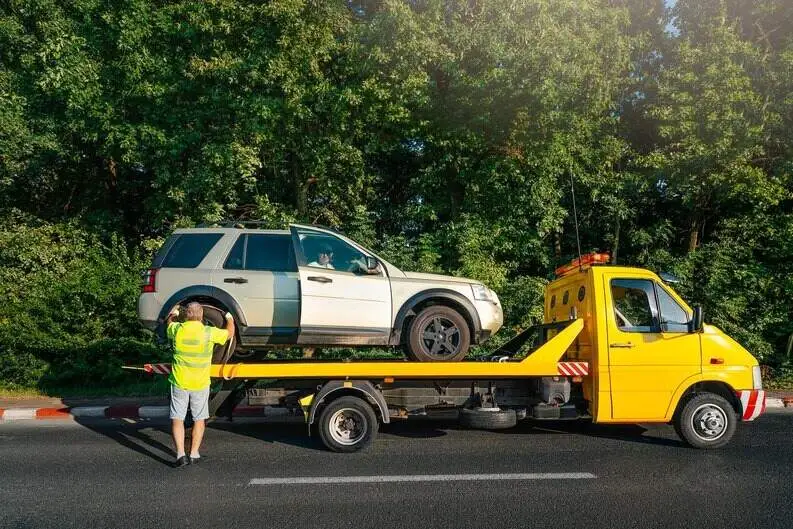
It is commonly preferred when damaged wheels, steering parts, suspension components, axles, drivetrain parts, or underbody areas should not rotate or support the vehicle during transportation.
A flatbed may be appropriate when:
- A wheel sits at an unusual angle
- A tire is rubbing against the fender
- A wheel or axle is broken
- The suspension has collapsed
- The steering does not respond normally
- The vehicle is stuck in park
- The collision damage is severe
- The car has very low ground clearance
A vehicle can often be loaded onto a flatbed even when it cannot start, roll, steer, or shift into neutral. Depending on its condition, the operator may use a winch, tow dollies, wheel skates, ramps, or other loading equipment.
Tell the dispatcher about locked wheels, displaced tires, collapsed suspension, steering problems, or an inability to shift into neutral before the truck arrives.
When Is a Wheel-Lift Tow Truck Appropriate?
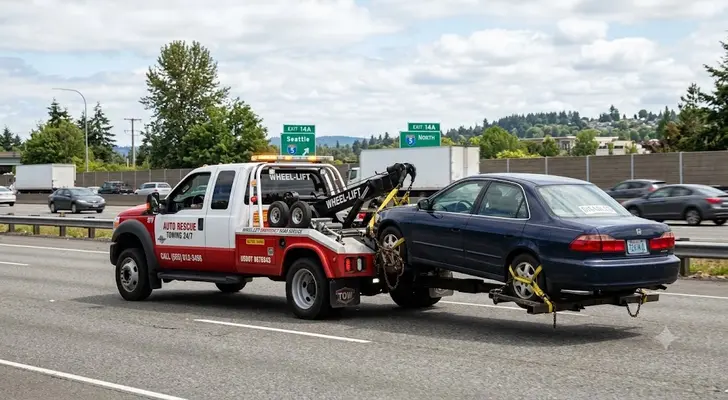
A wheel-lift truck raises either the front or rear wheels while the remaining two wheels stay on the road.
Because two wheels continue to rotate, a wheel-lift should be used only when the wheels left on the road, the suspension, and the drivetrain can safely tolerate that method.
A wheel-lift may be suitable when:
- Collision damage is minor
- Two wheels rotate normally
- The suspension is stable
- Ground clearance is adequate
- The drivetrain permits the method
- The manufacturer allows it
A wheel-lift should generally be avoided when a wheel is bent, displaced, broken, or locked; when the axle or suspension is damaged; or when the manufacturer requires all four wheels to remain off the road.
Tow dollies may sometimes be placed beneath the remaining wheels so they do not rotate during transportation.
When Are Tow Dollies or Wheel Skates Needed?
Tow dollies and wheel skates help move vehicles whose wheels cannot rotate normally.
They may be used when:
- One or more wheels are locked
- The parking brake will not release
- The vehicle cannot shift into neutral
- A damaged wheel cannot rotate
- The drivetrain should remain stationary
- The vehicle must be repositioned before loading
- A flatbed cannot directly reach the car
They are especially useful in low-clearance parking garages and other restricted spaces. The vehicle may first be moved into an open area and then transferred to a flatbed.
Tell the dispatcher whether the car can roll, whether it is stuck in park, the garage height, and how much loading space is available.
Do not force the transmission or electronic parking brake to release unless the manufacturer provides an approved procedure.
What Tow Truck Do AWD and 4WD Vehicles Need?
A flatbed is commonly preferred for an accident-damaged AWD or 4WD vehicle because all four wheels remain off the road.
Allowing only two wheels to rotate may place stress on the transmission, transfer case, or differentials when the manufacturer does not permit that towing procedure.
Some 4WD vehicles may allow another method when the transfer case can be placed in an approved neutral position. The correct procedure depends on:
- The specific drivetrain design
- Which wheels or axles are damaged
- Whether the vehicle can roll safely
- The manufacturer’s towing instructions
If a flatbed cannot reach the vehicle, a wheel-lift truck may sometimes be used with dollies beneath the remaining wheels.
The tow operator should verify the approved procedure for the exact year, make, and model.
What Tow Truck Does an Electric or Hybrid Vehicle Need?
A flatbed is commonly preferred for an accident-damaged electric or hybrid vehicle because it may have manufacturer-specific neutral procedures, designated attachment points, additional weight, and high-voltage battery components beneath the floor.
Tell the dispatcher that the vehicle is electric or hybrid and provide the exact year, make, and model before the truck is sent.
If the battery area is smoking, unusually hot, hissing, burning, or visibly damaged, move away from the vehicle and contact emergency services.
Do not touch exposed high-voltage components or orange cables.
How Is a Car Loaded if It Cannot Roll, Steer, or Shift Into Neutral?
A vehicle that cannot roll, steer, or shift into neutral will commonly require a flatbed and specialized loading equipment.
Depending on the vehicle’s condition, the operator may use:
- A winch
- Tow dollies
- Wheel skates
- Ramps
- Support equipment
- A manufacturer-approved neutral-release procedure
Tell the dispatcher if a wheel is tilted or pushed out of position, a tire is touching the fender, the suspension has collapsed, the steering does not respond, or the vehicle is stuck in park.
Do not force the vehicle to move, attempt to straighten a damaged wheel, or try to drive it onto the tow truck.
Does Vehicle Weight Affect Which Tow Truck Is Required?
Yes. The vehicle’s actual weight and configuration determine whether light-, medium-, or heavy-duty towing equipment is needed.
Larger or heavier vehicles may require more towing capacity, including:
- Full-size SUVs
- Heavy electric vehicles
- Full-size pickup trucks
- Commercial vans
- Work trucks
- Vehicles carrying heavy equipment or cargo
Give the dispatcher the exact year, make, and model. Also mention heavy cargo, commercial equipment, modifications, toolboxes, racks, lifts, or other attachments that may increase the vehicle’s weight.
What If the Vehicle Is Overturned or Off the Road?
Recovery and towing are separate but connected operations.
Recovery first moves the vehicle into a stable and accessible position. Towing then transports it to the selected destination.
Recovery may be needed when the vehicle is:
- Overturned
- In a ditch
- Down an embankment
- Against a barrier
- Stuck in sand or mud
- Missing a wheel
- Positioned where a standard tow truck cannot safely reach it
The operator may use winches, recovery cables, rigging, stabilization equipment, a boom, or more than one truck.
Accurately describe the vehicle’s position and surroundings when requesting assistance. Saying only that the car needs a tow may not provide enough information when recovery equipment is also required.
Can the Wrong Tow Truck Cause Additional Damage?
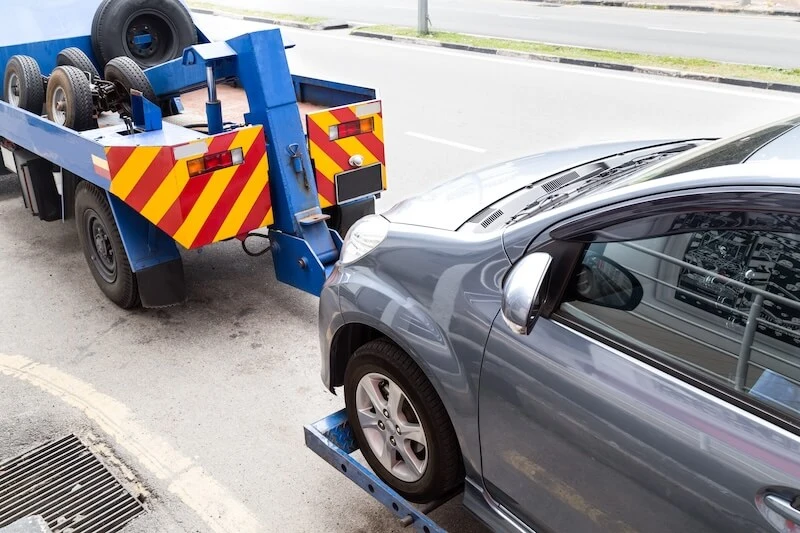
Yes. An unsuitable towing method may damage the drivetrain, wheels, tires, suspension, axles, bumpers, exhaust, underbody, or electric-vehicle battery components.
For example:
- Towing an AWD vehicle with only two wheels raised may damage the drivetrain when the manufacturer does not permit it.
- Dragging locked wheels may damage the tires, brakes, suspension, or transmission.
Loading a low-clearance vehicle at a steep angle may scrape the bumper or underbody.
This is why the dispatcher needs accurate information before selecting and sending the truck.
What Should I Tell the Dispatcher?
To help the towing company send suitable equipment, provide:
- Vehicle year, make, and model
- Whether it is front-wheel drive, rear-wheel drive, AWD, or 4WD
- Whether it is electric or hybrid
- Visible wheel, axle, suspension, or underbody damage
- Garage height or other access restrictions
- The requested delivery destination
Photos of the vehicle, wheel position, visible damage, and surrounding area may also help the operator prepare.
Describe the vehicle’s actual condition rather than only saying that it will not start.
Accurate information can reduce delays and help prevent the wrong equipment from being dispatched.
How ER Collision Auto Body Shop Prepares for a Towed Vehicle’s Arrival
Before having an accident-damaged vehicle delivered to ER Collision & Auto Body Shop, contact our team with the vehicle year, make, model, visible damage, pickup location, and whether the wheels can roll or steer.
We can confirm the delivery location, provide access instructions, and prepare for the vehicle’s arrival.
The towing operator remains responsible for selecting and safely using the appropriate towing and loading equipment.
After the vehicle arrives, our team can:
- Document its arrival condition
- Photograph visible collision damage
- Confirm the owner and insurance information
- Identify visible areas that may require further inspection
- Prepare an initial repair estimate
- Explain the next steps in the collision-repair process
Frequently Asked Questions
Is a flatbed always required after an accident?
No. A wheel-lift may be suitable when the damage is minor, two wheels rotate safely, the suspension is stable, and the manufacturer permits that method.
Can a car stuck in park still be towed?
Yes. The operator may use a manufacturer-approved neutral-release procedure, wheel skates, dollies, or a flatbed winch.
Can a tow truck move a car with locked wheels?
Yes. The operator may use a flatbed, winch, wheel skates, dollies, or other loading equipment depending on the vehicle’s condition.
Does an AWD vehicle always need a flatbed?
A flatbed is commonly preferred after an accident, but the correct procedure depends on the drivetrain design, collision damage, access, and manufacturer instructions.
Choosing the Correct Tow Truck
A flatbed tow truck is commonly preferred for an accident-damaged vehicle because all four wheels remain off the road.
A wheel-lift may be appropriate when the damage is minor, two wheels rotate safely, the suspension is stable, and the drivetrain permits that method.
Vehicles with damaged or locked wheels, suspension problems, low ground clearance, AWD systems, electric drivetrains, severe collision damage, or an inability to shift into neutral will often require a flatbed or specialized loading equipment.
Overturned, off-road, or inaccessible vehicles may require recovery before transportation.
Before requesting service, explain the vehicle’s drivetrain, weight, wheel condition, visible damage, access restrictions, and ability to roll or steer. Accurate information helps the towing company send the most suitable equipment.
ER Collision Auto Body Shop having 15+ years of experience and I-CAR Gold certification can help in towing & accident related repairs.