Yes. Car insurance may cover towing after an accident when the tow is connected to a covered claim and the vehicle could not be driven safely.
Depending on the circumstances, the expense may be reviewed under collision coverage, roadside assistance, or the at-fault driver’s property-damage coverage. Payment is not automatic.
Coverage can depend on:
- The applicable policy
- The accident circumstances
- Whether towing was reasonably necessary
- The towing distance and destination
- Dollar or mileage limits
- Storage and second-tow charges
- The documents submitted
- The insurer’s liability and coverage decision
Some drivers must pay the towing company first and request reimbursement. Others may have the tow arranged directly through an insurer, vehicle manufacturer, automobile club, or roadside assistance provider.
From a collision-repair intake perspective, reimbursement problems often arise when the insurer cannot clearly determine why the vehicle required towing, where it was taken, or which services were included in the bill.
When May Insurance Cover Accident Towing?
Towing may be considered for coverage when:
- The vehicle was not safely drivable after a covered accident
- The policy includes applicable roadside assistance
- The insurer arranged or authorized the tow
- Another driver is found liable
- The towing distance and destination were reasonable
- The charges were properly documented
- Applicable limits and authorization requirements were followed
Coverage may be limited when no applicable benefit exists, the tow was unnecessary, mileage or reimbursement limits were exceeded, or required documentation was missing.
The policy terms and insurer’s claim decision control the outcome.
Which Coverage Should You Ask About First?
Use this sequence when speaking with the insurer.
1. Was the tow caused by a collision?
If the vehicle required towing because of accident damage, collision coverage or a property-damage claim may be relevant.
2. Has liability been determined?
If another driver is found responsible, that driver’s property-damage coverage may consider reasonable towing expenses.
3. Does your policy include roadside assistance?
Roadside assistance may provide towing benefits, although provider, distance, and reimbursement limits may apply.
4. Did you pay the towing company directly?
Ask how to submit the itemized invoice and proof of payment.
5. Is the vehicle accumulating storage charges?
Ask immediately how the initial tow, daily storage, release fees, and any second tow will be reviewed.
Is Accident Towing Different From Roadside Assistance?
Yes.
Roadside assistance generally covers service needs such as:
- A dead battery
- Flat tire
- Lockout
- Fuel shortage
- Mechanical breakdown
- Non-collision towing
Accident towing follows collision damage and may instead be reviewed under collision coverage or a property-damage claim.
The limits, approved providers, payment process, and documentation requirements may differ.
When Is Towing Considered Necessary After an Accident?
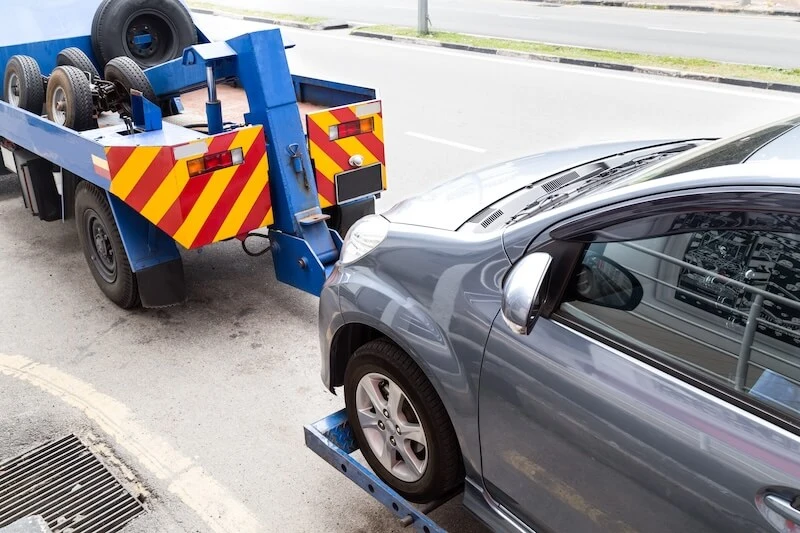
An insurer may evaluate whether towing was reasonably necessary based on the documented condition of the vehicle.
Towing may be more clearly justified when the vehicle has:
- Unsafe steering
- Brake damage
- Damaged wheels or tires
- Fluid leaks
- Deployed airbags
- Overheating
- Loose or unsecured body panels
- Broken required lights
- Suspension or axle damage
- Other conditions that prevent safe operation
A vehicle can start and still be unsafe to drive.
Photographs showing wheel position, leaking fluids, deployed airbags, warning indicators, loose components, or visible collision damage can help document why transportation was necessary.
For a complete safety checklist, see the separate guide about whether to tow an accident-damaged vehicle or drive it.
Will the At-Fault Driver’s Insurance Pay for Towing?
It may.
If another driver is found liable, that driver’s insurer may consider reasonable and necessary towing costs as part of the property-damage claim.
Liability may not be confirmed immediately. The insurer may first review:
- Driver statements
- Accident-scene photographs
- Police information
- Vehicle damage
- Witness statements
- Available coverage
While the investigation is pending, you may need to use your own available collision or roadside-assistance benefits or pay the towing provider directly.
Keep the towing invoice, proof of payment, accident photographs, and claim information for possible reimbursement.
What Happens While Fault Is Still Being Investigated?
While fault remains unresolved, the towing expense may be handled through your own available benefits, if applicable.
You may also need to pay first and submit the charge for review.
Ask your insurer:
- Which coverage may apply immediately
- Whether payment is required upfront
- Whether a deductible applies
- Whether there is a towing reimbursement limit
- Which documents must be submitted
- Whether using your own coverage affects later recovery
Using your own available coverage does not necessarily determine who is ultimately responsible for the accident. Insurers may address reimbursement between themselves after liability is established.
Do I Have to Pay the Towing Company First?
Sometimes.
A towing provider may require payment when the service is completed. The driver can then submit the charge to the insurer for review.
In other situations, the insurer, vehicle manufacturer, automobile club, or roadside provider may arrange payment directly.
Before paying, request an itemized invoice showing:
- Towing company name and contact information
- Service date and time
- Pickup location
- Delivery location
- Vehicle year, make, model, and license plate
- Base towing charge
- Mileage charge
- Recovery or equipment charges
- Storage fees, if applicable
- Total amount paid
A receipt showing only “tow service” and one total may be harder to evaluate than an invoice separating towing, mileage, recovery, equipment, and storage charges.
Request the itemized invoice rather than relying only on a credit-card receipt or handwritten total.
Common Problems That Can Delay Reimbursement
Common documentation and coordination problems may include:
- A non-itemized towing receipt
- Missing pickup or delivery locations
- No evidence showing why the vehicle could not be driven
- A second tow arranged without confirming authorization requirements
- Incomplete tow-yard release documents
- Conflicting descriptions of the vehicle’s condition
A strong reimbursement request connects the accident circumstances, vehicle condition, towing invoice, destination, storage history, and insurer instructions into one consistent record.
Can Insurance Deny or Limit Towing Coverage?
Yes.
Insurance may deny or limit a towing expense when:
- No applicable coverage exists
- The tow was unrelated to the covered accident
- The vehicle could reasonably have been driven
- The towing distance exceeded the limit
- The vehicle was taken farther than necessary
- The charge was considered unrelated or excessive
- Required documents were not submitted
- Avoidable storage or additional towing charges accumulated
A denial generally means the insurer found no applicable payment obligation.
A limitation may mean that only part of the mileage, recovery, storage, equipment, or second-tow expense is reimbursed.
Emergency circumstances may not always allow the driver to contact the insurer before the vehicle is moved. In that situation, document the accident location, vehicle condition, destination, and amount charged as soon as possible.
Are Towing and Storage Reviewed Separately?
Yes. Towing and storage are separate expenses.
The towing charge covers moving the vehicle from one location to another. Storage charges cover keeping the vehicle at a tow yard, impound facility, or other holding location.
Storage fees may accumulate daily, and the insurer may separately evaluate whether the storage period was reasonable.
If the vehicle is taken to a tow yard:
- Confirm the daily storage rate
- Ask when storage charges begin
- Ask what documents are required for release
- Notify the insurer
- Select a repair destination promptly
- Confirm whether transfer authorization is required
- Arrange the second tow when approved
Delays can occur when the owner, insurer, tow yard, and repair facility have not confirmed the release documents, payment responsibility, or destination.
Approval of the original tow does not automatically mean every day of storage will be reimbursed.
When Is a Second Tow Considered Reasonable?
A second tow from a storage yard, home, or temporary location to a collision repair shop may be considered when it is reasonable and connected to the covered claim.
The insurer may evaluate:
- Why the vehicle went to the first location
- Whether police ordered the initial tow
- Whether the owner could choose a repair facility
- The distance to the body shop
- Whether the second tow could have been avoided
- Applicable mileage or reimbursement limits
- How long the vehicle remained in storage
A second tow following a police-directed tow-yard delivery may be reviewed differently from one caused by sending the vehicle to a temporary location without selecting a repair destination.
Ask whether authorization is needed before arranging the transfer.
Example: Initial Tow, Storage, and Second Tow
Consider a vehicle removed from an accident scene by a police-directed towing company and taken to a storage yard before the owner selects a body shop.
The claim may involve three separate expenses:
- The original accident-scene tow
- Daily storage charges
- A second tow to the repair facility
The insurer may review each expense separately.
The owner should ask:
- Which charges may be considered under the claim
- Whether the second tow requires approval
- What documents the tow yard requires for release
- Whether mileage limits apply
- How storage charges will be reviewed
This example is illustrative. Actual coverage depends on the policy and claim circumstances.
Can I Choose Where the Vehicle Is Towed?
Drivers can often request a preferred repair destination.
Coverage may still depend on:
- Towing distance
- Policy limits
- Authorization requirements
- Whether the destination is considered reasonable
- Whether a farther destination creates additional charges
Before selecting a distant repair facility, ask whether prior approval or mileage limits apply.
For complete delivery guidance, see the separate article about having a vehicle towed directly to a body shop.
Build an Accident-Towing Reimbursement File
Organize the claim records into one file before submitting the towing expense.
Tow documentation
- Itemized towing invoice
- Proof of payment
- Pickup and delivery locations
- Mileage charges
- Recovery or equipment charges
- Storage invoices
- Second-tow invoice
Accident documentation
- Accident-scene photographs
- Vehicle-damage photographs
- Police report number, if available
- Other driver’s insurance information
- Description of why the vehicle could not be driven
Claim documentation
- Claim number
- Adjuster’s name and contact information
- Written towing instructions
- Destination approval
- Storage instructions
- Second-tow authorization
- Emails or messages from the insurer
Keep original records when possible and save digital copies.
A complete file does not guarantee reimbursement, but it can reduce repeated requests for information and make the expense easier to review.
How ER Collision Auto Body Shop Supports Repair-Related Documentation
When an accident-damaged vehicle arrives at ER Collision & Auto Body Shop, our intake documentation may include:
- The vehicle’s arrival condition
- Visible impact areas
- Exterior damage
- Wheel position
- Warning indicators
- Owner and claim information
- Areas requiring further inspection or disassembly
This documentation can help explain the vehicle’s condition after arrival and support the repair estimate.
If additional accident-related damage is identified during inspection or disassembly, the shop can document the findings and provide relevant repair information for the insurer’s review.
ER Collision does not decide:
- Whether towing is covered
- Whether storage must be reimbursed
- Which driver is liable
- Whether a towing charge is reasonable
- How much the insurer must pay
Those decisions remain with the insurance carrier.
Drivers in Huntington Beach and nearby Orange County communities can contact ER Collision before delivery to confirm the location and discuss the repair-intake process.
Frequently Asked Questions
Does paying a collision deductible mean towing is automatically covered?
No. A collision deductible generally relates to the covered vehicle-damage claim. Towing may be handled separately depending on the policy, claim circumstances, and insurer’s review.
Can I use my own roadside assistance while fault is investigated?
Possibly. Available roadside-assistance or collision benefits may help address the immediate tow while liability is pending. Keep all receipts and ask how later reimbursement may be handled.
Can I be reimbursed after paying for the tow?
Possibly. Submit the itemized invoice and proof of payment according to the insurer’s claim instructions.
Does insurance cover tow-yard storage?
It may. Coverage can depend on the daily rate, length of storage, claim circumstances, authorization requirements, and whether avoidable delays occurred.
Can insurance limit how far my car is towed?
Yes. Coverage may be affected by mileage limits, reimbursement caps, destination reasonableness, or prior-authorization requirements.
Protecting Your Towing Claim
Insurance may cover towing after a car accident when the tow is connected to a covered claim and the vehicle could not be driven safely.
Confirm which coverage applies, ask about mileage and reimbursement limits, request an itemized invoice, document why the vehicle was not safely drivable, minimize unnecessary storage, and obtain authorization before arranging a second tow.
ER Collision & Auto Body Shop having 15+ years of experience and I-CAR Gold certification can assist with towing and collision repair services once the vehicle arrives at our facility.
All coverage, liability, authorization, and reimbursement decisions remain solely with the insurance carrier.
Insurance Disclaimer: This article provides general information about accident-towing claims.
Coverage depends on the specific policy, applicable law, claim circumstances, and insurance carrier’s decision. Contact the insurer or claims adjuster for guidance about a particular claim.