A new paint job can improve resale value when the existing finish is peeling, heavily oxidized, or visibly damaged.
However, repainting a vehicle with presentable original paint may not recover its cost and can raise questions about previous collision repairs.
Quick Answer
- Severely damaged paint: A professional repaint may improve presentation and buyer interest
- Light scratches or dullness: Paint correction may offer better value
- Good original paint: Preserve it when possible
- Poor-quality repaint: May reduce buyer confidence and selling price
What Buyers Look for in Automotive Paint
Paint affects the first impression of a used vehicle, but buyers also use it to evaluate maintenance and repair history. Kelley Blue Book identifies overall condition as one of the primary factors affecting a vehicle’s resale value.
During an exterior inspection, buyers and appraisers may look for:
- Overall exterior condition
- Originality of the finish
- Consistency across the vehicle
- Signs of unrepaired damage
- Vehicle and repair history
- Documentation explaining previous refinishing
A repaint does not automatically indicate collision damage. Nevertheless, unexplained differences between panels may lead buyers to request repair records or a closer inspection.
How Repainted Panels Are Identified
Experienced appraisers may use a paint-depth gauge to compare coating thickness across body panels. Significant variation can suggest additional coating layers or underlying repair material.
Readings vary by manufacturer, panel material, factory application, and measurement location. A higher reading does not independently prove collision damage, and a typical reading does not guarantee that the finish is original.
The gauge is a screening tool that helps identify areas requiring closer evaluation.
Buyers may also notice:
- Mismatched color under different lighting
- Overspray or visible tape lines
- Rough panel edges
- Inconsistent gloss
- Texture that differs from adjacent panels
Some orange-peel texture is common in factory and refinished paint. It becomes more concerning when one panel’s texture is noticeably different from the surrounding finish.
Orange peel alone does not establish repair quality; color match, gloss, edges, cleanliness, and uniformity should be evaluated together.
When Repainting May Help Resale Value
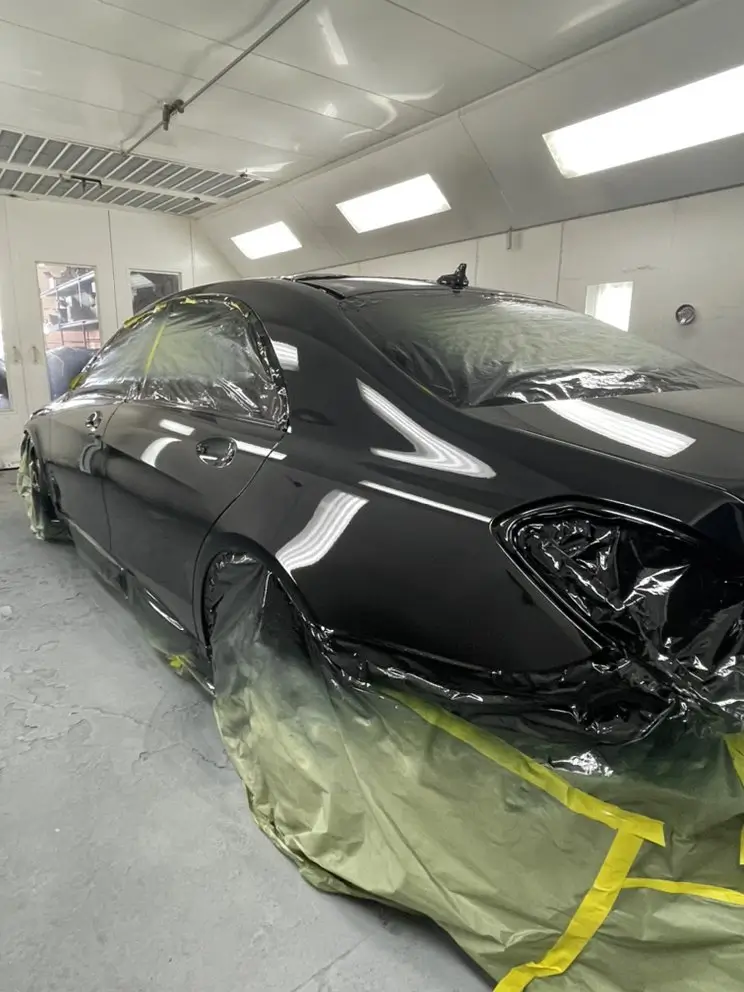
A repaint may improve marketability when the existing coating has widespread problems such as:
- Peeling or delaminating clear coat
- Heavy oxidation or chalking
- Deep scratches across several panels
- Previous refinishing that is already failing
- Exposed metal or coating damage that could lead to corrosion
- Severe fading that paint correction cannot restore
In these situations, refinishing may make the vehicle more attractive to private buyers and prevent visible deterioration from dominating the sale conversation.
Quality still matters. Surface preparation, body repair, color matching, blending, edge finishing, coating application, and documentation all affect how the result is perceived.
If the clear coat is separating, learn why automotive clear coat peels before deciding whether one panel or the complete exterior needs refinishing.
When Repainting May Not Be Worth It
Repainting is less likely to provide a worthwhile return when:
- The original paint remains presentable
- Defects are limited to light swirls or shallow scratches
- The repaint costs a significant portion of the vehicle’s value
- The vehicle will be traded to a dealer immediately
- A color change may reduce its appeal to future buyers
- The proposed work does not include adequate preparation
- The seller cannot document why the vehicle was repainted
Original paint can be valuable because it gives buyers fewer questions about previous bodywork. This is particularly important for collectible, luxury, and unusually well-preserved vehicles.
A fresh repaint may improve appearance without increasing the selling price by the full amount spent. Sellers should compare the likely presentation benefit with the complete cost before authorizing the work.
Paint Correction vs. Repainting
Paint correction uses controlled polishing to reduce certain surface defects while preserving the existing coating. It may improve:
- Light swirl marks
- Mild oxidation
- Water spotting
- Fine surface scratches
- Dull or uneven gloss
- Repainting is more appropriate for:
- Peeling clear coat
- Deep scratches through the coating
- Exposed substrate
- Failed previous repairs
- Severe fading or oxidation
- Areas requiring body repair
A simple fingernail check can provide an initial clue: if a scratch does not catch a fingernail, it may be limited to the upper surface and could respond to polishing.
If it catches, exposes primer or metal, or has damaged the color layer, refinishing may be required. A professional inspection is still necessary to determine the safest correction.
For general repaint planning ranges, review the guide to car-paint costs in Huntington Beach.
Pre-Sale Paint Decision Guide
| Current paint condition | Practical first step |
|---|---|
| Original paint in good condition | Wash, detail and preserve it |
| Light swirls or dullness | Request a paint-correction evaluation |
| One damaged panel | Consider localized repair and blending |
| Peeling clear coat on multiple panels | Compare repaint cost with vehicle value |
| Rust, exposed metal or body damage | Repair the underlying damage before selling |
| Recent professional repaint | Keep invoices, photos and repair documentation |
Before repainting, obtain a realistic trade-in or private-sale value for the vehicle. Then compare the refinishing cost with the likely benefit. A lower-cost detail, scratch repair, headlight restoration, or paint correction may produce a better return when the underlying coating remains sound.
Avoid choosing a limited-scope repaint solely to make the vehicle look newer before sale. Visible overspray, rough edges, mismatched color, or inconsistent texture can create more concern than the original cosmetic wear.
Learn why budget paint packages may cost less than comprehensive refinishing.
Frequently Asked Questions
Should I repaint my car before selling it?
Repaint only when significant coating damage is likely to affect presentation or leave the body vulnerable. For light surface defects, detailing or paint correction may be more economical.
Do dealerships pay more for a newly painted car?
Not necessarily. Dealers consider age, mileage, mechanical condition, history, market demand, exterior condition, and anticipated reconditioning costs. A repaint does not guarantee a higher offer.
Can a professional repaint still raise questions?
Yes. Buyers may ask why the work was completed. Invoices, before-and-after photographs, warranty information, and an honest explanation can reduce uncertainty.
Get a Pre-Sale Paint Evaluation in Huntington Beach
Not sure whether your vehicle needs detailing, paint correction, localized refinishing, or a more extensive repaint?
Erik Reyna and the team at ER Collision and Auto Body Shop bring more than 15 years of experience at an I-CAR Gold Class facility to evaluating automotive finishes.
Explore our car paint shop services in Huntington Beach or request an inspection based on your vehicle’s condition, value, and selling plans.