Can Bumper Scratches Be Removed Without Repainting?
Yes, some bumper scratches can be professionally buffed out if they only affect the clear coat, while deeper scratches that penetrate the paint layers usually require refinishing or repainting.
Modern bumper scratch evaluation involves more than simply looking at the size of the damage.
Professional collision repair technicians typically assess scratch depth, clear coat penetration, and whether primer or plastic has been exposed before recommending polishing, paint correction, or refinishing.
The most important factor is not the size of the scratch — it’s how deeply the damage penetrates the paint system underneath.
Understanding the Layers of a Modern Bumper Finish
Modern painted bumpers typically contain multiple protective and cosmetic layers:
- Clear coat (protective top layer)
- Base coat (vehicle color)
- Primer
- Plastic bumper material underneath
Light scratches may only affect the clear coat, while deeper damage can penetrate through the color layer and expose primer or bare plastic.
The deeper the scratch travels through these layers, the more likely paint repair becomes necessary.
The Fingernail Test: A Simple Way to Judge Scratch Depth
One of the most common ways professionals evaluate bumper scratches is the “fingernail test.”
If your fingernail glides smoothly across the mark, the damage may only affect the clear coat and could potentially improve with polishing or paint correction.
If the scratch catches your fingernail noticeably, the damage often extends deeper into the paint layers and may require refinishing instead of buffing alone.
While this test is not perfect, it is often a quick indicator of whether the scratch is surface-level or deeper paint damage.
How Professionals Determine Whether a Scratch Can Be Buffed Out
| Light Surface Damage | Deep Paint Damage |
|---|---|
| May improve with buffing or polishing | Usually requires paint repair |
| Clear coat affected only | Base coat or primer damaged |
| Smooth or shallow feel | Scratch catches fingernail |
| Paint transfer may be present | Plastic or primer visible |
| Cosmetic surface issue | Permanent paint damage |
In most cases, depth matters more than the overall size of the scratch.
Signs a Scratch May Buff Out
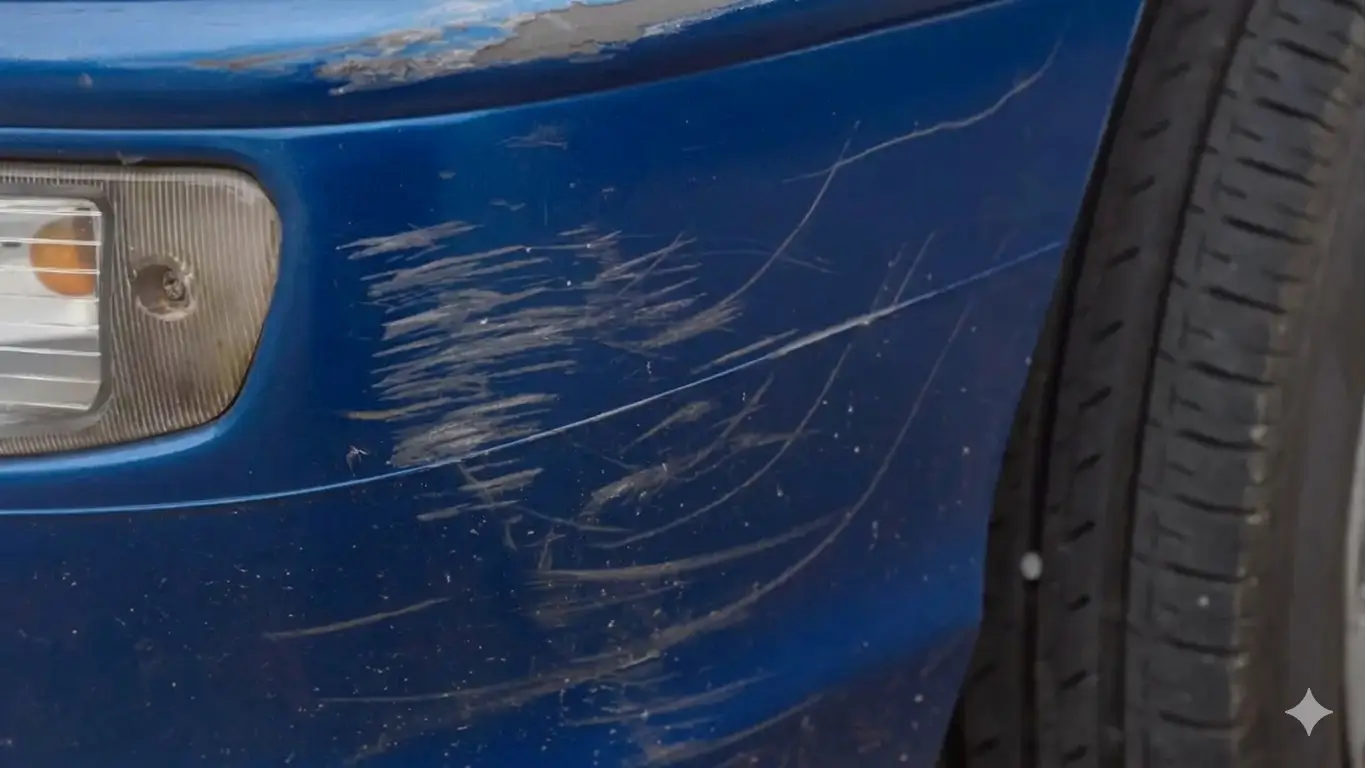
A scratch may improve with polishing or paint correction if:
- It feels smooth or shallow
- You cannot see primer or plastic underneath
- The mark appears white or dull but not deep
- Paint transfer from another object is present
- The damage only affects the clear coat surface
Light surface scuffs are often cosmetic and may not require repainting.
Signs Paint Repair Is Probably Needed
Paint repair is usually necessary if:
- The scratch catches your fingernail deeply
- Primer becomes visible underneath
- Black plastic shows through
- The scratch appears jagged or uneven
- Paint has been physically removed
Once the color layer is damaged, buffing alone typically cannot fully restore the finish.
Rust Prevention After a Scratch
The plastic bumper cover itself does not rust. However, a scratch or impact may also damage nearby metal brackets, fasteners, quarter panels, fenders, reinforcement components, or mounting areas.
If bare metal is exposed, the area should be cleaned, dried, and protected promptly with the correct primer and refinishing system.
Simply polishing the visible bumper mark will not prevent corrosion on damaged metal behind or beside the bumper.
In these cases, spot refinishing or repainting is often the proper long-term repair solution.
What Professional Buffing Actually Does
Professional buffing and paint correction work by carefully leveling and polishing damaged clear coat areas.
Buffing compounds are available in different cutting strengths rather than one universal grit level. Heavy-cut compounds remove defects more aggressively, medium compounds refine moderate damage, and finishing polishes restore clarity and gloss.
Professionals normally begin with the least aggressive combination capable of improving the defect.
Using a compound that cuts too heavily can remove unnecessary clear coat, create haze, or leave visible polishing marks that require additional correction.
This process may help reduce or remove:
- Surface scuffs
- Minor abrasions
- Paint transfer
- Light oxidation
- Fine clear coat scratches
However:
Buffing cannot replace missing paint or repair scratches that penetrate beyond the clear coat.
Why DIY Buffing Can Sometimes Make Scratches Worse
Many DIY repair attempts use:
- Aggressive rubbing compounds
- Incorrect polishing pads
- Excessive machine pressure
- Low-quality repair products
Modern automotive clear coat is surprisingly thin — often measuring only 40–60 microns thick. Professional shops often use a car paint thickness gauge to ensure enough material remains for a safe repair.
Paint thickness and paint hardness are different measurements. A thickness gauge estimates how much coating is present, while paint hardness describes how resistant the finish is to scratching, cutting, and polishing.
There is no single universal car paint hardness scale used identically across all manufacturers. Some clear coats are relatively soft and mark easily, while others are harder and require more polishing effort.
Technicians therefore test the paint response before selecting a compound, pad, or machine speed.
Improper polishing techniques can remove excessive clear coat quickly, especially during DIY bumper dent repair attempts using aggressive at-home methods.
This can lead to:
- Burn-through damage
- Swirl marks
- Uneven gloss
- Premature clear coat failure
Professional paint correction uses controlled techniques designed to preserve the finish safely while minimizing unnecessary paint removal.
For DIYers, the safest approach is to begin with the least aggressive method possible. Wash and dry the area thoroughly, confirm that the mark is not simply transferred paint, and test any product in a small, inconspicuous area.
Hand polishing may improve very light clear-coat marks, but deeper scratches, exposed primer, uneven paint, or visible plastic should be inspected professionally.
When using a microfiber cloth to buff a scratch, use a clean, soft cloth and light, controlled pressure. Work in a small area and inspect the surface frequently rather than rubbing continuously.
A contaminated or rough microfiber cloth can introduce additional fine scratches, so the cloth should be clean and free of dirt, sand, dried compound, or debris.
Stop immediately if the surface becomes unusually warm, hazy, discolored, or uneven.
DIY work should not continue when the repair requires sanding, paint application, plastic adhesion products, or machine polishing near bumper edges and body lines.
Why Plastic Bumper Repairs Differ From Metal Panels
Plastic bumpers behave differently than metal body panels, especially when impacts eventually lead to loose or hanging bumper damage over time.
They:
- Flex more during impact
- Expand and contract with heat
- Require specialized adhesion methods
- Use different refinishing processes
Because of this, proper plastic bumper scuff repair often requires:
- Flexible repair materials
- Correct primer systems
- Precision color matching
- Controlled curing methods
Why Color Matching Matters in Bumper Repair
Color matching involves more than locating the paint code. Vehicle age, UV exposure, previous repairs, metallic flake orientation, pearl layers, application technique, and the difference between plastic and metal surfaces can all affect how the final color appears.
Technicians may create spray-out test cards and adjust the formula before refinishing. In some situations, controlled blending into an adjacent area may be needed to prevent a visible color transition.
An OEM paint code provides the original manufacturer’s color family, but it does not always guarantee a perfect bumper match by itself.
Factory color variations, paint aging, repair history, and the way metallic or pearl paint sits on plastic can create visible differences.
A proper OEM paint match for a bumper may therefore require formula variants, tint adjustments, test spraying, and visual comparison under different lighting conditions.
Modern bumper repairs are designed not only to improve appearance, but also to maintain long-term durability and paint adhesion.
UV damage to a plastic bumper can cause fading, chalking, discoloration, brittleness, and deterioration of the clear coat or exposed plastic surface.
Scratched areas may become more noticeable because damaged paint layers provide less protection from sunlight.
A temporary dressing may improve the appearance of faded unpainted plastic, but it does not replace damaged paint, clear coat, or permanently degraded plastic.
Long-term repair may require surface preparation, adhesion promoter, refinishing materials, and UV-resistant coatings.
Why Bumper Scratches Matter More in Huntington Beach
In Huntington Beach, environmental exposure can accelerate deterioration around damaged paint surfaces.
Coastal conditions often include:
- Strong UV exposure
- Salt air
- Airborne sand particles
- Ocean moisture
Over time, sandy ocean breezes can act like fine abrasive particles against compromised clear coat areas. What begins as a small scratch may become increasingly visible as the surrounding finish continues to wear.
This is especially noticeable on modern:
- Metallic finishes
- Pearl paint systems
- Dark-colored vehicles
- High-gloss clear coats
Early inspection and repair can often help prevent worsening finish damage later.
Real-World Insight From Collision Repair Experience
In many cases, bumper scratches that initially appear severe turn out to be mostly paint transfer or clear coat damage that can improve substantially with polishing.
At the same time, some smaller scratches that seem minor at first glance may actually penetrate deeply into the paint system and require refinishing.
Proper inspection is usually the fastest and most accurate way to determine the right repair approach.
The following observations are based on first-hand evaluations of bumper scuffs, paint transfer, clear-coat scratches, and deeper finish damage encountered during collision-repair inspections.
How to Help Prevent Bumper Scratches
Bumper scratch prevention begins with reducing contact and protecting the finish from abrasive contamination.
Helpful measures include:
- Leaving additional space when parking
- Avoiding contact with curbs, garage walls, and loading equipment
- Removing bird droppings, salt, sand, and road contamination promptly
- Using clean wash mitts and microfiber towels
- Avoiding automatic car washes with abrasive brushes
- Applying appropriate paint protection products
- Using a bumper protector when frequently loading cargo
- Repairing loose bumper trim before it rubs against painted surfaces
Paint-protection film may help reduce light scuffs and abrasions, but it cannot prevent damage from every impact.
Frequently Asked Questions
Can bumper scratches be buffed out?
Some can — especially light surface scratches that only affect the clear coat.
How do I know if my bumper scratch is too deep to buff?
If the scratch catches your fingernail noticeably or exposes primer or plastic underneath, paint repair is usually necessary.
Does paint transfer look like a scratch?
Yes. Paint transfer from another vehicle or object can sometimes appear severe but may polish away during professional correction.
Can deep bumper scratches worsen over time?
Yes. Exposed paint layers may eventually lead to peeling, fading, or deterioration around the damaged area.
Is repainting always necessary for bumper scratches?
No. Many lighter scratches improve significantly with professional polishing, paint correction, or localized spot repair.
Do mobile bumper repair services work for all scratches?
Mobile bumper repair can sometimes help with minor cosmetic damage, but deeper scratches or advanced color matching often require controlled shop refinishing conditions for the best results.
Does insurance cover a bumper scratch?
Insurance may cover bumper scratch repair when the damage results from a covered collision, vandalism, or another event included in the policy.
Coverage depends on the cause of the damage, the policy terms, the deductible, and whether another party is responsible.
For a minor cosmetic scratch, the repair cost may be lower than the policy deductible. Vehicle owners should review their coverage and compare the repair estimate with the deductible before filing a claim.
What Does Bumper Scratch Repair Cost?
The cost of repair depends on scratch depth, bumper material, paint type, labor requirements, color-matching difficulty, and whether the damage can be polished or requires refinishing.
Light paint transfer or surface polishing is generally less expensive than spot repair or complete bumper refinishing. Costs may increase when the repair involves:
- Exposed primer or plastic
- Metallic, pearl, or multi-stage paint
- Cracks, dents, or distorted plastic
- Removal of sensors, trim, lights, or moldings
- Previous paintwork
- Blending into adjacent areas
- Calibration of driver-assistance components
A visual inspection is normally required before an accurate estimate can be provided.
Final Recommendation
Some bumper scratches can be professionally buffed out — while deeper scratches require paint repair to restore the finish correctly.
The most important factors include:
- Scratch depth
- Paint layer penetration
- Whether primer or plastic is exposed
- The condition of the surrounding clear coat
Early evaluation helps determine whether polishing is enough or whether refinishing is the better long-term solution, especially when comparing overall bumper repair pricing and repair methods.
Professional Bumper Scratch Repair in Huntington Beach
At ER Collision And Auto body Shop in Huntington Beach, CA, we carefully inspect bumper scratches to determine whether professional polishing, paint correction, spot repair, or refinishing is the best solution for your vehicle.
With more than 15 years of collision repair experience and I-CAR Gold Class Certification, we provide:
✔ Professional bumper scratch repair
✔ Paint correction and polishing
✔ Precision color matching
✔ Plastic bumper refinishing
✔ Honest repair recommendations
✔ Genuine customer reviews
✔ Workmanship warranty
Not sure whether your bumper scratch can be buffed out or needs paint repair?
Upload photos or contact ER Collision And Auto body Shop today for a quick professional evaluation and repair estimate.