No. A wheel alignment cannot straighten a bent frame or repair a damaged structural mounting point.
Alignment measures wheel geometry and adjusts the angles the vehicle’s design allows. Structural damage requires a separate assessment and, where necessary, manufacturer-specified repair or component replacement.
However, a vehicle pulling after an accident does not automatically have frame damage. Tire problems, bent suspension parts, displaced components, and brake concerns can cause similar symptoms. The first step is identifying what changed before deciding whether an alignment is appropriate.
A frame and structural assessment in Huntington Beach can evaluate relevant mounting points and related components when the cause remains uncertain.
What Is the Difference Between Wheel Alignment and Frame Repair?
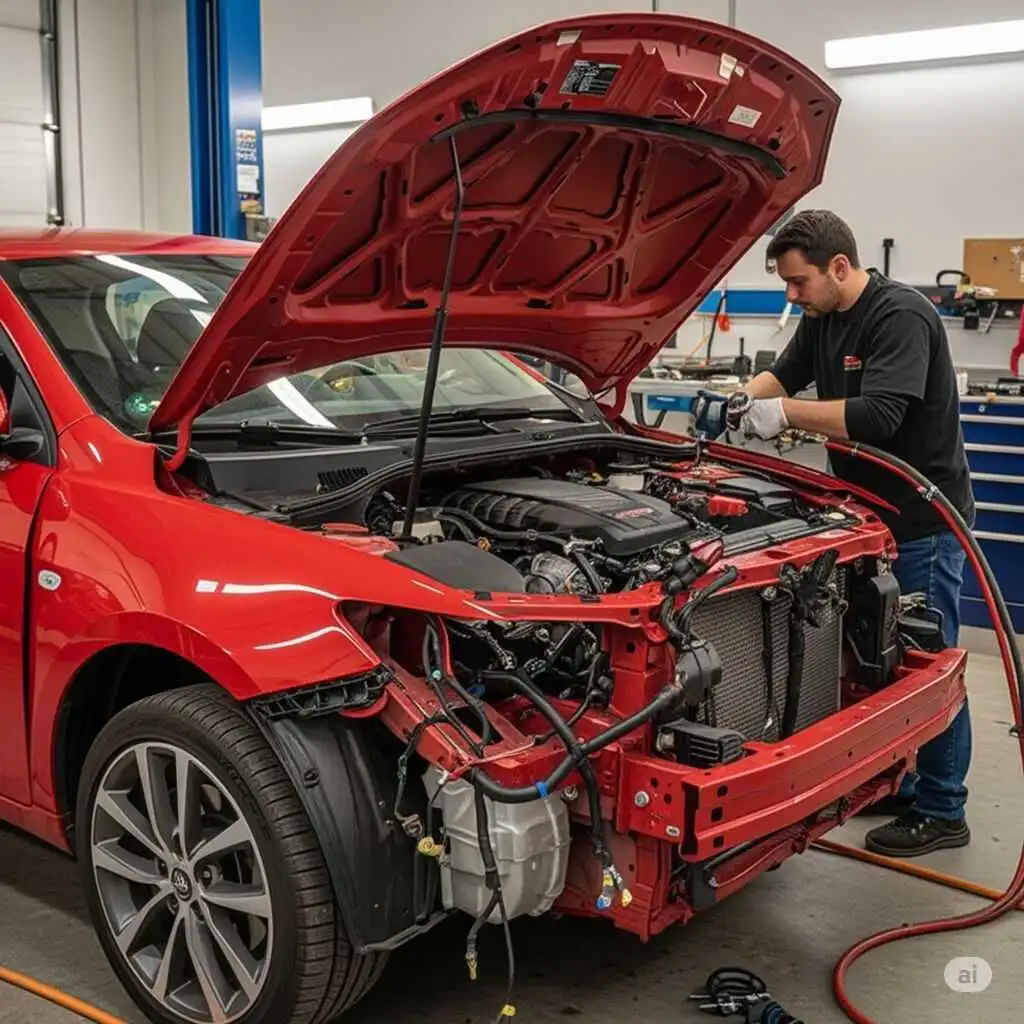
Wheel alignment adjusts wheel geometry; frame repair addresses damaged vehicle structure. Both services may be part of the same collision repair, but they perform different jobs.
| Service | What it addresses | What it does not establish |
|---|---|---|
| Wheel alignment | Wheel angles and tracking using permitted adjustments | Whether all structural damage has been repaired |
| Structural measurement | Body or frame reference points compared with vehicle specifications | Whether every steering or suspension component is undamaged |
| Structural repair | Approved correction or replacement of damaged structural components | Whether final alignment and other required checks are complete |
The term “frame” may refer to a separate truck frame, an integrated unibody structure, or a bolt-on subframe. Review the difference between unibody and full-frame repair, and ask which component is involved so you understand what the proposed work covers.
What Does a Wheel Alignment Adjust?
An alignment checks wheel angles and adjusts those the vehicle’s design allows. Three common measurements are:
- Toe: Whether the wheels point inward or outward when viewed from above.
- Camber: The inward or outward tilt of a wheel when viewed from the front.
- Caster: The forward or rearward tilt of the steering axis when viewed from the side.
Not every angle is adjustable on every vehicle. A reading outside specification may require investigation rather than another adjustment.
I-CAR’s wheel and suspension alignment guidance explains how alignment angles can help diagnose suspension and structural concerns. The readings provide useful clues, but they do not identify a bent frame by themselves.
When Might an Alignment Be Enough After an Impact?
An alignment may be sufficient when an inspection finds no damage requiring repair and the wheel angles can be corrected using the vehicle’s specified adjustments.
The technician should consider the impact history, tires, wheels, steering and suspension components, ride height, subframe, and relevant mounting areas before treating the condition as routine misalignment.
| Inspection finding | Appropriate next step |
|---|---|
| No relevant damage found and readings adjust normally | Complete the alignment and verify the result |
| Bent steering or suspension component | Repair or replace the damaged component before final alignment |
| Suspected subframe displacement | Inspect its condition and position using the applicable procedure |
| Structural reference points outside specification | Develop a structural repair plan |
| Pulling remains despite acceptable readings | Investigate tires, brakes, components, and other possible causes |
This process helps avoid both unnecessary structural work and repeated alignments that cannot correct the underlying condition.
At ER Collision Auto Body Shop in Huntington Beach, we do not assume that every post-collision pull requires frame repair—or that another alignment will solve it. We compare alignment readings with the condition of the tires, wheels, steering and suspension components, subframe position, and structural reference points.
When structural measurement is indicated, we can use Car-O-Liner computerized measuring equipment to compare relevant structural reference points with vehicle specifications. We may evaluate those results alongside alignment readings and physical inspection findings to distinguish structural displacement from an adjustable alignment condition or damaged component.
Should Frame Repair Happen Before or After Alignment?
Required structural and mechanical corrections should be completed before the final wheel alignment. Initial alignment readings may still help diagnose the damage and develop the repair plan.
A post-collision process may include:
- Inspecting the impact area and affected components.
- Measuring wheel alignment and vehicle structure as needed.
- Completing required structural, steering, or suspension repairs.
- Performing the final wheel alignment.
- Completing applicable calibrations and repair verification.
The exact sequence depends on the vehicle and manufacturer’s procedures. Ask whether an alignment charge covers initial diagnostic measurements, the final adjustment, or both. These may be separate operations rather than duplicate work.
Can Adjustment Kits Compensate for a Bent Frame?
An adjustment kit does not repair structural damage. Some vehicles have approved service parts or correction methods that provide additional adjustment, but their suitability depends on the vehicle and diagnosed condition.
If additional hardware is recommended, ask:
- What condition is the part intended to correct?
- Is its use supported for this vehicle?
- Has structural or suspension damage been ruled out?
The goal should be correcting the cause of improper geometry. Moving a reading into range does not establish that damaged components are suitable for continued use.
Why Does the Car Still Pull After an Alignment?
Persistent pulling can have causes beyond alignment angles. Tire-pressure differences, tire construction or wear, brake drag, damaged components, and road conditions can affect how a vehicle tracks.
Explain whether the pulling occurs constantly, only while braking, or mainly on certain roads. Mention any collision, curb strike, tire replacement, or suspension work that preceded it.
If the vehicle never drove correctly after an earlier collision repair, bring the repair invoice and previous alignment reports. Comparing the records can help identify what changed. Review the problems a bent or incompletely repaired frame can cause down the road if alignment or tire-wear concerns continue returning.
Do not release the steering wheel to test the pull. If the vehicle is unstable or difficult to control, stop somewhere safe and arrange assistance.
What If the Vehicle Cannot Be Aligned Within Specification?
Ask which reading remains incorrect, whether it is adjustable on your vehicle, and what prevents correction. “It will not align” is a finding—not a complete diagnosis.
Possible causes include:
- A bent control arm or steering knuckle
- Incorrect ride height
- A damaged wheel or tire
- A displaced subframe
- Worn suspension components
- Structural displacement affecting a mounting point
Before paying for another alignment, request the previous alignment report and an explanation of what was adjusted. If structural damage is suspected, ask what inspection findings or measurements support that conclusion.
Reaching the limit of an adjustment does not prove the frame is bent. It means the cause of the incorrect geometry still needs to be identified.
Get Alignment and Structural Concerns Assessed in Huntington Beach
If an alignment has not resolved a problem after an impact, contact ER Collision and Auto Body Shop’s frame repair team in Huntington Beach.
Bring your alignment reports, collision photographs, and previous repair estimate. Explain when the problem began and what work has already been attempted.
Call Erik Reyna team, backed by 15+ years of collision repair experience to arrange an assessment at 17851 Jamestown Ln, Huntington Beach, CA 92647.