Yes. Unrepaired structural damage—or damage that was not fully addressed—can contribute to recurring alignment problems, uneven tire wear, handling concerns and body-fit issues.
Related collision damage may also affect seals, protective coatings, mechanical components or electronic systems, with some symptoms becoming noticeable later.
However, a history of frame repair does not mean future problems are inevitable. What matters is whether the correct repair procedures were followed, related damage was addressed, and the completed work was verified.
Some problems appear immediately. Others become noticeable only after mileage accumulates, the vehicle encounters rain, or affected components begin producing symptoms.
If alignment, tire-wear, panel-fit, or handling concerns continue after collision work, a post-collision structural assessment in Huntington Beach can help identify what requires further inspection.
When Can Frame-Related Problems Become Noticeable?
Different problems can appear on different timelines. Some affect handling immediately, while others require mileage, rain exposure, or deterioration of an inadequately protected repaired area.
| When the problem appears | What may become noticeable |
|---|---|
| Immediately after the collision or repair | Pulling, vibration, tire interference or closure problems |
| After additional driving | Uneven tire wear or recurring alignment changes |
| During rain or a car wash | Water intrusion, wind noise or sealing problems |
| Over a longer period | Corrosion or deterioration around insufficiently protected areas |
| After a later impact | Changes involving the previous repair or another damaged component |
The timing does not prove the cause, but it helps the technician determine what to inspect. There is no reliable mileage or time period after which every collision-related problem will have appeared.
Tire wear requires mileage to develop, a sealing problem may first appear during rain, and corrosion can take considerably longer to become visible. Some diagnostic or calibration concerns may not produce an obvious warning light during ordinary driving.
Driving for several months without symptoms is useful history, but it does not independently verify every part of the earlier repair. Continue normal maintenance and report new symptoms promptly. New concerns should be connected to inspection findings, measurements, repair records, or test results rather than automatically attributed to the previous collision.
Why Do Tire Wear and Alignment Problems Keep Returning?
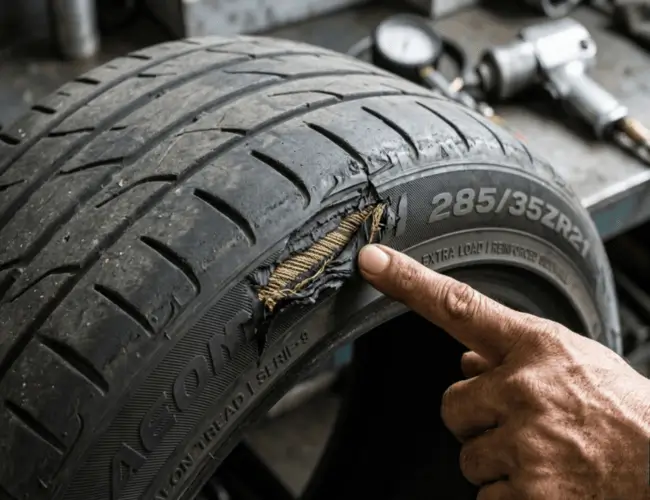
Structural displacement or damage involving suspension mounting points can affect wheel geometry and how the tires contact the road. Over time, this may produce uneven wear even when the vehicle initially feels normal.
An alignment adjustment changes available wheel angles. It does not necessarily correct a bent suspension part, displaced mounting location, tire problem, or unresolved structural condition.
Recurring alignment problems should be investigated rather than repeatedly adjusted. The underlying cause may involve tires, suspension components, subframe position, or structural mounting locations.
For the complete diagnostic distinction, read Can an Alignment Fix a Bent Frame?
Can Problems Develop Around the Suspension or Steering?
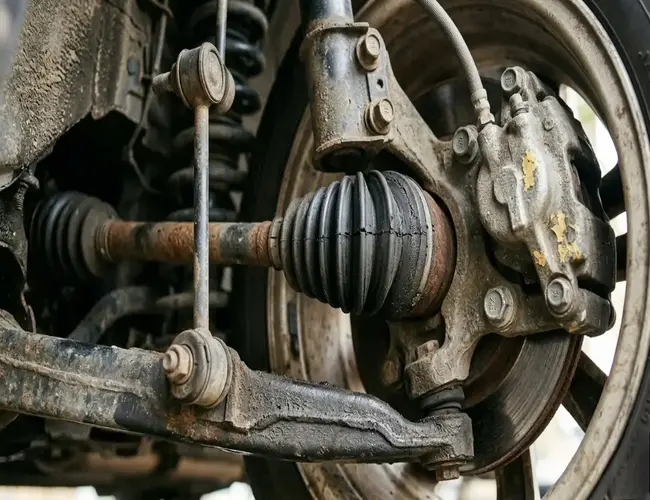
Yes. A collision can damage mechanical components attached to or positioned by the vehicle’s structure.
Straightening the frame or body does not repair a bent control arm, damaged steering component, wheel problem, or deteriorated mounting bushing.
Possible symptoms include clunks over bumps, vibration at certain speeds, unstable handling, or a change in steering response.
Explain when the symptom occurs—during braking, acceleration, turning, highway travel, or driving over rough roads. Those details help narrow the inspection.
Avoid assuming every noise means the structure has moved. A focused inspection should distinguish a tire, wheel, steering, or suspension problem from a structural concern.
Why Might Doors Leak or Wind Noise Develop After a Collision?
Damage around body openings—or problems involving reinstalled panels, glass, and seals—can affect fit and weather protection. Water intrusion may not become obvious until the first heavy rain or car wash.
Warning signs include:
- Damp carpet or interior trim.
- Moisture inside the trunk.
- A musty odor after rain.
- New wind noise.
- A door, trunk, or liftgate that requires unusual effort to close.
These problems can result from structural displacement, but damaged weatherstripping, glass installation, blocked drains, seam sealing, or panel adjustment may also be responsible.
Document where the moisture appears and under what conditions. A leak test and inspection of the affected opening can help identify the entry point. Repeatedly drying the interior without locating the source leaves the underlying problem unresolved.
Can Rust Form Around a Previously Repaired Area?
Yes, if collision damage or repair work leaves metal insufficiently protected. Structural repairs may disturb factory coatings, panel seams, and protection inside enclosed sections.
Completing the repair may require restoring primers, seam sealers, cavity protection, or other manufacturer-specified materials. The correct product and application depend on the vehicle and repair procedure.
Rust staining, bubbling, or coating deterioration deserves inspection, but it does not automatically prove structural deterioration or poor workmanship. The location, depth, and cause must be assessed. Painting over visible corrosion without evaluating the affected area can conceal a developing problem.
Does a Repaired Frame Gradually Bend Again?
A properly completed structural repair should not normally require repeated straightening because it has “settled.” If alignment, structural measurements, panel fit or tire clearance changes, the cause should be investigated.
Possible explanations include:
- A new collision, curb strike, or pothole impact.
- Unresolved original damage.
- A deteriorated mechanical component.
- A problem involving the earlier repair.
Ask the shop to compare current findings with the original measurement, alignment, and repair records. These documents create a useful baseline for identifying what changed.
The absence of records does not prove that the repair was defective, but it can make the assessment more difficult.
What Should You Do If a Problem Returns After Repair?
Contact the original repair facility and describe exactly when the problem occurs. Bring the final invoice and any available alignment, structural-measurement, scan, or calibration records.
If the concern involves unstable steering, tire interference, braking changes or another immediate driving issue, review whether a car is safe to drive after frame straightening and discuss towing.
Ask whether the condition is connected to the original repair, a later impact, normal wear, or an unrelated mechanical problem. For a complete documentation checklist, read How Do You Know If a Shop Fixed a Bent Frame Correctly?
Get Recurring Post-Collision Problems Checked in Huntington Beach
If tire wear, pulling, leaks, noises, or other symptoms keep returning after a collision, arrange an assessment with ER Collision and Auto Body Shop in Huntington Beach.
Explain the symptom, when it began, and any previous attempts to correct it. Bring available repair and alignment records so the inspection can build on what is already known.
Call (714) 866-9453 to arrange an appointment with team of Erik Reyna. Shop is an I-CAR Gold Class facility with more than 15 years of collision-repair experience. Identifying the underlying cause provides a clearer repair plan than repeatedly treating the same symptom.