A spongy brake pedal can result from air in the hydraulic system, a brake fluid leak, overheated fluid, or a component that cannot maintain pressure. Air is a common cause, but pedal feel alone cannot identify the fault.
If your brake pedal suddenly feels softer, travels farther than usual, or sinks toward the floor, stop safely and arrange professional inspection before continuing your trip.
For help identifying the problem, explore our brake inspection and repair services in Huntington Beach. If braking is unreliable, arrange towing rather than driving to the shop.
What Does a Spongy Brake Pedal Feel Like?
A spongy pedal feels unusually springy or compressible when pressed. You may need more pedal movement than usual before the brakes respond.
Describe the sensation carefully when requesting service:
- Spongy: The pedal feels elastic or squishy.
- Low: It travels farther than usual before braking begins.
- Sinking: It continues moving downward while pressure is held.
These symptoms can overlap, but the distinction helps guide inspection. A change from your vehicle’s normal pedal feel matters more than comparison with another car.
If the sensation is pulsing or shaking rather than softness, our guide to brake vibration when stopping explains that different symptom.
Why Does Air in the Brake Lines Cause a Soft Pedal?
Hydraulic brakes use fluid to transmit pedal force to the wheel brakes. Air compresses much more readily than brake fluid. When air is present, some pedal movement compresses the trapped air instead of promptly transmitting braking pressure.
Air may enter when the hydraulic system is opened during repairs or when fluid loss allows the reservoir to run too low.
Bleeding removes trapped air. However, if a leak allowed air into the system, the leak must also be repaired. Bleeding alone does not resolve the underlying fault.
What Else Can Cause a Soft or Low Brake Pedal?
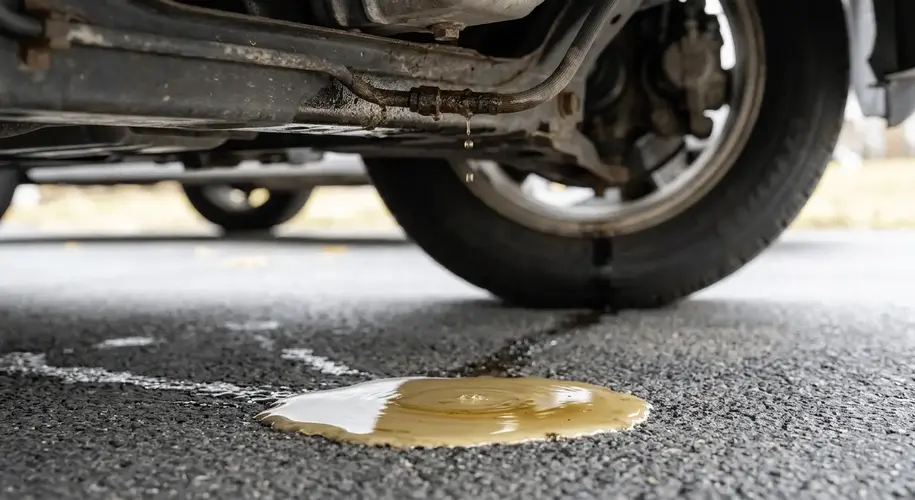
Brake Fluid Leaks
Fluid can escape through damaged lines, fittings, calipers, or wheel cylinders. Loss of fluid can compromise hydraulic pressure.
Possible clues include falling reservoir levels or wetness around brake components. A leak may not leave an obvious puddle, so the absence of one does not rule it out.
Master Cylinder Problems
A master cylinder with damaged internal seals may fail to hold pressure even without an obvious external leak. A pedal that continues sinking under steady pressure needs prompt assessment.
Excessive Brake Component Travel
On vehicles with rear drum brakes, an adjustment problem can require extra pedal travel before the shoes contact the drums.
A fault inside the ABS hydraulic assembly can also affect pedal feel. Inspection is needed to distinguish this from trapped air, a leak, or another hydraulic problem.
Wagner’s guide to soft or spongy brake pedals describes possible causes including trapped air, fluid leaks, master-cylinder faults, rear brake adjustment, and ABS hydraulic problems.
Why Can the Pedal Become Soft After Heavy Braking?
Brake fluid can boil when temperatures become high enough, forming compressible vapor bubbles. Moisture absorbed by glycol-based brake fluid lowers its boiling point, increasing susceptibility to this problem.
This is different from ordinary air trapped after a repair, although both can affect pedal firmness.
Brembo’s brake fluid guidance explains how absorbed moisture lowers the fluid’s boiling point. Under high temperatures, vapor bubbles can form and compress when the pedal is pressed, reducing effective pressure transmission.
If the pedal changes after prolonged or heavy braking, stop safely and arrange inspection. A return to normal after cooling does not establish that the cause has been resolved.
Can I Drive With a Spongy Brake Pedal?
Do not continue a trip with a newly soft or unreliable brake pedal. Seek professional advice and arrange towing when braking performance is uncertain.
Particularly urgent signs include:
- The pedal approaching the floor.
- Increased stopping distance.
- Visible fluid leakage.
- A brake warning light together with changed pedal feel.
- Needing repeated pedal applications to obtain braking response.
A temporary improvement does not prove the brakes are safe.
Why Does My Pedal Feel Soft After Brake Service?
A new change after brake work should be reported to the repairer immediately.
If the hydraulic circuit was opened, trapped air or a bleeding issue may be involved. Installation, leaks, and component operation also need checking. Some ABS systems require a vehicle-specific bleeding procedure.
A distinctly soft pedal should not be dismissed as normal pad bedding.
How Is the Cause Diagnosed and Repaired?
The repair should follow the findings rather than begin with an assumed need for a fluid flush.
Depending on the vehicle and symptoms, inspection may involve:
- Checking fluid level and looking for external leaks.
- Assessing whether the hydraulic system holds pressure.
- Inspecting brake components and their movement.
- Reviewing recent repairs and applicable bleeding procedures.
- Checking ABS operation when symptoms indicate a concern.
The technician can then explain whether the vehicle needs leak repair, bleeding, component replacement, adjustment, or fluid replacement.
Because these repairs involve different work, pad-replacement prices alone cannot predict your bill. Our guide to comparing brake repair estimates explains which parts, labor, and diagnostic charges to clarify.
Ask what caused the pedal change and how normal operation will be verified after repair.
Will Adding Brake Fluid Fix It?
Adding fluid does not repair a leak, remove trapped air, or restore a failing component.
Reservoir levels can change with pad wear, so a low reading needs interpretation rather than automatic topping up. Use only the fluid specification required by the vehicle manufacturer.
If the level is below minimum and the pedal feels abnormal, arrange inspection before driving.
Brake Pedal Inspection in Huntington Beach
ER Collision and Auto Body Shop provides brake inspections and repairs for drivers in Huntington Beach and nearby Orange County communities. Erik Reyna and his team bring more than 15 years of auto repair experience to diagnosing and addressing brake concerns.
Describe when the pedal changed, whether recent brake work was performed, and whether warning lights or fluid loss are present.
If stopping performance is affected, arrange towing to the shop.