Yes. Repeated exposure to airborne salt, marine moisture and ocean spray can leave residue on a vehicle.
Intact car paint provides a protective barrier, but rock chips, deep scratches, panel edges and exposed metal are more vulnerable because salt and moisture can remain in these areas and contribute to corrosion.
For Huntington Beach drivers, the greatest concern is not one afternoon near the ocean. Risk increases through repeated exposure combined with:
- Outdoor parking near the coast
- Unrepaired paint chips or scratches
- Ocean spray or wet sand
- Infrequent washing
- Moisture collecting around seams and fasteners
Salt exposure is different from ordinary sun damage. UV exposure primarily contributes to fading, oxidation and clear-coat deterioration.
Coastal salt is most concerning where moisture and contaminants reach damaged paint or exposed metal.
How Does Coastal Salt Reach Your Vehicle?
You do not need to drive through seawater for coastal residue to reach your car.
Airborne Coastal Deposits
Wind and breaking waves can carry fine salt-containing droplets inland. These particles may settle on exterior surfaces, especially when a vehicle is parked outdoors close to the shoreline.
Exposure varies according to:
- Distance from the ocean
- Wind and weather conditions
- Parking location
- Frequency of coastal driving
- Whether the vehicle is garaged
Marine Moisture
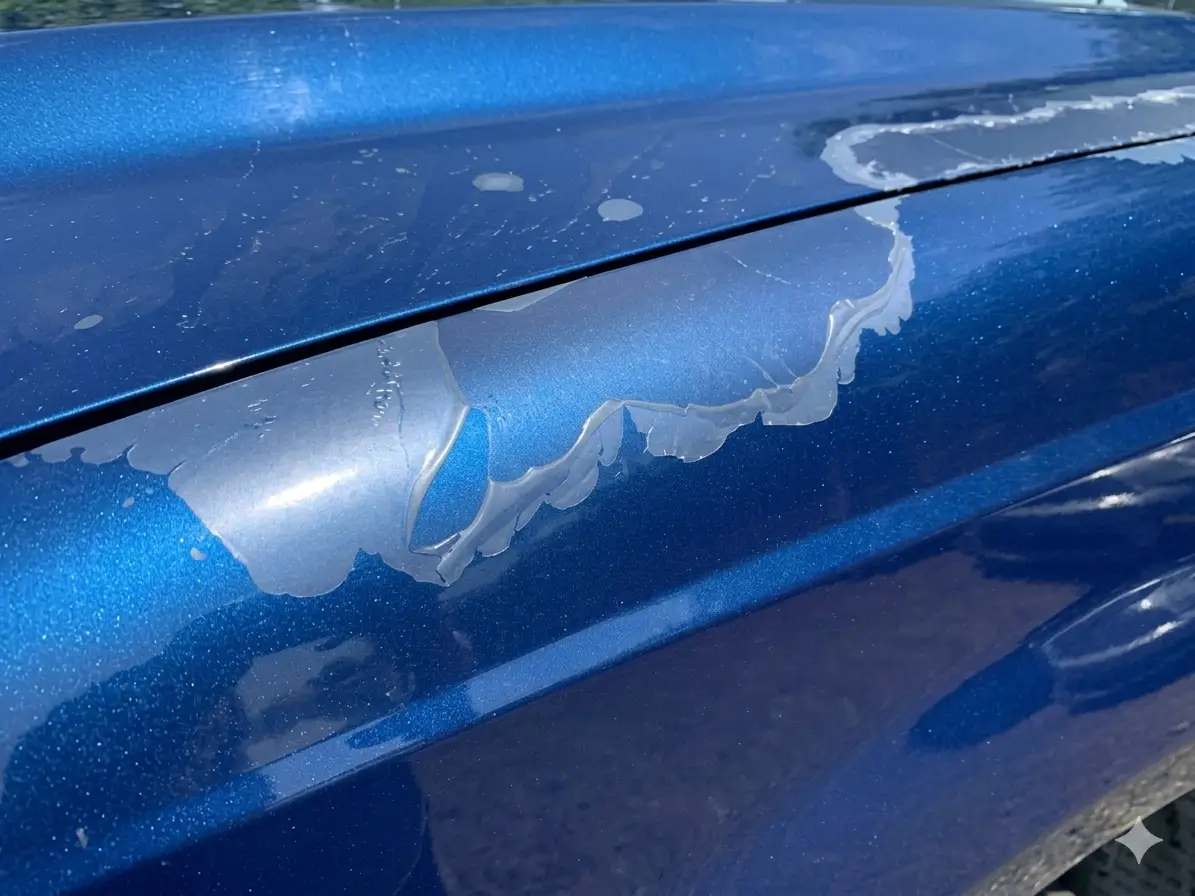
The marine layer can leave a vehicle damp overnight or during the morning. When this moisture evaporates, salt, minerals and other environmental deposits may remain around:
- Panel gaps
- Door and hatch edges
- Window moldings
- Exterior trim
- Rock chips
- Lower body panels
This does not mean coastal fog immediately destroys car paint. The concern is repeated accumulation, particularly where the finish is already damaged.
Direct Ocean Spray and Wet Sand
Direct contact with ocean spray, seawater or wet sand creates more concentrated exposure than normal coastal air.
A fresh-water rinse is especially important after:
- Driving through saltwater near a flooded coastal road
- Parking where ocean spray reaches the vehicle
- Driving or parking on wet sand
- Carrying surfboards or equipment covered in saltwater
- Allowing saltwater to drain across painted panels
Salt Exposure vs. Sun Damage
These conditions can affect the same vehicle, but they represent different problems.
| Condition | Common pattern | Primary concern |
|---|---|---|
| Coastal salt exposure | Residue around chips, seams, lower panels and exposed components | Contamination and corrosion |
| Sun damage | Fading, chalkiness and gloss loss on the hood, roof or trunk | UV deterioration and oxidation |
| Clear-coat failure | Flaking, lifting or peeling coating | Delamination requiring refinishing |
| Water spotting | Circular deposits or etched marks | Minerals left after water evaporates |
If the paint is generally faded, chalky or dull, read our guide on how to fix sun-damaged car paint.
If the coating is flaking or lifting, see why car clear coat peels. Washing, waxing or polishing will not rebuild failed clear coat.
Where Does Coastal Damage Usually Begin?
Salt-related deterioration does not always appear as fading across an entire panel. It commonly begins in vulnerable areas where moisture can remain or the protective finish has been compromised.
Paint Chips and Deep Scratches
Small chips on the hood, fenders, bumper area and lower doors may expose primer or metal. If bare metal is visible, salt and moisture can contribute to corrosion around the damaged area.
A surface scratch affecting only the clear coat is different from a deep scratch that reaches the underlying material. A professional inspection can determine how many paint layers have been affected.
Panel Seams and Edges
Residue may accumulate around:
- Door bottoms
- Hood and trunk edges
- Hatch openings
- Fender lips
- Fuel-door recesses
- Folded panel edges
Because these areas are less visible than the center of a hood or door, early deterioration can be overlooked.
Wheel Arches and Lower Panels
Wheel openings, rocker panels and lower doors receive water, road debris and contamination from the tires. Existing chips in these areas can make the surface more vulnerable.
Salt and moisture can also affect exposed fasteners, brackets and underbody components even when the exterior paint still looks acceptable.
How to Protect Your Car from Salt Air
1. Rinse Before Touching the Paint
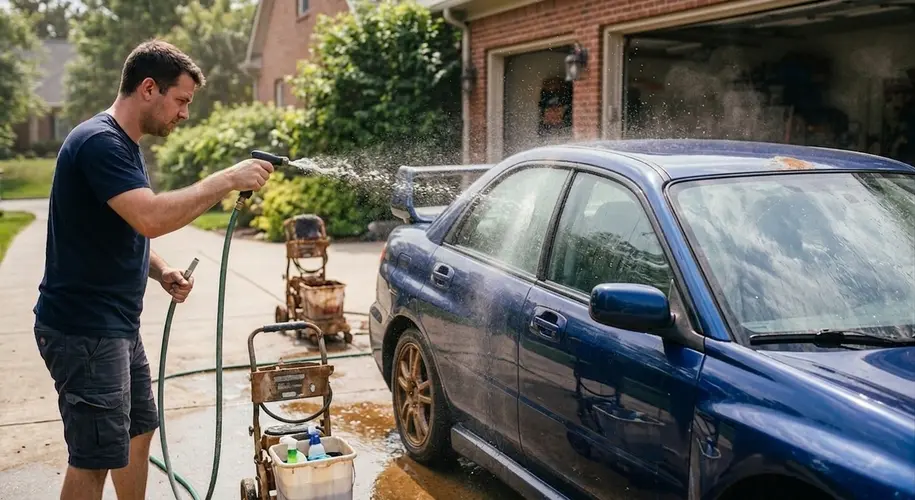
Do not wipe dry salt, sand or gritty residue across the surface. These particles may create fine scratches.
Begin with a fresh-water rinse to remove loose material before using a wash mitt or microfiber towel.
2. Use Automotive Wash Products
Wash with an appropriate automotive soap rather than household dish detergent. Rinse the vehicle thoroughly and dry it with a clean microfiber towel to reduce water spotting.
Pay particular attention to:
- Panel gaps
- Wheel openings
- Lower doors
- Rocker panels
- Trunk and hatch edges
- Areas around trim and emblems
Vehicles parked outdoors near the coast every day may need more frequent cleaning than vehicles garaged farther inland. There is no single schedule appropriate for every car.
3. Repair Exposed Paint Damage
Washing removes contamination but does not restore a broken paint barrier. Chips and scratches should be inspected when they expose primer or bare metal.
Early attention may help prevent a small defect from developing into corrosion that requires more extensive preparation and refinishing.
4. Use Protective Products Realistically
Wax, paint sealant and ceramic coating can make the surface easier to clean and reduce direct contact between contaminants and the finish.
However, these products do not prevent:
- Rock chips
- Deep scratches
- Existing corrosion
- Peeling clear coat
- Damage to exposed metal
- Problems caused by neglected maintenance
Protective products complement regular washing and inspection; they do not replace them.
Some owners also consider vinyl wrap as a way to cover and protect an intact finish.
However, wrap should not be applied over rust, peeling clear coat or unstable paint. If you are comparing a temporary vinyl finish with permanent refinishing, review our guide to car wrap vs. paint in California.
5. Reduce Repeated Exposure When Possible
A garage or covered parking location can reduce direct contact with marine moisture and airborne deposits.
If using a vehicle cover, make sure both the cover and vehicle are clean. A dirty or loose cover can rub sand and contamination against the paint in coastal wind.
What Should You Do After Parking at the Beach?
One normal beach visit is unlikely to cause immediate paint failure. After noticeable exposure:
- Check for salt, sand or ocean spray
- Rinse loose residue away with fresh water
- Do not scrub dry sand across the paint
- Wash the vehicle properly when needed
- Inspect existing paint chips and scratches
- Check wheel arches and lower panels
- Rinse the underbody after direct seawater or wet-sand exposure
Saltwater from surfboards, wetsuits and other equipment should also be rinsed away rather than allowed to dry repeatedly on painted surfaces.
Common Mistakes to Avoid
Assuming Rain Will Clean the Vehicle
Light rain may redistribute contamination instead of removing it. As the surface dries, it may leave additional mineral deposits.
Ignoring Small Paint Chips
A small chip can expose the material beneath the paint. Corrosion may eventually spread around the damaged edge if metal is exposed.
Covering a Dirty Vehicle
A cover can trap sand or salt against the finish. Wind movement may then rub those particles across the paint.
Polishing Without Diagnosing the Problem
Polish is not a universal treatment. It will not repair corrosion, deep scratches or failed clear coat. Clean and inspect the surface before selecting a repair method.
Can Salt-Related Paint Damage Be Repaired?
The correct treatment depends on what is damaged:
- Surface residue: May be removable through proper washing.
- Bonded contamination: May require professional decontamination.
- Light surface defects: Paint correction may be possible if healthy clear coat remains.
- Deep chips or scratches: May require touch-up or localized refinishing.
- Visible corrosion: Requires proper preparation before repainting.
A body shop should inspect damage that includes exposed metal, bubbling, rust, lifting paint or deterioration spreading from a panel edge.
Frequently Asked Questions
Is salt air bad for car paint?
Repeated coastal exposure can leave salt and moisture on the vehicle. The greatest concern occurs around damaged paint, panel seams and exposed metal.
Does ocean air cause cars to rust?
Salt and moisture can accelerate corrosion when they reach unprotected or insufficiently protected metal.
Is one day at the beach enough to damage car paint?
One ordinary visit is unlikely to cause immediate failure. Repeated exposure, accumulated residue and unrepaired paint damage create greater long-term risk.
Should I wash my car after visiting the beach?
Rinse away visible salt, sand or ocean spray. Avoid wiping gritty residue across dry paint.
Is salt-air damage the same as sun damage?
No. Sun damage primarily involves UV-related fading and oxidation. Salt exposure is more closely associated with contamination and corrosion around vulnerable areas.
Does ceramic coating prevent salt damage?
It may make cleaning easier, but it cannot protect exposed metal, stop rock chips or replace regular maintenance.
Where should I inspect my vehicle?
Check rock chips, wheel openings, rocker panels, lower doors, panel seams, hatch edges and exposed fasteners.
When should I visit a body shop?
Request an inspection if you see rust, bubbling, exposed metal, deep scratches, lifting paint or damage that remains after proper washing.
Coastal Paint Inspection in Huntington Beach
ER Collision and Auto Body Shop helps Huntington Beach and Orange County drivers identify paint chips, scratches, surface defects, corrosion and coating failure.
With more than 15 years of experience and I-CAR Gold Class recognition, Erik Reyna and his team provide:
- Automotive paint inspections
- Paint-chip and scratch evaluation
- Surface preparation
- Color-matched refinishing
- Panel repainting
- Collision-related paint repair
If coastal exposure has affected your vehicle, the first step is determining whether the condition involves removable contamination, exposed metal, corrosion or paint-system failure.
Explore our professional automotive paint and refinishing services or contact ER Collision and Auto Body Shop for an in-person estimate.