If your vehicle makes a clunking or knocking sound when driving over bumps, common causes include worn sway-bar links, control-arm bushings, ball joints, strut mounts or loose suspension hardware.
Steering components, brake hardware and other underbody parts can produce similar sounds, so the source should be inspected before parts are replaced.
For help identifying the noise, explore our suspension inspection and repair service in Huntington Beach.
Worn or loose suspension components may also affect wheel alignment, steering response and tire wear. If you notice irregular tread patterns along with the noise, learn more about what causes uneven tire wear.
What Does a Clunking Suspension Sound Like?
Drivers often describe it as:
- A dull knock from the front end
- A metallic clunk when hitting a bump
- A single thud when turning into a driveway
- A repeated knocking over rough roads
The sound may be more noticeable at low speeds or when one wheel encounters a bump independently.
Most Common Causes of Clunking Over Bumps
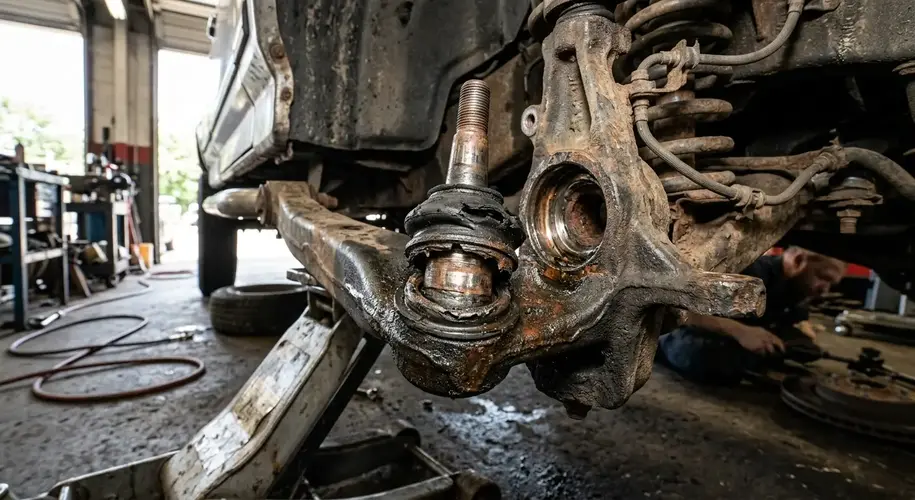
Worn Sway Bar Links
Sway bar links connect the sway bar to the suspension assembly.
When bushings or link joints wear out, excess play develops. As the vehicle shifts weight over bumps, the loose connection can create a knocking sound. MOOG identifies clunking over bumps as a symptom of worn sway-bar links.
Sway bar link noise is often most noticeable on uneven roads.
Failing Ball Joints
Ball joints act as pivot points between control arms and steering knuckles.
Wear can create excessive play in a ball joint, allowing unwanted movement between the control arm and steering knuckle. Depending on the suspension design and severity, this may produce clunking over bumps, loose steering or uneven tire wear—symptoms described in MOOG’s guide to worn ball joints.
A technician should check joint movement against the vehicle manufacturer’s inspection procedure and allowable limits. A clunk alone does not confirm ball-joint failure.
Worn Control Arm Bushings
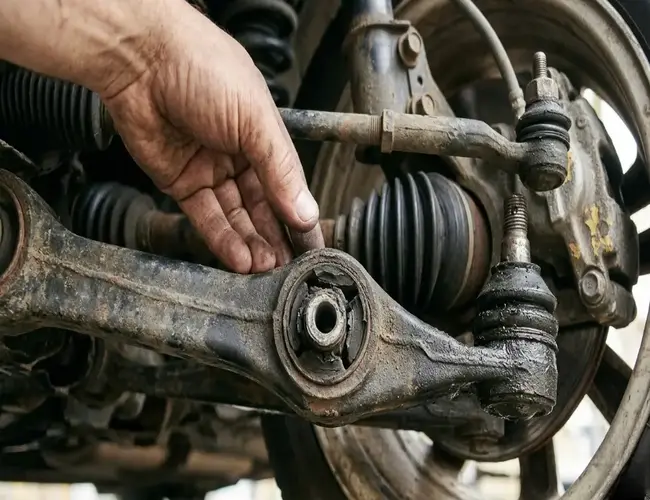
Control arm bushings cushion suspension movement and maintain wheel alignment.
Over time, rubber bushings crack or deteriorate. When this happens, the control arm can shift slightly under load, producing a dull clunk over bumps.
Bushing wear may also contribute to uneven tire wear and steering drift. AAA’s tire-safety guidance explains that worn suspension components and wheel alignment can affect tire wear and performance.
Loose or Damaged Strut Mounts
Struts attach to the chassis through upper mounting assemblies.
If the mount or bearing plate wears out, movement at the top of the strut can cause knocking sounds during suspension compression.
This is often heard when driving over small bumps at lower speeds.
Worn Shock Absorbers or Struts
Shocks and struts control vertical movement of the suspension.
Weak shocks or struts usually cause excessive bouncing rather than a sharp clunk. Noise may come from internal damage, a loose shock mount or a deteriorated strut mount.
Loose Suspension Hardware
Improperly torqued bolts, worn mounting brackets, or damaged subframe components can create impact-related noise.
Even minor hardware looseness can produce noticeable sounds under road load.
When multiple systems are involved — including steering or drivetrain components — a full mechanical inspection may be required.
Can Clunking Be Caused by Steering Components?
Yes.
Tie rods and steering rack components also experience movement during bumps.
If tie rod ends become loose, steering linkage can produce a knocking sound while the suspension compresses.
This may also affect steering stability at higher speeds and can contribute to problems like a vehicle pulling to one side while driving, which is another common symptom of front-end wear.
Why Does the Noise Happen Only on One Side?
Clunking often occurs on the side experiencing the most wear.
For example:
- A single worn sway bar link
- One deteriorated ball joint
- A control arm bushing on one corner
A single worn component may cause noise on one side, but sound can travel through the body or subframe. The side where the clunk is heard is not always the side containing the failed part.
Is It Safe to Drive With a Clunking Noise?
A clunk alone cannot establish whether the vehicle is safe to drive. Some noises come from mounting or bushing wear, while others involve components that control wheel position and steering.
Stop driving and arrange towing if the noise is accompanied by loose steering, difficulty controlling the vehicle, visible wheel displacement or tire rubbing.
If handling feels normal, arrange an inspection promptly. Tell the shop whether the noise began after a pothole, collision or recent repair, and whether it occurs during braking or turning.
How Is a Clunking Suspension Diagnosed?
Diagnosis starts by identifying when the sound occurs. When the vehicle is safe to operate, a technician may reproduce the complaint during a controlled road test before inspecting the relevant components.
Checks may include:
- Sway-bar links and mounting bushings
- Ball-joint play using the manufacturer’s specified inspection method
- Control-arm bushings and attachment points
- Shock and strut mounts
- Steering linkage
- Brake hardware and other possible sources of underbody noise
- Recently disturbed fasteners and mounting hardware
Sound can travel through the body or subframe, so the loudest location does not necessarily identify the damaged part.
Frequently Asked Questions
Why does my car clunk only at low speeds?
A clunk may be easier to hear at low speeds when there is less tire, wind and engine noise. Note whether it occurs over small bumps, when one wheel enters a driveway or while turning. These details help a technician reproduce the sound, but they do not identify the failed component by themselves.
Can bad shocks cause clunking?
Severely worn shocks can contribute, but clunking more commonly involves bushings, ball joints, or sway bar links.
Is clunking expensive to fix?
Cost depends on the source. Replacing a sway-bar link differs significantly from replacing a control arm, strut mount or steering component. See our suspension repair cost guide for general estimates.
Why does my car clunk after hitting a pothole?
Impact can stress suspension parts, shift alignment geometry, or damage mounting hardware.
Suspension Inspection in Huntington Beach
Hearing a clunk over bumps? Erik Reyna and his team having more than 15 years of automotive repair experience at ER Collision and Auto Body Shop in Huntington Beach can inspect the suspension, steering and related mounting points to identify the source.
When scheduling, describe when the sound occurs and whether it followed an impact or recent repair. Request an inspection.