Uneven tire wear can result from incorrect tire pressure, wheel alignment outside specification, wheel imbalance, delayed rotation, damaged tires or worn steering and suspension components.
The location and shape of the wear provide important diagnostic clues:
- Inner-edge wear: negative camber, incorrect toe or worn suspension parts
- One outer edge: positive camber, alignment problems or repeated cornering forces
- Both outer shoulders: underinflation or excessive loading
- Center wear: excessive inflation
- Feathering: incorrect toe or steering-linkage movement
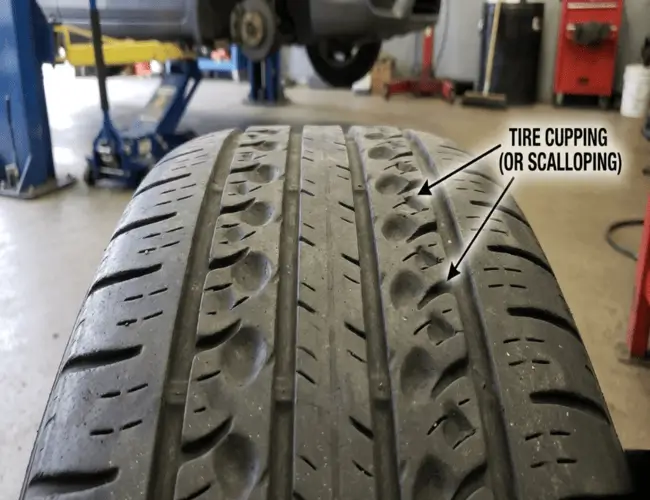
- Cupping: weak damping, imbalance, bent wheels or loose components
An alignment may correct the condition causing future wear, but it cannot restore tread that has already worn away.
The tire, wheel, alignment, steering and suspension should be evaluated before new tires are installed.
Tire-Wear Patterns and Common Causes
| Wear pattern | Common possibilities |
|---|---|
| Inner edge | Negative camber, incorrect toe, worn suspension or incorrect ride height |
| One outer edge | Positive camber, incorrect toe or repeated hard cornering |
| Both shoulders | Underinflation or overloading |
| Center tread | Excessive inflation |
| Feathering | Excessive toe-in or toe-out |
| Cupping or scalloping | Weak shocks or struts, imbalance, bent wheel or looseness |
| Flat spot | Hard braking, tire damage or prolonged parking |
A visible pattern can narrow the possibilities, but it does not confirm the failed component. More than one condition may be present.
According to AAA’s tire-safety guidance, tread wear on one edge commonly relates to wheel alignment, while cupping may involve wheel imbalance, shocks or other suspension components.
What Causes Inner-Edge Tire Wear?
Inner-edge wear means the inside shoulder of the tire is losing tread faster than the center and outside.
Common causes include:
Excessive Negative Camber
Camber is the inward or outward tilt of the wheel when viewed from the front.
With excessive negative camber, the top of the wheel leans inward and places more load on the inside shoulder. Some vehicles use negative camber by design, so measurements must be compared with vehicle specifications.
Incorrect Toe
Toe describes whether the tires point slightly inward or outward when viewed from above. Excessive toe can cause the tread to scrub sideways as the tire rolls, accelerating inner-edge wear or creating feathering.
Worn or Damaged Suspension Components
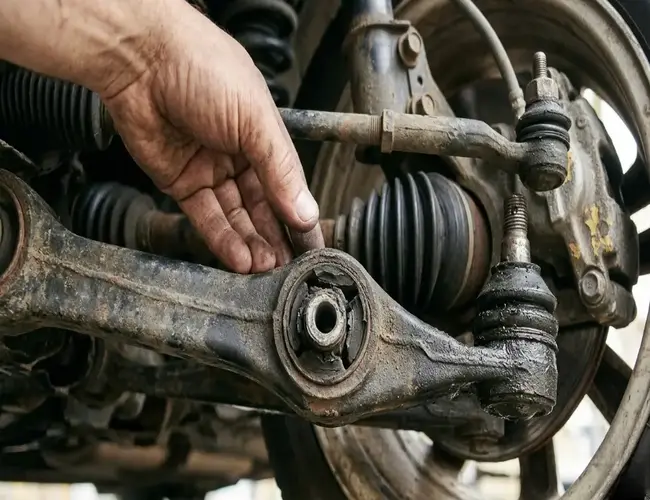
Worn control-arm bushings, ball joints, tie rods or mounting points can allow wheel position to change under load. A vehicle may measure differently while driving than it does during a stationary inspection.
Bent control arms, steering knuckles or struts can also change geometry after a pothole, curb strike or collision.
Incorrect Ride Height
Sagging springs, improper lowering or changes in vehicle ride height may alter camber and toe. Alignment should be checked at the correct ride height.
What Causes Outer-Edge Tire Wear?
Wear on one outside edge should be distinguished from wear on both shoulders.
One Outside Edge
A single outer shoulder may wear because of:
- Excessive positive camber
- Incorrect toe
- Worn suspension components
- Repeated aggressive cornering
- Bent or shifted components
Positive camber means the top of the wheel leans outward. If excessive, it can place additional load on the outside shoulder.
Both Outer Shoulders
Wear on both shoulders more commonly indicates:
- Underinflation
- Excessive vehicle loading
- Driving for extended periods below the specified pressure
Check tire pressure when the tires are cold and use the pressure listed on the vehicle’s door-jamb placard—not the maximum pressure on the tire sidewall.
What Is Feathered Tire Wear?
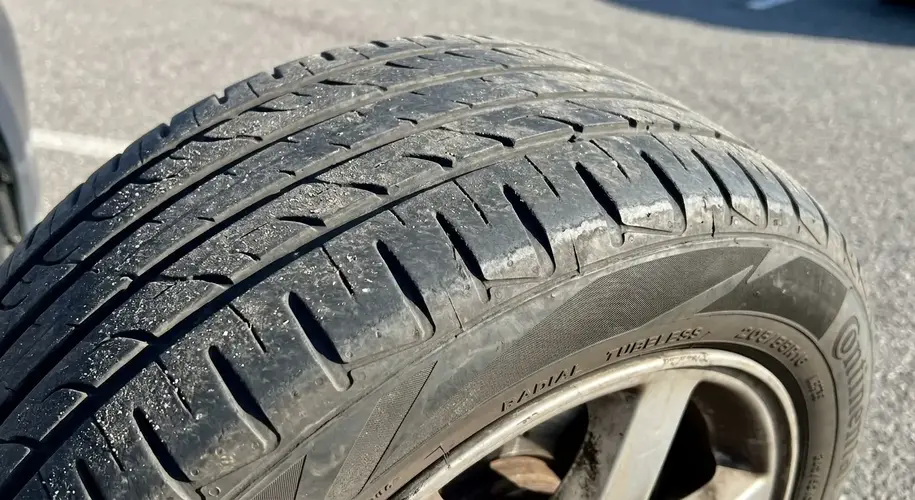
Feathering occurs when each tread block feels smooth in one direction and sharp in the other.
It commonly results from excessive toe-in or toe-out, which causes the tire to scrub across the pavement rather than roll cleanly.
Possible underlying causes include:
- Alignment outside specification
- Worn inner or outer tie-rod ends
- Deteriorated control-arm bushings
- Loose steering or suspension components
- Previous impact damage
Feathering may also be accompanied by wandering, an off-center steering wheel or pulling. For related diagnostic information, see why a car pulls to one side while driving.
Can Worn Suspension Cause Uneven Tire Wear?
Yes. Suspension and steering components help maintain wheel position as the vehicle brakes, accelerates and travels over uneven roads.
Wear in a ball joint, tie rod, bushing or mounting point may allow camber or toe to change while driving. Bent components or incorrect ride height can create similar problems.
Relevant components include:
- Control arms and bushings
- Ball joints
- Inner and outer tie rods
- Struts and strut mounts
- Springs
- Steering knuckles
- Wheel bearings
- Subframe mounting points
When a worn or damaged component affects wheel geometry, it should be repaired before final alignment. Visit our suspension repair service for inspection and repair information.
Will an Alignment Fix Uneven Tire Wear?
An alignment can correct adjustable camber, caster or toe measurements, depending on the vehicle. It cannot:
- Replace missing tread
- Repair a damaged tire
- Correct wheel imbalance
- Repair worn or loose components
- Straighten a bent wheel or suspension part
- Restore incorrect ride height caused by damaged springs
If the tires remain serviceable, correcting alignment may prevent the pattern from becoming worse. Tires with exposed cords, bulges, tread separation or insufficient tread depth require replacement regardless of the alignment result.
Will Tire Rotation Fix Uneven Wear?
Rotation may redistribute future wear when the tires remain serviceable, but it cannot reverse existing tread damage or correct the underlying cause.
Rotation may also be restricted when a vehicle has:
- Directional tires
- Different front and rear tire sizes
- Unequal tire damage
- Severe edge wear
The cause should be identified before relying on rotation as the solution.
Is Uneven Tire Wear Dangerous?
Minor wear does not always represent an immediate emergency, but severe or irregular wear may:
- Reduce wet-weather traction
- Increase noise or vibration
- Affect directional stability
- Expose internal cords
- Increase the risk of tire failure
Stop driving and arrange inspection or towing if a tire has exposed cords, a sidewall bulge, tread separation, rapid pressure loss or severe vibration.
How We Diagnose Uneven Tire Wear
At ER Collision & Auto Body Shop in Huntington Beach, we evaluate the wear pattern before recommending alignment, tires or suspension parts.
Depending on the condition, an inspection may include:
- Checking cold tire pressure against the door-jamb placard
- Measuring tread depth across the inner, center and outer tread
- Inspecting tire age, size, damage and rotation restrictions
- Checking wheel balance, wheel condition and bearing play
- Inspecting tie rods, ball joints, bushings, shocks and struts
- Measuring ride height
- Measuring camber, caster, toe and thrust angle where applicable
- Checking for bent parts or shifted mounting points after an impact
This process helps distinguish pressure-related wear from tire, alignment, balance, suspension or collision-related damage.
Frequently Asked Questions
Why is my tire wearing on the inside only?
Common causes include excessive negative camber, incorrect toe, worn suspension components, a bent part or incorrect ride height.
Why are both edges of my tire wearing?
Wear on both outer shoulders commonly indicates underinflation or excessive loading. Verify cold tire pressure using the vehicle placard.
Can uneven tire wear cause vibration?
Cupping, flat spots, tire damage and severe irregular wear can produce vibration. Wheel imbalance or a bent wheel may also be responsible.
Should suspension problems be fixed before replacing tires?
Yes, when suspension or steering wear is causing the pattern. Otherwise, replacement tires may develop the same wear.
Suspension and Tire-Wear Inspection in Huntington Beach
If your tires show inner-edge wear, outer-shoulder wear, feathering or cupping, an inspection can determine whether the cause involves pressure, the tire, wheel balance, alignment or suspension wear.
Erik Reyna and his team bring more than 15 years of repair experience.
As an I-CAR Gold Class® collision-repair facility, we also evaluate tire, wheel and suspension concerns associated with potholes, curb strikes and vehicle collisions.
Call (714) 866-9453, visit 17851 Jamestown Lane, Huntington Beach, CA 92647, or request a repair estimate.