Brake vibration often comes from uneven rotor thickness or uneven friction deposits, which make braking force vary as the wheels turn. Sticking calipers and worn steering or suspension components can also contribute.
At ER Collision and Auto Body Shop, we start by asking where you feel the shaking: through the steering wheel, brake pedal, or seat. We also ask whether it happens only during braking or continues while cruising. These details guide our inspection, but measurements are needed to confirm the cause.
For recurring shaking during braking, explore our brake inspection and repair services in Huntington Beach.
Why Does My Car Shake When I Brake?
Your car may shake when braking because of uneven rotor thickness, uneven friction deposits, sticking calipers, or worn steering and suspension components. The main possibilities include:
Uneven Rotor Thickness, Friction Deposits, or Runout
Differences in rotor thickness or uneven friction deposits can make braking force change as the disc rotates. This can produce pedal pulsation or shaking during braking.
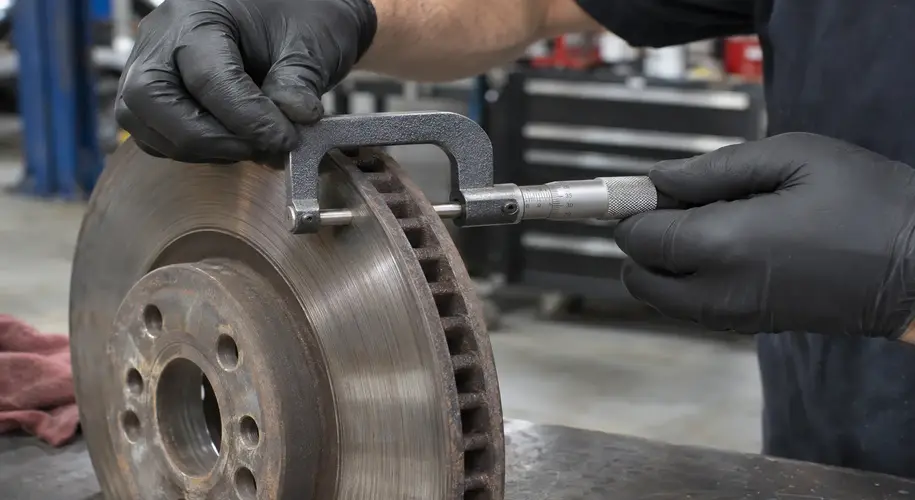
Rotor runout is side-to-side movement as the rotor turns. Excessive runout can contribute to uneven wear and thickness variation over time.
These conditions are often described as “warped rotors,” but that term does not identify the actual fault. Diagnosis should include thickness measurements at multiple points and a runout check against the vehicle manufacturer’s specifications.
Wagner’s technical guide to brake pedal pulsation and disc thickness variation explains how excessive lateral runout can produce uneven rotor thickness and pedal pulsation.
Worn or Uneven Brake Pads
Uneven brake-pad wear is a clue to an underlying problem rather than proof that the pads alone are causing the vibration.
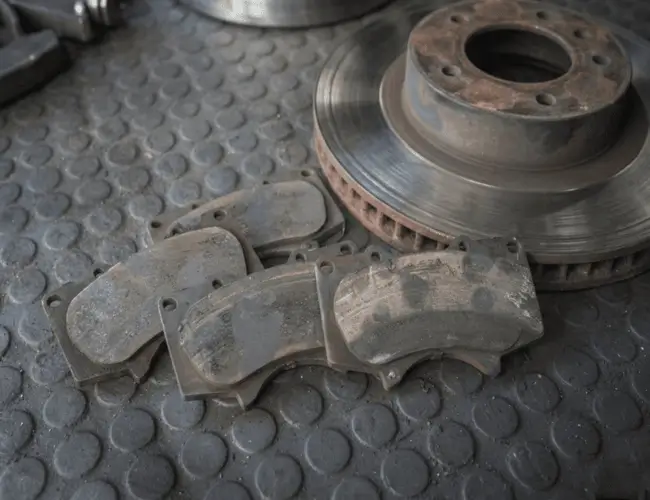
When we inspect unevenly worn brake pads, we compare the inner and outer pads on each wheel. A difference in wear prompts us to check the caliper piston, slide pins, and how freely the pads move in their brackets. We look for the reason behind the wear before recommending new pads, because replacing friction material alone will not correct a binding component.
If the shaking is accompanied by squeaking, note when the noise occurs; our guide to why brakes squeak explains possible causes.
Sticking Brake Calipers
A sticking caliper can keep a brake pad pressed against the rotor after you release the pedal. This can:
- Cause uneven pad wear
- Overheat one side of the rotor
- Create vibration under braking
Caliper issues often require repair or replacement to restore smooth braking.
Suspension or Steering Components
Worn control arm bushings, ball joints, tie rod ends, or wheel bearings can contribute to shaking during braking or amplify vibration from the brakes.
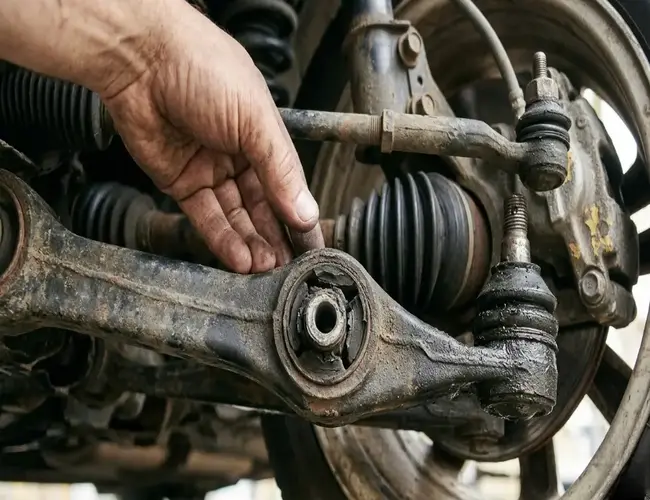
If brake measurements do not fully explain the shaking, checking steering joints, bushings, hubs, and bearings can help identify another contributing fault. Learn more about our suspension repair services.
Why Does My Steering Wheel Shake When Braking at High Speed?
Shaking that appears during braking from higher speeds can be associated with front brake irregularities or movement in steering and suspension components. Speed alone cannot identify the cause.
Tell the technician whether the shaking occurs only when braking or also while cruising. Do not perform high-speed braking tests to reproduce it.
Is It Safe to Drive With Brake Vibration?
Recurring brake vibration needs prompt inspection. The fact that the vehicle still stops does not establish that it is safe to drive.
If shaking is severe, stopping distance increases, you notice a soft or spongy brake pedal, the pedal sinks, or the vehicle becomes difficult to control, stop safely and arrange towing.
For milder symptoms without an obvious loss of braking, contact a repair professional promptly for advice about inspection and transportation.
Can ABS Cause Normal Brake Pedal Pulsing?
Yes. During an anti-lock braking system intervention, you may feel rapid pedal pulsing as the system helps prevent wheel lockup.
That differs from recurring shaking during ordinary braking on a dry road. Unexpected ABS activation or persistent vibration needs diagnosis. Follow your vehicle owner’s manual for ABS braking instructions.
What’s the Difference Between Brake Vibration and Wheel Imbalance?
Brake-related vibration typically appears or becomes more noticeable when the brakes are applied. Its intensity may change with:
- Vehicle speed
- Pedal pressure
- Brake temperature
Wheel imbalance typically causes vibration while driving, including when the brakes are not applied, often within a particular speed range. Wheel or tire vibration can also become stronger during braking, so these patterns guide the inspection rather than confirm the cause
How Brake Vibration Is Diagnosed
Depending on the symptoms, diagnosis may include:
- Measuring rotor thickness at multiple points.
- Checking rotor runout and hub mounting surfaces.
- Inspecting friction deposits and pad wear patterns.
- Checking caliper pistons, slide pins, and hardware.
- Inspecting relevant steering, suspension, and wheel bearing components.
- Checking wheel-fastener torque against manufacturer specifications, especially if the shaking began after brake or tire service.
Findings should be compared with the vehicle manufacturer’s specifications before recommending resurfacing or replacement.
Correcting the cause matters as much as replacing worn parts. If excessive runout comes from corrosion between the hub and rotor, installing new rotors without correcting that mounting condition can allow the problem to return.
Does Brake Vibration Mean I Need New Rotors?
Not necessarily. The cause must first be confirmed. Rotor condition, measured thickness, and manufacturer limits determine whether resurfacing or replacement is appropriate.
A caliper or mounting fault also needs correction if it contributed to the problem.
To understand how the recommended work affects your estimate, see our guide to brake repair costs and what the price includes.
Brake Vibration Inspection in Huntington Beach
At ER Collision and Auto Body Shop in Huntington Beach, owner Erik Reyna brings more than 15 years of automotive repair experience to the business.
When requesting an inspection, describe where you feel the vibration, when it occurs, and whether braking performance has changed.
If the shaking began after an accident, mention that timing and ask the technician to document the findings. Our guide to insurance coverage for accident-related brake repairs explains how the cause of damage affects the coverage question.
If the vehicle is difficult to control or does not stop normally, arrange towing.