A frame straightening machine uses controlled force, secure anchoring, and structural measurements to correct damage that the vehicle manufacturer permits technicians to straighten. The machine alone cannot guarantee that the steel remains suitable for reuse.
Whether straightening is appropriate depends on the material, damage condition, manufacturer limits, use of heat, and whether the affected component requires replacement.
Some damaged structural parts must be replaced because pulling them back into shape would not make them suitable for reuse. Steel type, damage severity, component location, and manufacturer instructions determine whether straightening is permitted.
A structural frame-repair assessment in Huntington Beach can help establish whether the affected component permits correction or requires replacement under the applicable vehicle information
How Does a Frame Straightening Machine Move the Structure?
The machine secures the vehicle while hydraulic equipment applies force in a planned direction. A measuring system allows the technician to monitor the position of structural reference points throughout the correction.
The equipment generally includes:
| Component | Its role |
|---|---|
| Frame rack or repair bench | Supports the vehicle during structural work |
| Anchors, clamps, or fixtures | Secure designated areas and resist unintended movement |
| Hydraulic pulling equipment | Applies force through suitable attachment points |
| Structural measuring equipment | Compares reference-point positions with vehicle specifications |
Anchoring matters because force applied to one area can affect other parts of the vehicle. The technician plans where the pulling force will act, which areas must remain secured, and how the structure is expected to respond.
The ability of a machine to move a component does not establish that straightening the component is permitted.
Anchoring, access and repair methods also differ by vehicle construction. Review the difference between unibody repair and full-frame repair for that distinction.
What Happens Before Pulling Begins?
The technician may identify the damaged materials, reviews the manufacturer’s repair information, inspects the affected area, and takes measurements before applying force.
An exterior panel or underbody cover may conceal a damaged rail, reinforcement, joint, or mounting location. Some parts may need to be removed before the full damage and appropriate repair method can be determined.
The assessment should distinguish among:
- Displacement that may permit correction
- Localized damage requiring component replacement
- Damage extending into adjacent structures or joints
- Materials or locations with restrictions on pulling
- Stretching, thinning, cracking, or compression damage.
For example, Rivian’s repair guidance for the 2025-and-newer R1S permits front- and rear-rail pulling only under specified conditions and measurement limits. Rails showing compression damage can be replaced under that guidance. These requirements apply to those vehicles and should not be treated as universal rules.
At ER Collision and Auto Body Shop in Huntington Beach, we do not determine whether a structural component can be straightened based only on its appearance. Our team may identify the affected areas, reviews applicable vehicle repair information, inspects related components, and uses Car-O-Liner computerized measuring equipment when structural measurements are needed.
Measurements taken during the process help us monitor how the intended reference points respond and whether adjacent areas are moving as expected.
How Does Controlled Pulling Help Prevent Additional Damage?
Controlled pulling allows the technician to manage the direction and progress of the correction while monitoring how the structure responds.
Force applied in the wrong location or direction can distort an adjacent area, stress an attachment, or worsen existing damage. Proper anchoring, suitable pulling points, and a planned sequence help manage those risks.
The technician compares movement with the repair plan instead of continuing until the vehicle merely looks straight.
Measurements can show whether the selected reference points are moving toward specification and whether another area is shifting unexpectedly.
Gradual force does not make a prohibited repair acceptable. If the manufacturer requires replacement, the component does not become repairable simply because a machine can move it.
Does Bending Steel Back Change Its Properties?
It can, depending on the steel, the original damage, and the correction method. Restoring a component’s shape does not automatically restore its material condition.
Collision damage may leave metal stretched, thinned, cracked, or otherwise outside the manufacturer’s permitted repair condition. Returning structural reference points to their specified positions does not, by itself, establish that every affected component remains suitable for reuse.
The word “weaken” can also oversimplify the issue. Strength, stiffness, and the ability to deform before fracture are different material characteristics. A component must retain the performance required by the vehicle’s design—not simply look straight or feel rigid.
Vehicles use multiple steel grades with different compositions and manufacturing processes. That is why repairability must be determined for the specific component rather than from a general rule about automotive steel.
Why Is Heat Restricted During Frame Straightening?
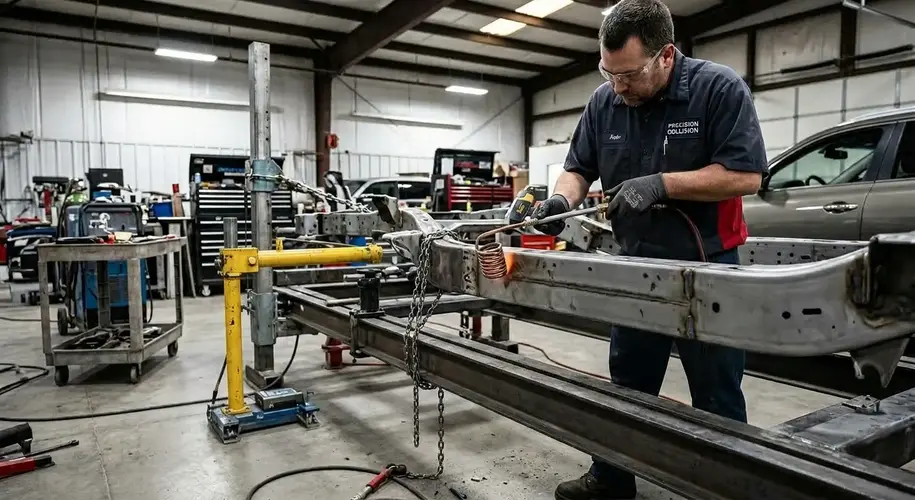
Heat can alter the material properties of certain automotive steels. Although heating may make metal easier to move, it can also make a component unsuitable for its intended structural function.
Advanced high-strength steels can obtain important properties through controlled thermal and manufacturing processes. Applying repair heat may alter their microstructure and mechanical behavior in ways that cannot ordinarily be reversed during a body-shop repair.
WorldAutoSteel’s advanced high-strength steel repairability guidance explains that elevated temperatures can affect different steel grades differently and emphasizes following manufacturer-specific repair procedures.
Cold straightening avoids the additional effects of repair heat, but it is not automatically permitted for every component. The collision damage itself may already require replacement.
There is no universal heating temperature or pulling method suitable for every vehicle. Ask whether heat is permitted for the specific material and component involved in your repair.
Is the Repair Finished When the Vehicle Leaves the Frame Machine?
Not necessarily. Structural correction may be only one stage of the repair. Remaining work can include component installation, joining, corrosion protection, refinishing, mechanical repairs, wheel alignment, diagnostic scans and required calibrations.
The completed vehicle should be evaluated according to its complete repair plan—not only its structural dimensions.
For the records and checks used after completion, read How Do You Know If a Shop Actually Fixed a Bent Frame Correctly?
What Can Computerized Measuring Verify?
Computerized measuring verifies geometry; it does not directly test the strength or remaining material condition of every repaired area.
| The equipment can help verify | It cannot establish by itself |
|---|---|
| The position of measured structural reference points | Whether every damaged component was identified |
| Movement during controlled correction | Whether straightening was permitted |
| Final measured geometry | The material condition of every repaired component |
| Whether adjacent measured points moved unexpectedly | Whether every joint and protective coating was restored |
| Before-and-after dimensional results | Whether all mechanical and electronic work is complete |
A measurement report is one part of the repair documentation. It should be considered alongside the manufacturer’s procedures, component condition, inspection findings and completed repair operations.
If someone says “the computer shows it is perfect,” ask which points were measured and what additional inspections were used to verify the completed repair.
What Should You Ask About the Straightening Method?
Ask for a vehicle-specific explanation supported by inspection findings and repair documentation.
Useful questions include:
- Will heat be used, and is it permitted?
- What measurements will document the correction?
- What additional inspections, alignments, scans, or calibrations are required?
- How will the completed repair be verified?
The explanation should show why the proposed method fits the vehicle and damage. Equipment brand, pulling capacity, or a clean exterior finish cannot provide that evidence on their own.
Discuss Structural Repair Options in Huntington Beach
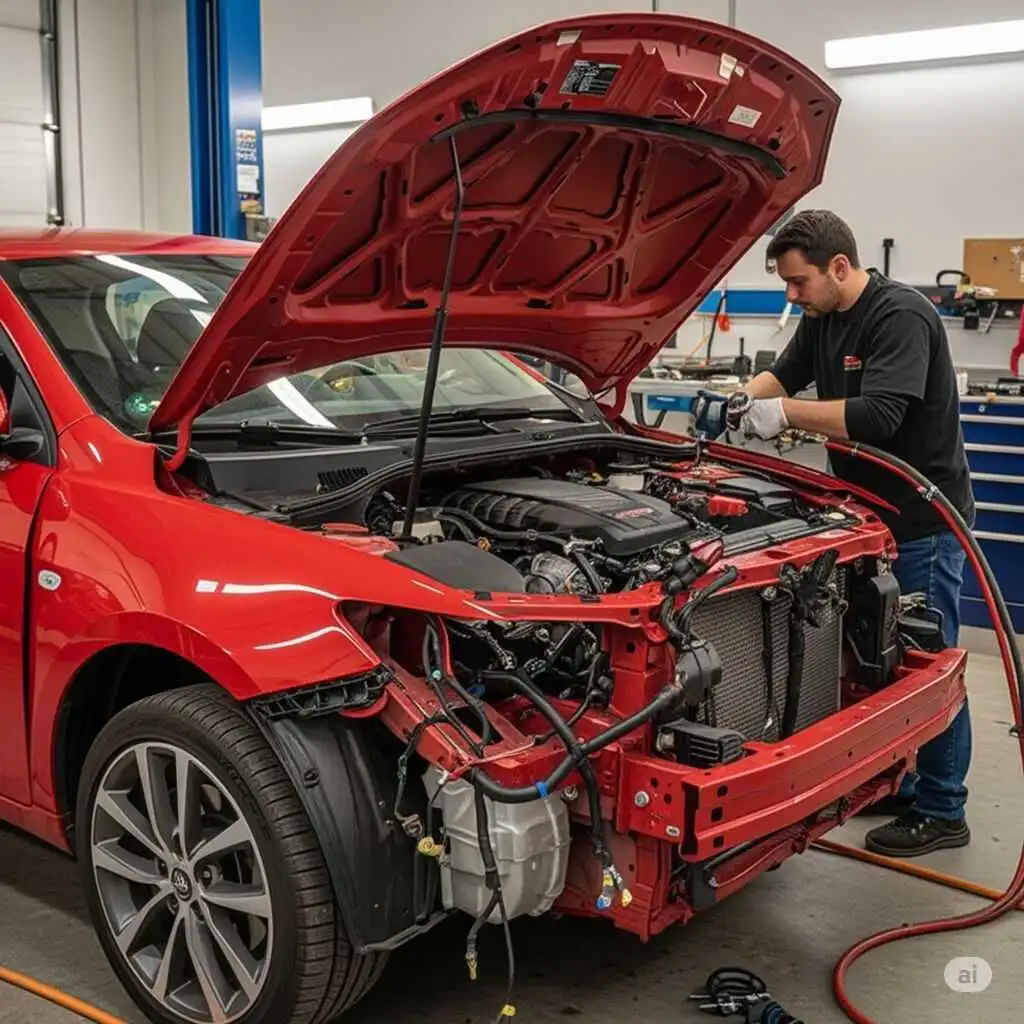
For an assessment of whether damaged vehicle structure can be corrected or requires replacement, contact ER Collision and Auto Body Shop’s frame repair team in Huntington Beach.
Bring collision photographs and any existing repair estimate. Ask the team to explain the proposed repair method, applicable manufacturer procedures, and documentation available for the completed work.
Call (714) 866-9453 to arrange an inspection at 17851 Jamestown Ln, Huntington Beach, CA 92647.