A new whistle after windshield replacement can come from loose exterior molding, incorrectly fitted trim, or an air leak through the windshield’s adhesive seal. Air moving across a raised edge or through a small opening can create a high-pitched sound as vehicle speed increases.
The sound alone cannot tell you whether the problem involves exterior trim or the bonded windshield installation.
During windshield-noise inspections, we check the exterior molding and A-pillar trim alongside the bonded seal before recommending whether the glass needs to be removed.
Contact the installer for an inspection instead of assuming the noise will disappear as the adhesive cures.
If you need help identifying the source, our auto glass repair services in Huntington Beach include inspection of windshield leaks and related concerns.
Does Whistling Mean the Windshield Seal Is Leaking?
Not necessarily. Two different problems can produce a similar sound:
- Air passing through an opening: A gap in the bonded seal can allow air to enter around the windshield.
- Air moving over an exterior part: A molding or trim edge can vibrate or disturb airflow without air entering the cabin.
That distinction matters because the repairs are different. Securing a loose molding may resolve an exterior noise, while an adhesive defect requires evaluation of the glass-to-body bond.
For example, a General Motors bulletin for the 2012 Chevrolet Cruze identifies upper windshield molding vibrating against the roof as a cause of highway-speed whistling. That vehicle-specific example shows why a whistle should not automatically be diagnosed as a leaking windshield.
What Can Cause Windshield Whistling After Replacement?
Loose or Misaligned Windshield Molding
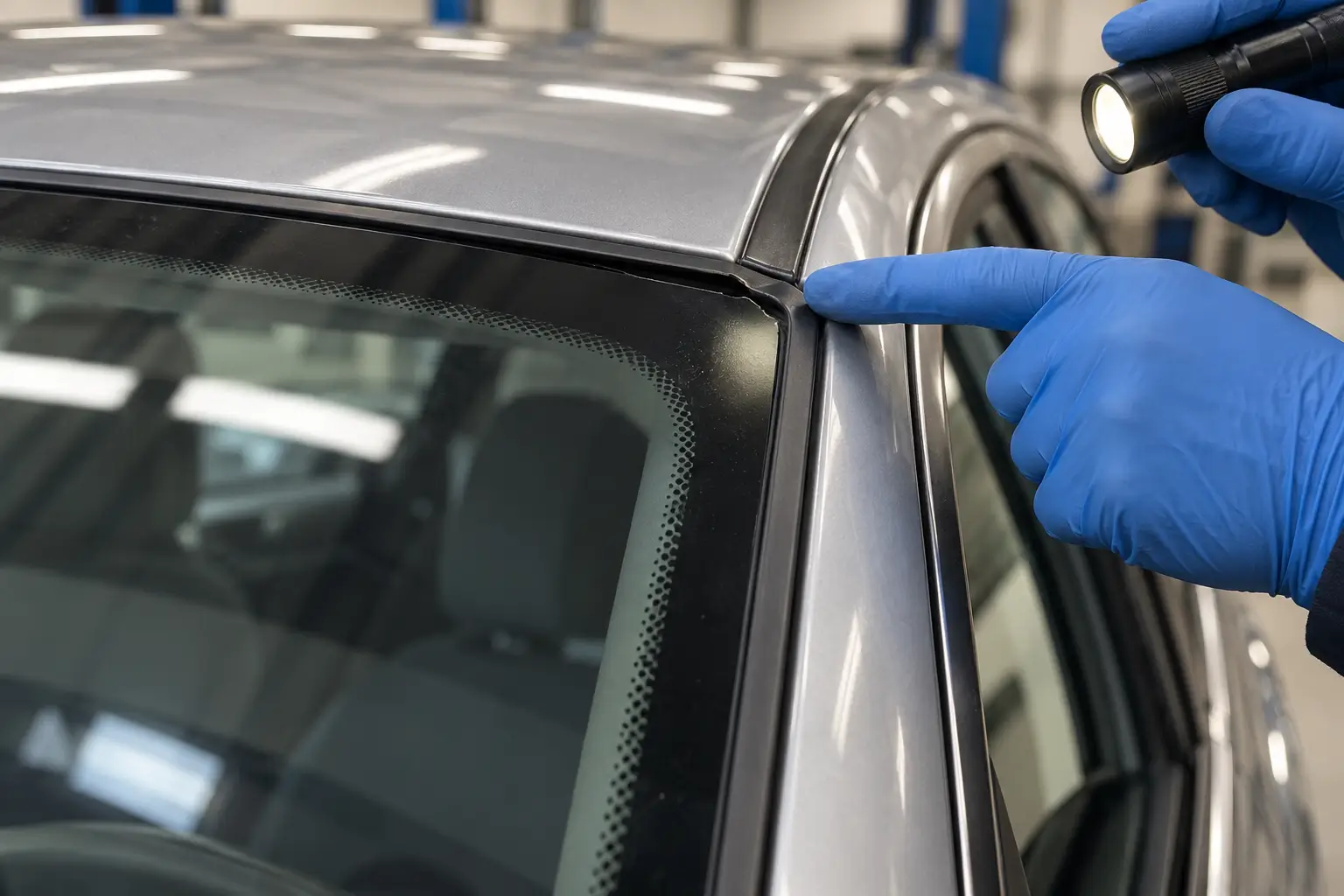
The molding is the finishing strip around the glass on vehicles equipped with it. If an edge is lifted, distorted, or incorrectly positioned, passing air can make it whistle or vibrate.
A noise near the roofline makes the upper molding worth inspecting. However, the apparent location inside the cabin is only a clue; it does not confirm the source.
A Gap in the Urethane Adhesive
On bonded windshields, urethane adhesive connects the glass to the vehicle body. An opening in that adhesive bead can create an air-leak path.
For example, FCA service communication S2123000040 describes inspecting the urethane bead when diagnosing windshield wind noise on the affected vehicles. It distinguishes localized defects from larger leak areas requiring removal and resealing. The applicable vehicle procedure and bond condition determine the repair.
The inspection may also need to address the pinchweld—the body flange around the windshield opening. Contamination, corrosion, or incorrect preparation can interfere with adhesion.
If a bonding defect is confirmed, the repair must address its cause rather than simply cover the visible opening.
For the installation factors involved, see how work-area conditions and surface preparation affect windshield installation.
Incorrectly Secured A-Pillar Trim
The A-pillars are the body structures beside the windshield. Exterior trim along these pillars may be disturbed during replacement.
Damaged clips, missing fasteners, or a trim panel that does not engage correctly can leave an edge exposed to airflow.
Ford has documented how windshield fit and damaged or missing clips can affect A-pillar molding installation on affected vehicles.
A Nearby Body or Sealing Problem
A sound heard at the windshield may originate at a nearby body seam or adjoining gap.
This is why a technician should isolate the source before recommending another windshield. Manufacturer diagnostic information includes cases where windshield-area whistling was traced to frame seams and openings rather than the glass adhesive itself.
What Should You Tell the Installer?
Give the shop a description that helps reproduce the problem:
| What to report | Useful detail |
|---|---|
| When it began | Immediately after replacement or several days later |
| When it happens | Approximate speed, road conditions, and wind conditions |
| Where you hear it | Upper edge, driver’s side, passenger’s side, or lower windshield |
| What it sounds like | Sharp whistle, rushing air, buzzing, or fluttering |
| Other symptoms | Water intrusion, visible lifted trim, or a noticeable draft |
For example: “The whistle started after replacement, appears around 50 mph, and sounds loudest near the upper passenger-side corner.”
Record these observations during ordinary driving. Do not speed to reproduce the noise or handle a phone while driving.
How Should a Shop Diagnose the Noise?
A useful inspection should answer three questions: Where is the sound coming from, what part is causing it, and does the windshield bond need repair?
Depending on the vehicle, the technician may:
- Confirm the complaint. Reproduce the sound under safe conditions after the vehicle has met its required drive-away time.
- Inspect the surrounding parts. Check moldings, A-pillar trim, attachment clips, and visible glass positioning.
- Isolate the affected area. Use a suitable diagnostic method to distinguish exterior airflow noise from an air leak.
- Follow the applicable repair procedure. Correct the identified defect and verify the result.
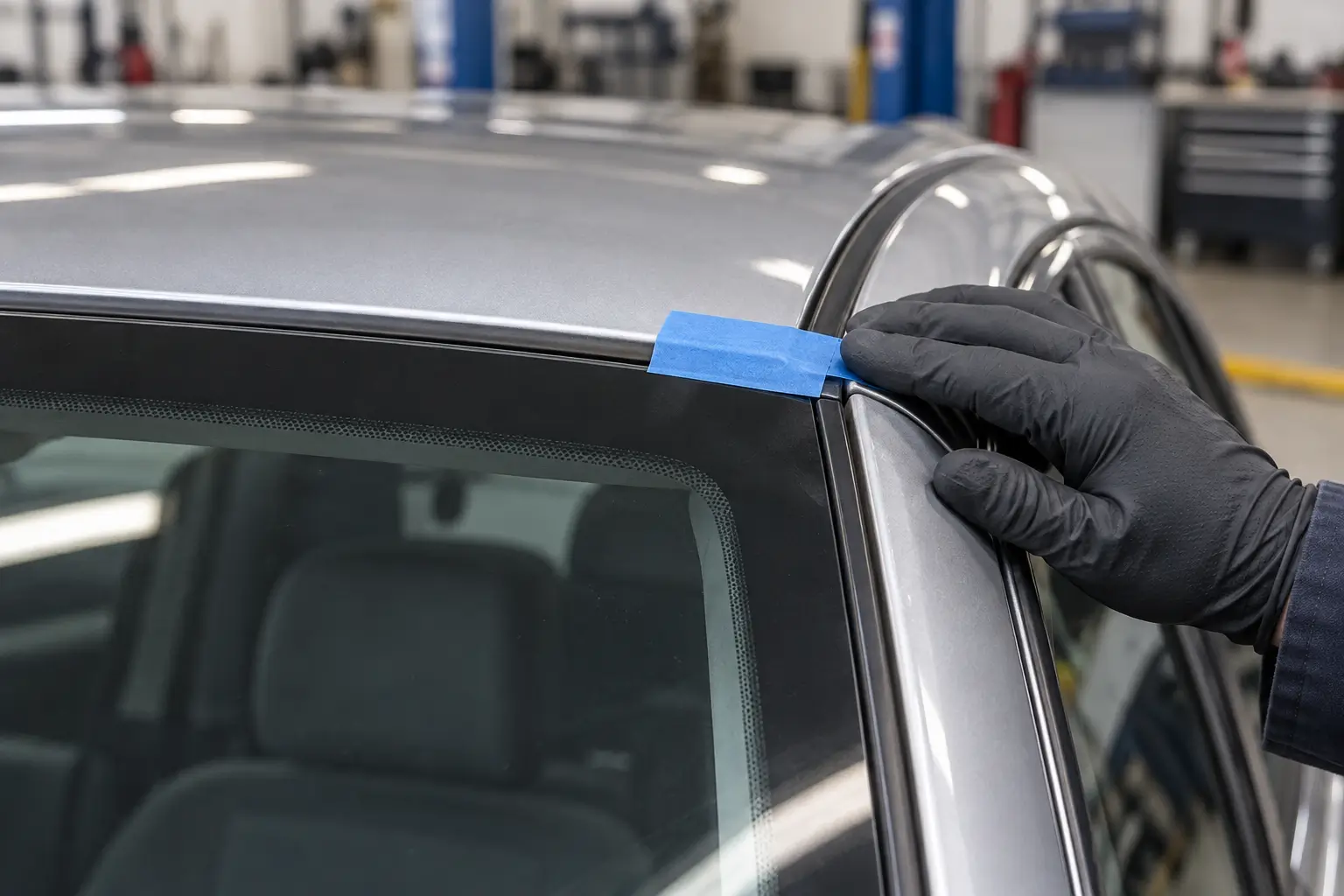
Some manufacturer procedures use temporary masking tape over selected exterior gaps to help isolate wind noise. A change in sound helps identify an area; it does not, by itself, establish whether the adhesive bond is sound. Leave this testing to the technician.
Is It Safe to Drive With the Whistling Noise?
A whistling sound alone cannot establish whether your windshield installation is safe. The windshield is part of your vehicle’s safety system. If inspection confirms an adhesive-bond defect, it needs proper correction. A vibrating exterior molding requires a different repair.
Contact the installer promptly and ask whether the vehicle should be driven before inspection. If exterior trim is lifting or appears ready to detach, stop safely and arrange assistance.
Should You Wait for the Adhesive to Cure or Add Sealant?
Waiting for the adhesive to cure is not a diagnosis or a substitute for checking a new whistle. The source could be exterior trim, an adhesive opening, or an adjoining body seam.
Avoid applying household silicone, glue, or weatherstripping around the glass. Covering a visible gap may conceal the symptom without addressing its cause.
For a polyurethane windshield retention system, repair materials must be compatible with that system. A technician should determine whether a permitted localized repair is appropriate or whether the glass needs to be removed and reinstalled.
Does the Windshield Need to Be Replaced Again?
Not automatically. A molding or attachment problem may be corrected without removing the glass. An installation defect involving the adhesive bond may require removal and reinstallation.
Before authorizing work, ask:
- Which component is causing the noise?
- How was the source confirmed?
- Does the repair involve exterior trim or the bonded seal?
- Does the original installation warranty cover the correction?
Windshield Repair and Replacement in Huntington Beach
If your windshield whistles after replacement, contact our team to discuss an inspection. If another shop installed it, check with that installer first about warranty coverage.
Owner Erik Reyna brings more than 15 years of automotive repair experience, and our shop holds I-CAR Gold Class recognition.